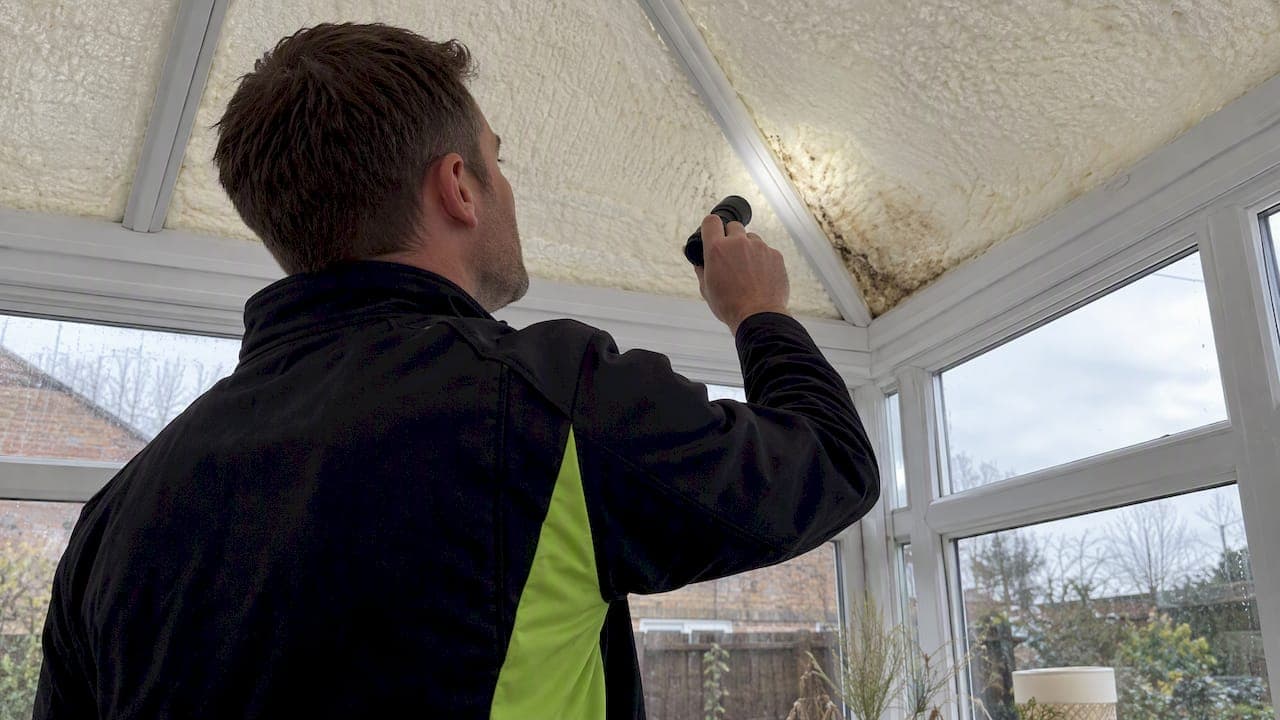
Spray foam in a conservatory roof can be safe when it is properly specified and installed, but poor application has caused hidden moisture, timber rot and mortgage problems across the UK. If you are worried about foam already in your roof, the right first step is an independent, RICS-aware survey, not a removal quote, so you know what you are actually dealing with before anyone touches the roof.
TL;DR:
- Moisture risk depends on foam type, underlay, and installation; direct application against roof coverings and blocked ventilation create the greatest concern.
- Lenders may request an independent report, adjust valuations, lend conditionally, or decline; dated photos, moisture and thermal readings, and post-removal timber checks support approval.
- Removal is warranted when a survey confirms active decay, a lender requires it, or poor installation cannot be managed; foam alone does not justify removal.
- Open cell removal typically costs £1,000 to £5,000, while closed cell removal costs £1,500 to £7,000; access and timber repairs can raise the bill.
- Avoid same day offers and unsolicited removal pitches; get an independent survey and multiple quotes before signing, and keep records of calls, visits, and quotes.
Table of Contents
- How spray foam causes problems in conservatory roofs
- Mortgage, valuation and selling impacts of spray foam
- Checking your roof and commissioning an independent survey
- When removal is necessary and what it realistically costs
- What a mortgage-aware removal workflow should look like
- Scams and mis-selling: recognising pressure tactics
- What a certified contractor actually provides
- A cautious, evidence-led way to think about this
- How we help homeowners resolve spray foam problems
- FAQ
- Sources
How spray foam causes problems in conservatory roofs
A conservatory roof is either a "cold roof", where insulation sits below the structure and the void above stays ventilated, or a "warm roof", where insulation sits above or within the structure and the timber stays warm and dry. Spray foam problems usually start when installers turn a ventilated cold roof into a sealed one without redesigning it as a proper warm roof. Trap moist air against cold timber with no escape route, and condensation forms where nobody can see it.
Gov on moisture risk in timber sloped roofs shows that risk varies significantly by foam type, underlay and how the foam is applied, with the highest risk occurring when foam is sprayed directly onto the underside of the roof covering rather than against a correctly specified underlay. Several failure patterns show up repeatedly in UK conservatories:
- Foam applied directly against bituminous sarking felt or old plastic membranes that were never designed to sit next to foam.
- No air and vapour control layer (AVCL) fitted, so moisture migrates freely into the timber.
- Foam bridging ventilation gaps that were deliberately built into the original roof design.
- Closed-cell foam used where its very low vapour permeability traps existing moisture rather than letting it dry out.
Open-cell and closed-cell foams behave differently here. Open-cell foam is more vapour-open, so moisture can sometimes migrate through it; closed-cell foam is denser and far less permeable, which is good for thermal performance but unforgiving if moisture gets trapped behind it. The GOV.UK report notes that open-cell foam carries lower permeability risk than closed-cell in some roof and climate scenarios, which is why the right choice depends on the specific roof, not a blanket rule.
The hardest part is that none of this is visible day to day. Rot develops slowly under an unbroken layer of foam, and the first sign is often a soft patch of ceiling, a musty smell, or a surveyor's flashlight picking up discolouration years later.

Pro Tip: If your conservatory roof was foamed more than five years ago and you have never had it checked, treat an inspection as overdue rather than optional.
Mortgage, valuation and selling impacts of spray foam
Surveyors flag spray foam because it physically prevents them from inspecting the timber underneath it, and uncertainty is what lenders dislike most. A roof that looks fine from inside the conservatory might be hiding decay that only becomes obvious once the foam is removed, so a standard valuation often cannot confirm the structure is sound.
RICS consumer guidance describes spray foam as a significant alteration to a roof that can hide timber problems and affect both valuation and mortgageability, recommending an independent survey rather than an assumption either way. Lenders typically respond in one of several ways:
- They request an independent specialist report confirming the condition of the timber and the type of foam used.
- They apply a valuation adjustment or retention to reflect the uncertainty and the cost of future remedial work.
- They lend conditionally, pending removal or further investigation.
- In some cases, they decline to lend at all until the issue is resolved.
The evidence that tends to satisfy lenders includes a RICS-style report, moisture and U-value readings, dated photographs, and, where removal has happened, a post-removal structural check confirming the timber is sound. If you are buying a property with spray foam already installed, request this evidence before exchange. If you are selling, commissioning it in advance can prevent a sale collapsing at survey stage. If you are remortgaging, ask your lender directly what documentation it needs rather than guessing.
Checking your roof and commissioning an independent survey
Before calling anyone, a short visual check tells you whether urgency is warranted. Look for ceiling staining, a persistent musty smell, damp patches that appear after heavy rain, or any softness in exposed timber you can safely reach. None of these confirm a problem on their own, but any of them justifies getting a professional opinion rather than waiting.
When you do call a surveyor, look for RICS-accredited practitioners with specific experience of spray foam roofs, since general building surveyors do not always have the technical background to interpret what they find. Ask for:
- A full roof report with photographic evidence, not just a verbal summary.
- Drone survey images where the roof pitch or access makes a ground inspection unreliable.
- A timber inspection with moisture readings at multiple points, not a single spot check.
Pro Tip: Keep a copy of every report, photograph and quote you receive. If a dispute with a lender, insurer or installer arises later, this paper trail is often what settles it.
Before any work starts, tell your mortgage lender and buildings insurer what you have found. Lenders sometimes want sight of the survey before agreeing to further borrowing, and insurers may ask questions about ongoing damp or timber damage. Doing this early avoids delays later in a sale or remortgage.
When removal is necessary and what it realistically costs
Removal becomes the right call when a survey confirms active timber decay, when a lender insists on it as a condition of lending, or when the original installation was so poor that no amount of monitoring will fix it. It is not automatically necessary just because foam is present and the roof is dry.
RICS guidance is clear that removal should be carried out by trained specialists using controlled mechanical methods, not abrasive chipping by hand, because inexperienced removal frequently damages roof tiles, underlay and wiring, pushing the final bill higher than a planned job would have cost.
- Closed-cell foam removal typically runs higher than open-cell because it bonds more aggressively to timber and roofing materials.
- Access, roof size and the amount of follow-up timber treatment or tile replacement all affect the final price.
- A straightforward conservatory job can sit in the low thousands; more extensive decay or access problems push costs towards the upper end of what specialists quote.
- Removal on its own does not automatically restore mortgageability. Lenders generally want a certified report confirming the timber's condition afterwards, not just confirmation that the foam is gone.
What a mortgage-aware removal workflow should look like
A properly run removal follows a sequence, and skipping steps is usually what leads to disputes later. The pattern that holds up to lender scrutiny looks like this:
- An initial survey to confirm foam type, extent and any visible timber damage.
- A detailed, itemised quote covering removal method, access requirements and any anticipated repairs.
- Controlled removal carried out by PCA or BBA-aware technicians using equipment designed to protect tiles and existing structure.
- A timber inspection and any remedial treatment, carried out and documented before the roof is closed up again.
- A final lender-facing report summarising the work, the timber condition and photographic evidence.
Specialist tools and trained crews matter because they reduce the chance of secondary damage, which is what drives costs up and delays lender sign-off. The deliverables worth asking for are a basic visual survey, a full roof report with photographs, and a drone survey where the pitch makes direct inspection difficult. Each one gives a lender or buyer's surveyor something concrete to assess rather than taking your word for it.
Pro Tip: Be wary of any quote that is vague about scope, offers no certification, or asks for cash only. These are the hallmarks of the cold-calling practices Trading Standards has repeatedly warned about.
Scams and mis-selling: recognising pressure tactics
Spray foam has attracted a disproportionate amount of mis-selling in the UK, usually following a predictable pattern: an unsolicited call or doorstep visit, exaggerated claims about imminent danger to the roof, and a same-day offer to "sort it" with little explanation of scope or cost.
Cornwall Council Trading Standards advises homeowners to get an independent, RICS-style inspection and multiple quotes before agreeing to any removal work, and to be cautious of unsolicited approaches. Your rights here are backed by the Consumer Rights Act 2015, and organisations such as TrustMark and Citizens Advice can help if you feel pressured.
- Never sign anything on the spot, however urgent the salesperson makes it sound.
- Get an independent survey before agreeing to removal, regardless of what you are told about the roof's condition.
- Keep records of calls, visits and quotes in case you need to report the trader.
Herefordshire Council secured custodial sentences against a director and a salesman for a spray foam loft insulation scam involving dishonest cold-calling, which shows how seriously these cases are now being treated.
What a certified contractor actually provides
A reputable specialist works from evidence, not assumption. That means a basic visual survey to establish scope, a full roof report with photographs, and a drone survey where the roof pitch makes a ground inspection unreliable, followed by certified removal and, where appropriate, an insurance-backed warranty on the finished work.
Our certified removal service is built specifically around producing documentation that lenders and surveyors accept without further argument.
These deliverables matter because they answer the exact questions a lender's surveyor will ask: what type of foam was present, what condition the timber was in, and what evidence exists that the work was done properly. Before appointing anyone, ask:
- Are your technicians PCA or BBA aware, and can you show evidence of that experience?
- What insurance do you carry, and is it specific to spray foam removal?
- Can I see a sample report from a previous job, including the photographic evidence you provide?
A cautious, evidence-led way to think about this
Spray foam is not automatically a disaster, and ripping it out at the first mention of the word is not automatically the right answer either. Verify with a RICS-style survey and your lender before committing to anything, because documented, certified removal plus proper repairs is what actually restores confidence, not panic or a rushed decision. Weigh the energy savings against the long-term health of the roof, and let the evidence decide.
— jessica*
How we help homeowners resolve spray foam problems
If a survey has confirmed a problem, or you simply want certainty before a sale or remortgage, we handle the whole process directly, with no call centre and no middleman between you and the technicians doing the work.

Our services cover the full range a lender is likely to ask for:
- Spray foam removal, covering both open cell and closed cell foam, carried out by PCA-aware technicians.
- A basic visual survey, full roof report with photographs, or drone survey, depending on how much detail your lender or buyer needs.
- A 10-year insurance-backed warranty on completed removal work, giving you something concrete to show a future buyer or lender.
For a wider look at how ventilation problems in roofs and lofts relate to condensation generally, this guide to plumbing ventilation is a useful companion read. When you contact us, expect transparent fixed pricing with no hidden fees and a photographic report you can pass straight to a surveyor or lender. If you need a certified quote for removal or a survey, get in touch through our spray foam removal services page.
FAQ
Is spray foam insulation banned in the UK?
No, spray foam insulation is not banned in the UK. It remains a legal insulation method, but RICS guidance warns that poor installation can affect a property's valuation and mortgageability, which is why independent surveys are recommended before and after any work.
How much does it cost to remove spray foam insulation in the UK?
Removal costs vary with foam type, roof size and access, with open cell removal typically costing £1,000 to £5,000 and closed cell removal £1,500 to £7,000. Jobs needing extensive timber repair or difficult access sit towards the upper end of that range.
What is the spray foam insulation scandal?
The "scandal" refers to widespread mis-selling, including cold-calling and exaggerated danger claims, that led to poor installations across UK homes and, in some cases, criminal prosecution. Herefordshire Council secured prison sentences against a director and salesman involved in one such scheme.
Why are people removing spray foam?
Homeowners most often remove spray foam because it is blocking a mortgage approval or a sale, or because a survey has confirmed hidden timber decay underneath it. RICS notes that spray foam can conceal existing roof problems, which is why lenders often ask for independent verification before agreeing to lend.
Can spray foam cause damp or condensation problems?
Yes, when foam seals ventilation paths that a roof relied on, moisture can become trapped against the timber. GOV.UK modelling shows this risk depends heavily on the foam type, underlay and how the foam was applied, rather than being inevitable in every case.