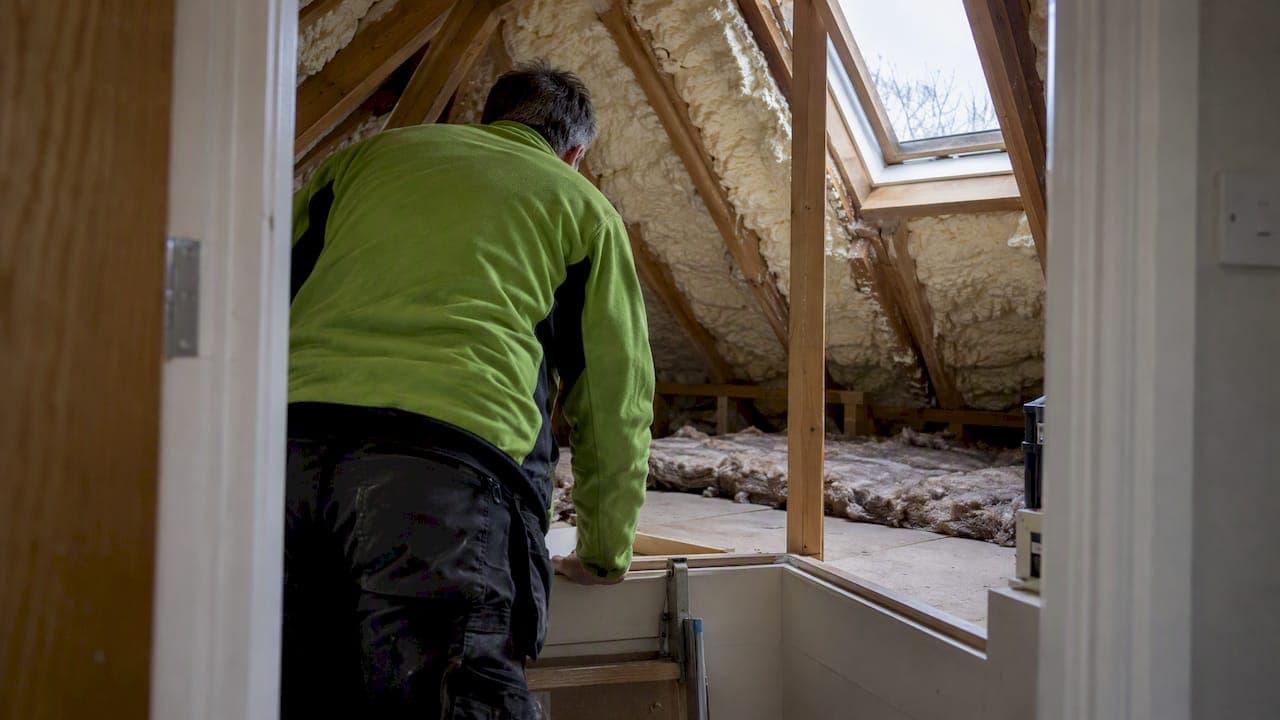
Spray foam does not always cause loft problems, but poor installation, missing paperwork or the wrong product for your roof can create moisture risk, timber decay and mortgage complications. If you are worried, your first move is to gather any installation paperwork you have, then book an independent inspection before agreeing to any removal work. How much risk you actually face depends heavily on the foam type used and whether it was fitted with an air and vapour control layer.
TL;DR:
- Correctly specified open-cell spray foam with an air and vapour control layer generally presents low moisture risk, but foam applied without these layers increases long-term damp concerns.
- Moisture issues are more likely when foam is directly applied onto roof coverings or in humid areas, with climate and underlay properties significantly affecting moisture escape.
- Visual inspection of lofts with spray foam is unreliable due to the foam's tight bond covering underlying timber and felt, requiring independent assessment for accurate diagnosis.
- Removal costs range from £1,000 to £7,000 depending on foam type and roof complexity, with proper surveys before quotes essential for accurate budgeting.
- Lenders often decline mortgages on roofs with spray foam, especially closed-cell, unless detailed product, installer, and inspection documentation are provided.
Table of Contents
- How spray foam in lofts can cause problems: moisture, condensation and timber risk
- Condensation vs leaks: how to tell and why spray foam changes diagnosis
- Types of spray foam and why open-cell vs closed-cell matters
- Mortgage and saleability issues: why lenders are cautious and what that means for you
- What an inspection should cover: the Sprayed Foam Inspection Protocol and useful survey tests
- Removal costs and process: typical UK price ranges and factors that drive the bill
- What to do next: practical homeowner checklist before you spend on removal
- How reputable specialist removal and certified surveys work
- Keeping a level head about loft spray foam risk
- Thinking about a survey or removal quote?
- FAQ
- Sources
How spray foam in lofts can cause problems: moisture, condensation and timber risk
Insulating at roof level rather than at ceiling level changes the temperature of the loft void. The timber and roof covering above the foam run colder than they would in a traditional loft, which affects how moisture moves through the structure and where it condenses.
Government-commissioned modelling looked at exactly this question for timber sloped roofs. The research found that open-cell spray foam applied in line with BS 5250:2021 generally models as low risk, but the picture changes sharply in certain conditions.
- Foam sprayed directly onto the underside of the roof covering, with no air and vapour control layer, showed meaningfully higher moisture risk.
- Climate and location matter: scenarios modelled for London behaved differently to those modelled for Newcastle, because local humidity and temperature patterns affect how much moisture the structure has to cope with.
- The resistance of the roofing underlay beneath the foam also changes how much moisture can escape, which influences long-term timber condition.
The government's 2024 modelling is the clearest UK evidence on this question so far: it shows that correctly specified open-cell foam with an AVCL is often low risk, while foam applied without that layer, or straight onto the roof covering, carries a higher chance of hidden damp problems building up over time.
Condensation vs leaks: how to tell and why spray foam changes diagnosis
Damp patches in a loft are not automatically a spray foam problem, and telling condensation apart from a leak matters before you spend money on anyone.
- Condensation tends to show as fine droplets, surface mould or a general dampness that is worse in cold weather and improves with ventilation, rather than appearing only after rain.
- Leaks usually track with weather: staining that darkens or spreads after heavy rain, and sometimes an active drip you can actually see or hear during a storm.
- Run a simple check yourself: a hygrometer reading of loft humidity, a visual sweep of exposed timber and felt, a sniff for musty or damp odours, and photographs taken from several angles for any inspector you bring in later.
The complication with spray foam is that it bonds tightly to the roof structure and often covers the felt, battens and rafters completely. That makes a straightforward visual check far less reliable, because staining, rot or old leak damage can sit hidden underneath the foam layer. This is one reason RICS guidance treats spray foam as a significant alteration that calls for a proper independent assessment rather than a quick look with a torch.
Types of spray foam and why open-cell vs closed-cell matters
The two products behave very differently once they are in your loft, and that difference shapes both your risk and your bill.
- Open-cell foam is lighter, softer and more permeable to moisture vapour, which generally gives timber more chance to dry out if dampness does get in.
- Closed-cell foam is denser, rigid and far less permeable, which can trap moisture against timber if it is present and makes any trapped damp harder to detect early.
- Closed-cell's density and strong adhesion also make it considerably harder and more expensive to strip away without damaging the roof structure underneath.
- Because closed-cell is harder to inspect and remove, it tends to draw more caution from lenders and surveyors than open-cell installed to specification.
Mortgage and saleability issues: why lenders are cautious and what that means for you
Mortgage problems are often the moment spray foam issues actually surface, sometimes years after installation. BBC reporting found that a notable share of major UK lenders decline to lend against homes with spray foam in the loft, while others assess each case individually rather than applying a blanket refusal. Equity release lenders have tended to be the most cautious of all.
Lenders that do assess case-by-case typically want to see:
- The original product certificate and manufacturer details for the foam used.
- Installer paperwork, including any warranty or guarantee issued at the time.
- An independent PCA or RICS-style inspection report, ideally with photographs.
- Evidence of any remedial work already carried out.
If a lender raises a concern during a sale or remortgage, the practical response is to commission a proper survey rather than panic into removal. A good report written with lending decisions in mind can resolve the issue faster than cutting out the foam ever would.
Pro Tip: Ask any surveyor upfront whether their report is written in a format lenders accept, since a generic damp survey will not carry the same weight as a dedicated spray foam inspection.
What an inspection should cover: the Sprayed Foam Inspection Protocol and useful survey tests
The Property Care Association's Sprayed Foam Inspection Protocol gives PCA-trained surveyors a consistent way to assess an installation, and it sits alongside RICS consumer guidance recommending independent assessment before anyone commits to removal.
A credible report under the protocol should cover:
- Foam identification: confirming whether the product is open-cell or closed-cell and roughly how it was applied.
- AVCL check: verifying whether an air and vapour control layer is present, since its absence is a key risk marker in the government's own modelling.
- Photographic record: clear images of rafters, felt and any visible timber condition, taken systematically across the loft.
- Monitoring or removal recommendation: a judgement on whether the installation can simply be monitored, needs partial remediation, or should be fully removed.
Outcomes vary widely. Some properties need nothing more than paperwork to satisfy a lender, others are flagged for ongoing monitoring, and some are recommended for partial or full removal based on what the inspection finds.
Removal costs and process: typical UK price ranges and factors that drive the bill
Costs vary a great deal depending on the foam type and how the loft is built. Open-cell spray foam removal typically runs from £1,000 to £5,000, while closed-cell spray foam removal tends to sit higher, from £1,500 up to £7,000, reflecting how much harder closed-cell is to strip without damaging the roof structure.

PCA member surveys found that in a sample of over 500 inspections, 79% showed at least one divergence from the inspection protocol, 35% had defects attributed to the sprayed foam, and 27% were recommended for re-quilt or re-roof work. That last figure matters for budgeting: removal sometimes uncovers damage that needs separate repair before the loft can be properly re-insulated.
Several factors push a quote up or down:
- Foam type and thickness, since closed-cell takes longer to remove per square metre.
- Roof complexity, access and the need for scaffolding on steep or high properties.
- Whether timber repair, re-felting or re-battening is needed once the foam is out.
- Party wall arrangements or loft conversions that complicate access and sign-off.
Before accepting any quote, insist on a proper site survey, an itemised breakdown, photographic evidence of the existing installation, and a written remediation plan rather than a single lump-sum figure.
What to do next: practical homeowner checklist before you spend on removal
Work through this before committing to anything:
- Gather any paperwork you have: product certificates, installer invoices, warranties and photographs from when the foam went in.
- Contact the original installer or manufacturer, where traceable, to confirm what product and method were used.
- Commission an independent PCA or RICS-style inspection rather than relying on a quote from a removal company alone.
- Get at least two or three separate quotes once you know what the inspection actually recommends.
- Check that any contractor carries a TrustMark registration or an insurance-backed warranty before you sign anything.
Pro Tip: Treat any unsolicited call or doorstep visit offering a free loft check as a warning sign, since reputable surveyors rarely need to cold-call homeowners.
Monitoring rather than immediate removal can be a reasonable interim step where an inspection finds no active defects, particularly for open-cell installations fitted correctly with an AVCL.
How reputable specialist removal and certified surveys work
Spray foam removal should be carried out by PCA-certified technicians, producing mortgage-compliant documentation that lenders can act on directly. Surveys and reports, including drone-based options, can provide a clear, photographed record of the loft's condition. Removals are often backed by a 10-year insurance-backed warranty and may include the option of replacement insulation once the old foam is out.

Keeping a level head about loft spray foam risk
Not every loft with spray foam needs urgent action. We think the right response is evidence first: get an accredited inspection, read what it actually says, and only then decide whether removal is necessary. Pressure-selling tactics deserve more suspicion than the foam itself usually does.
— jessica
Thinking about a survey or removal quote?
If an inspection has flagged a defect, a lender has blocked a sale, or your loft has a closed-cell installation you cannot properly assess yourself, specialist removal may be worth the cost. Some providers offer site surveys, lender-ready reports and transparent, itemised pricing with no hidden extras.

You can view removal pricing and service options or book a survey or drone report to get a clear picture of what your loft actually needs.
FAQ
Is spray foam insulation banned in the UK?
Spray foam insulation is not banned in the UK, but RICS guidance treats it as a significant alteration that warrants independent assessment, and some lenders decline mortgages on affected properties. Whether it causes a problem depends on the product used, how it was installed and whether it included an air and vapour control layer.
What is the problem with spray foam in a loft?
The main issue is that spray foam can trap moisture against roof timbers, particularly when it is applied without an air and vapour control layer or directly onto the roof covering, as government modelling has shown. It can also make it very difficult to visually inspect the timber underneath for existing rot or damp damage.
How much does it cost to have spray foam removed from a loft?
Removal costs in the UK typically range from £1,000 to £5,000 for open-cell spray foam and £1,500 to £7,000 for closed-cell spray foam, depending on roof access, loft size and whether timber repairs are needed. Getting a site survey before accepting a quote helps you understand which end of that range applies to your property.
Are there problems with spray foam insulation in attics?
Problems can occur, but they are not universal: PCA member surveys found divergences from installation protocol in a large share of inspected properties, with some cases needing re-quilting or re-roofing. An independent inspection is the most reliable way to find out whether your specific loft is affected.