TL;DR:
- Homeowners should hire PCA-certified specialists for spray foam removal to ensure proper documentation and avoid mortgage issues. Mechanical extraction with professional tools is necessary, especially when foam covers roof timbers or involves closed-cell insulation. Costs typically start around £40 per square meter, with comprehensive reports vital for lender approval and insurance backing.
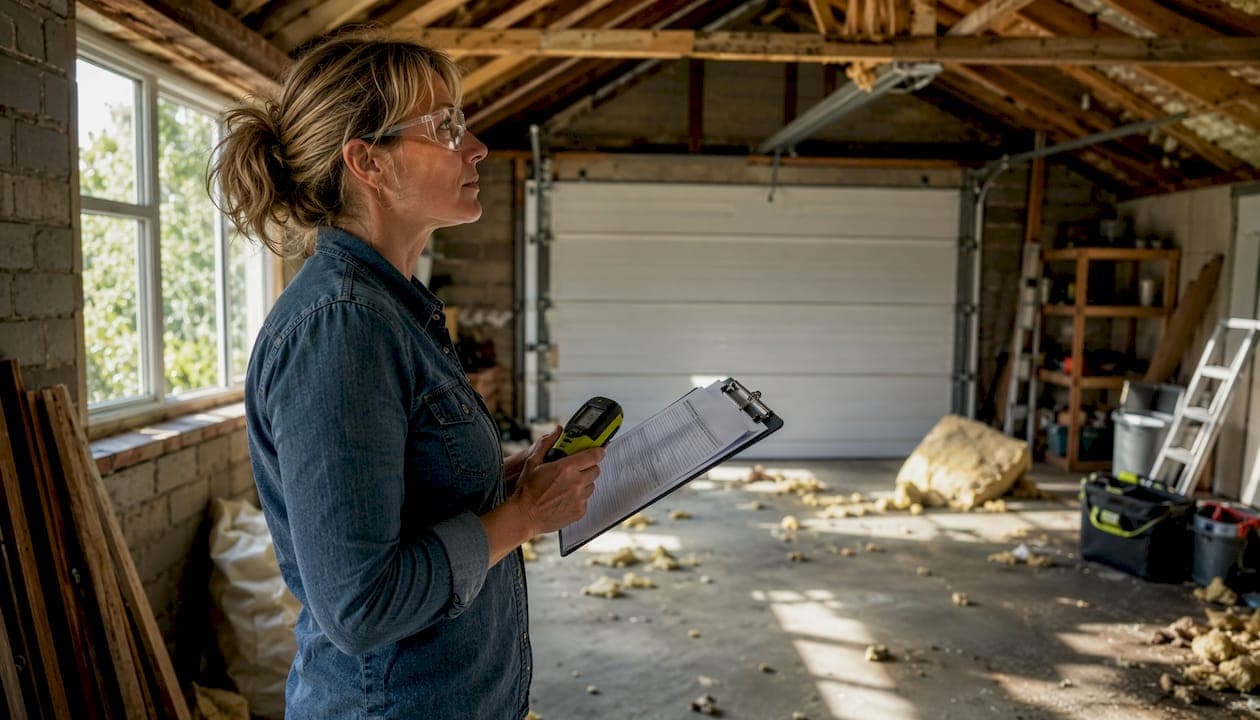
Most homeowners should commission a PCA-certified specialist for spray foam removal rather than attempt it themselves. The only exception is a small, accessible patch of open-cell foam in a well-ventilated loft where no mortgage, sale, or remortgage is pending. Before anything else, gather your installation paperwork, take photographs of the affected area, seal off living spaces from the loft, and contact a PCA-certified assessor or Revive Maintenance for a survey.
Why this matters immediately:
- Spray foam obscures roof timbers, creating a blind spot that prevents surveyors from assessing rot or structural damage.
- Major lenders either refuse or assess applications case-by-case when spray foam is present, according to BBC News reporting.
- Where installation paperwork and product certification (such as BBA certificates) exist, removal may not be necessary at all — an inspection can sometimes resolve the lender's concern without lifting a single rafter.
- Without documentation, an independent PCA, RPSA, or RICS inspection becomes the deciding document for your lender.
The TL;DR: spray foam removal is primarily a mortgage and timber-inspection issue. The process must produce a formal timber condition report and photographic record, not just an empty loft.
Table of Contents
- Should you DIY or hire a specialist?
- The step-by-step spray foam removal process
- What does spray foam removal cost in the UK?
- Mortgage and safety implications you need to understand
- What tools are used, and does WD-40 actually work?
- When should you call Revive Maintenance?
- Key takeaways
- What the team actually finds on site
- Revive Maintenance: certified removal across London and the South East
- Useful sources
- FAQ
Should you DIY or hire a specialist?
DIY is only reasonable when all of the following apply:
- The foam is open-cell, minimal in area, and in an accessible loft space.
- No mortgage, remortgage, or property sale is planned.
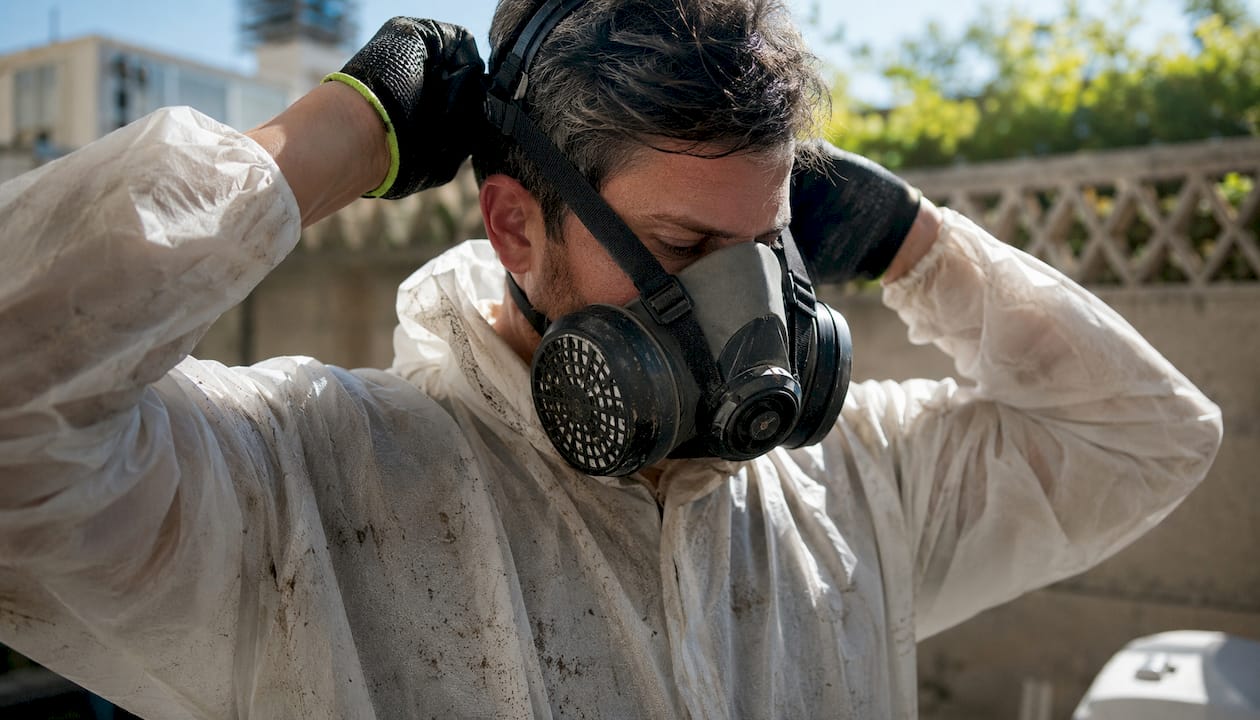
- You have appropriate PPE (P3 respirator, disposable suit, goggles) and can dispose of waste correctly.
- The timbers are already visible and clearly undamaged.
A specialist is required when:
- The foam covers roof rafters and a surveyor needs to inspect timber condition.
- You have closed-cell foam. Closed-cell foam is denser, harder to remove, and more likely to damage timber if handled incorrectly.
- A mortgage, sale, or remortgage is imminent and lender documentation is needed.
- Access is restricted, asbestos is suspected, or electrical isolation is required.
- You need a formal timber condition report for your lender.
Pro Tip: Before choosing DIY, call your mortgage lender and ask directly whether they require a PCA or RICS-aligned inspection report. Many do, which makes DIY removal insufficient regardless of how well it is carried out.
Using a PCA-certified team also preserves your remediation and insurance options. A 10-year insurance-backed warranty, such as the one offered by Revive Maintenance, is only available through certified professionals and cannot be replicated with a DIY approach.
The step-by-step spray foam removal process
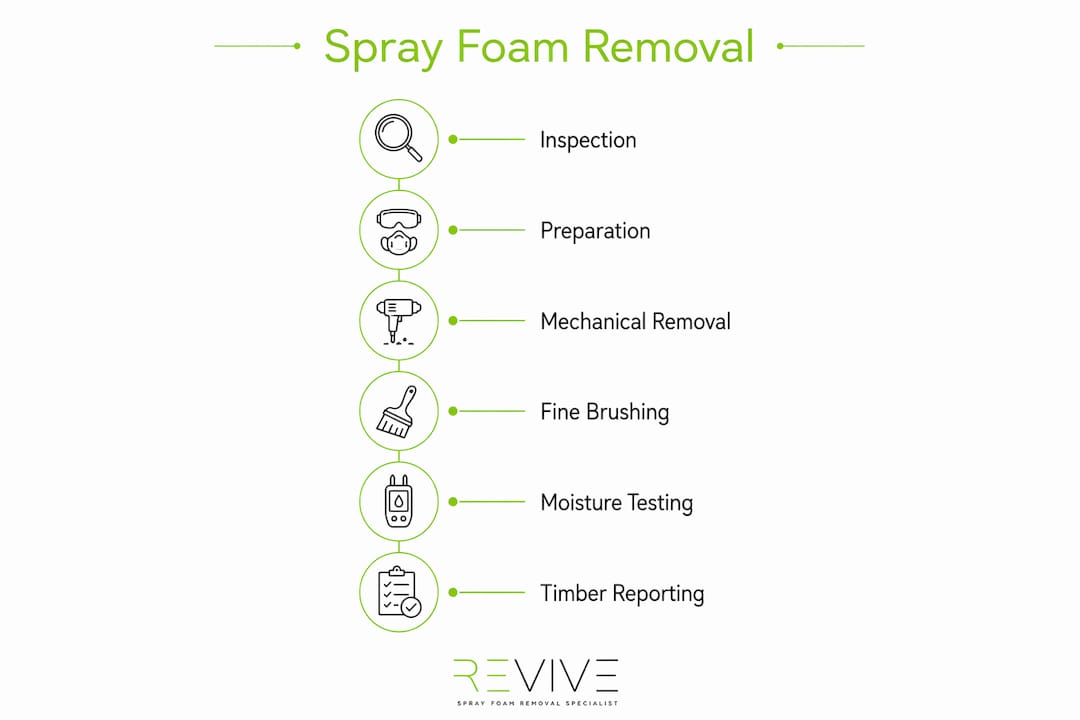
A professional removal follows a clear sequence: survey, containment, mechanical extraction, fine cleaning, timber assessment, disposal, and documentation. Here is what actually happens on site.
-
Site survey and risk assessment. A qualified technician assesses foam type (open or closed cell), thickness, coverage, timber visibility, moisture levels, ventilation routes, and roof structure condition. This determines the method, time required, and whether asbestos checks or electrical isolation are needed first.
-
Containment and preparation. Electrics are isolated where necessary. Wiring, pipework, and water tanks are protected. Dust containment sheeting is laid, and negative-pressure containment is established to prevent airborne particles reaching living spaces, following mold removal safety best practices for homeowners.
-
Mechanical extraction, rafter by rafter. Professionals use oscillating multi-tools, hand scrapers, insulation saws, and wire brushes to remove foam layer by layer. Mechanical removal is the industry standard. Chemical solvents and high-pressure water are avoided because they soak timber and can accelerate rot or weaken structure.
-
Fine brushing and residue removal. Once bulk foam is cleared, stiff wire brushes remove residue from timber surfaces. This stage is not optional for mortgage purposes — it exposes the timber grain so moisture readings are accurate.
-
Timber inspection and moisture checks. Exposed rafters and joists are assessed for rot, insect damage, splitting, excessive moisture, and structural weakness. A moisture meter records readings at multiple points. Any damage found at this stage is documented and, where necessary, repaired before new insulation is installed.
-
Photography and formal report. The team photographs timbers before, during, and after removal. These images, alongside moisture readings, form the timber condition report that lenders and surveyors require. A removal quote that does not include this step is incomplete for mortgage purposes.
-
Waste disposal and site clean. All foam material is bagged and removed. Some spray foam products may be classified as specialist waste under UK regulations, requiring licensed disposal rather than a standard skip. The loft is cleaned so replacement insulation can be installed safely.
Safety controls used throughout:
- P3 or FFP3 respirators and full disposable coveralls
- Safety goggles and nitrile gloves
- HEPA-filtered extraction vacuums and air scrubbers
- Negative-pressure containment sheeting
- Asbestos checks before work begins in older properties
- Electrical isolation where circuits run through the loft
What photos should you take as the homeowner? Before the team arrives, photograph the full loft from the hatch, close-ups of foam coverage on each rafter, any visible staining or discolouration, and any existing insulation. These images support the survey and can help resolve lender queries faster.
What does spray foam removal cost in the UK?
Costs start from around £40 per m², with Checkatrade estimating the total removal cost at approximately £3,200 for a typical three-bedroom detached property. Closed-cell foam, restricted access, and significant timber repairs push costs higher.
| Cost item | Typical range |
|---|---|
| Removal (open-cell foam) | From £40 per m² |
| Removal (closed-cell foam) | Higher than open-cell; varies by thickness |
| Three-bed detached (example) | Approximately £3,200 total, based on Checkatrade estimates (which reflects both area and typical full-property removal) |
| Timber repairs (if needed) | Variable; quoted separately |
| Replacement insulation (e.g. Superfoil) | Quoted separately |
| Specialist waste disposal | Included or quoted separately |
Timeline:
- Survey and quote: typically within a few days of enquiry.
- Removal: commonly 2–7 days depending on loft size, foam type, and access.
- Timber assessment and final report: a few days to a week after removal.
- Full remediation including replacement insulation: up to two weeks in total.
Factors that increase cost: closed-cell foam, thick application, poor loft access, contamination, required timber repairs, and regional labour rates in London and the South East.
There is no general government funding to cover removal costs. Where the foam was poorly installed, homeowners should pursue remediation through the original installer or escalate via TrustMark dispute resolution.
Mortgage and safety implications you need to understand
The central issue for lenders is not that spray foam is inherently hazardous. It is that foam prevents a surveyor from seeing whether timbers are sound. RICS guidance confirms that surveyors need clear access to assess the roof structure, and the PCA inspection protocol was developed specifically to standardise how lenders and surveyors assess risk and accept remedial reports.
Actionable steps for remortgage or sale:
- Locate installation paperwork, guarantees, and any BBA or product certificates.
- If paperwork is missing, contact the original installer or manufacturer first.
- Commission an independent PCA, RPSA, or RICS-aligned inspection.
- Obtain a formal timber condition report with photographic evidence.
- Share the report with your lender or mortgage broker before listing the property.
Pro Tip: Ask your specialist to confirm in writing that the timber condition report meets your specific lender's requirements before work begins. Different lenders have different thresholds, and a report that satisfies one may not satisfy another.
What tools are used, and does WD-40 actually work?
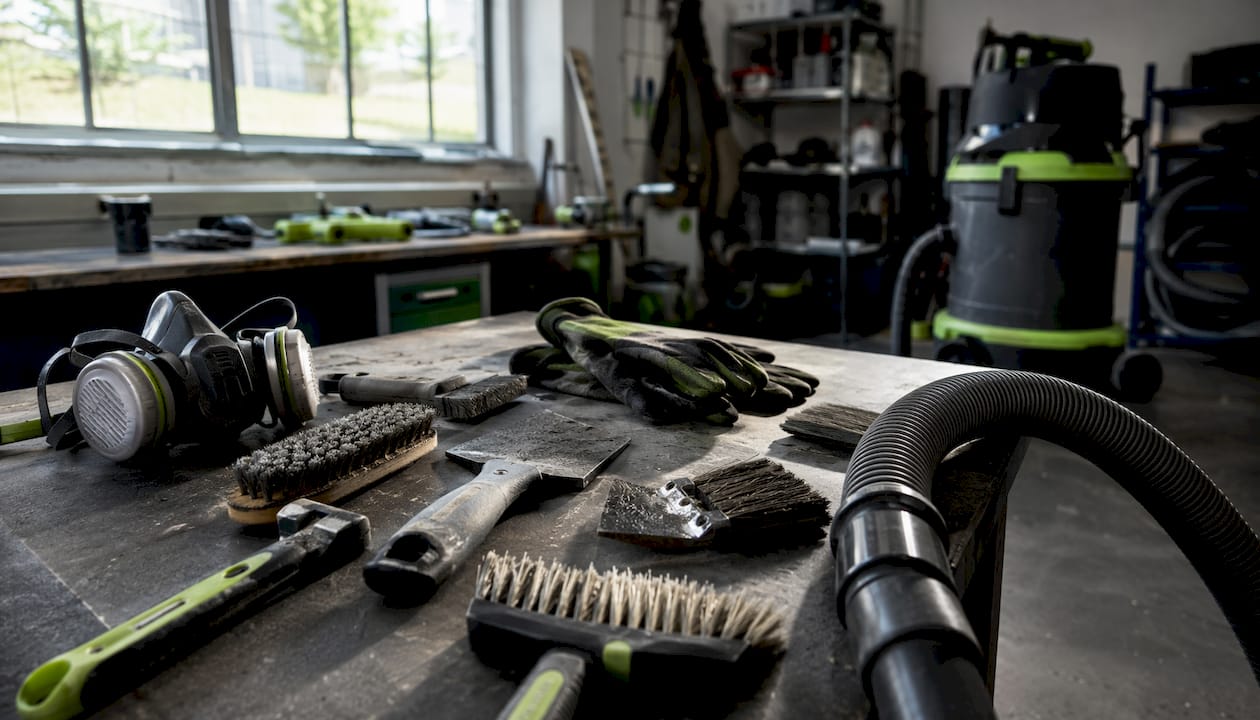
Removal is mechanical. The standard toolkit includes oscillating multi-tools, hand scrapers, wire brushes, insulation saws, HEPA-filtered extraction vacuums, air scrubbers, dust containment sheeting, moisture meters, and full PPE. Each tool has a specific role: oscillating tools cut through bulk foam without gouging timber; wire brushes clear residue from grain; moisture meters confirm the timber is dry enough for a clean report.
On WD-40 and cured foam: WD-40 has no meaningful effect on cured expanding foam. It can help loosen uncured foam or soften fresh accidental spills on hard surfaces, but once foam has fully set, mechanical removal is the only reliable method. Acetone-based solvents can soften some uncured foam on non-porous surfaces, but neither is appropriate for structural timber work and neither satisfies lender inspection requirements.
Pro Tip: For small accidental spills of uncured foam on skin or clothing, isopropyl alcohol or a dedicated foam cleaner applied immediately is more effective than WD-40. On timber, always use mechanical methods.
Regarding disposal: some spray foam products are classified as specialist waste under UK environmental regulations. Check with your specialist whether licensed disposal is included in the quote or charged separately. Fly-tipping foam waste carries significant penalties.
When should you call Revive Maintenance?
Call a PCA-certified specialist when the foam obscures rafters, when closed-cell foam is present, when a mortgage or sale is pending, or when access and safety are concerns. These are not edge cases — they describe the majority of homeowners who contact Sprayfoamremovalhelp.
What Revive Maintenance provides:
- PCA-certified survey and risk assessment
- Full mechanical removal (open and closed cell)
- Fine brushing, moisture checks, and formal timber condition report
- Mortgage-compliant certification and documentation
- Replacement insulation options including Superfoil
- PCA/RICS certification booking for lender submission
Trust signals: PCA certification, a 10-year insurance-backed warranty, over 1,000 homeowners served across London and the South East, and direct contact with the in-house technicians carrying out the work. No middlemen, no hidden fees.
Pro Tip: Book a free inspection before committing to any removal quote. A proper site survey often reveals whether full removal is necessary or whether existing documentation can resolve the lender's concern without lifting a rafter.
Key takeaways
Most homeowners need a PCA-certified specialist to remove spray foam and produce the timber condition report that mortgage lenders and RICS surveyors require.
| Point | Details |
|---|---|
| Specialist removal is usually needed | DIY is only appropriate for small, non-structural patches where no mortgage is involved. |
| Mechanical extraction is the standard | Oscillating tools and wire brushes, rafter by rafter; solvents and water damage timber. |
| Costs start from around £40 per m² | Checkatrade estimates approximately £3,200 for a three-bed detached property. |
| Documentation is as important as removal | A formal timber condition report with moisture readings and photos is what lenders need. |
| Sprayfoamremovalhelp offers certified removal | Revive Maintenance provides PCA-certified surveys, removal, and mortgage-compliant reports across London and the South East. |
What the team actually finds on site
A PCA-certified team typically finds either no timber damage at all or limited rot that is fully repairable. The risk is not the foam itself — it is when foam has been hiding slow-running decay for years, and nobody knew until a surveyor flagged the property.
A common scenario: a homeowner contacts Sprayfoamremovalhelp after a lender rejects their remortgage application. The survey reveals closed-cell foam applied directly to rafters with no ventilation channel, and moisture readings above acceptable thresholds in two bays. Removal takes three days, timber repairs take one more, and the final certified report is submitted to the lender within ten days of the initial call. The remortgage proceeds.
That outcome depends entirely on using a certified team with the right equipment and the authority to produce a report lenders will accept. A 10-year insurance-backed warranty and direct technician contact mean you know exactly who is accountable from survey to certification.
Revive Maintenance: certified removal across London and the South East
If you need mortgage-compliant spray foam removal, Revive Maintenance offers something straightforward: PCA-certified technicians who carry out the survey, the removal, and the timber assessment themselves, with no subcontractors and no hidden costs.

The service covers London and the South East and includes a full mechanical removal, fine brushing, moisture readings, a formal timber condition report, and a 10-year insurance-backed warranty. Replacement insulation options, including Superfoil, are available immediately after removal. Over 1,000 homeowners have used Sprayfoamremovalhelp to resolve lender rejections and complete sales that were stalled by spray foam.
If your situation is urgent, same-day emergency removal is available for homeowners facing imminent exchange or lender deadlines. For everyone else, book a free home inspection and get a clear, honest assessment of what your property actually needs.
Useful sources
- RICS consumer guide on spray foam insulation — Explains how spray foam affects valuations, home surveys, and lender decisions; the primary reference for surveyor requirements.
- House of Commons Library briefing (CBP-10658) — Covers the mortgage implications of spray foam, confirms no government funding for removal, and outlines TrustMark escalation routes.
- BBC News: major lenders reject homes with spray foam — Documents lender behaviour and case-by-case assessment policies.
- Checkatrade cost guide: removing roof foam insulation — Market-anchored cost data including per-m² rates and whole-house examples.
- PCA inspection protocol (via Clearview Mortgage Solutions) — Explains the PCA's standardised inspection protocol and how it supports lender acceptance of remedial reports.
- Insulation Manufacturers Association: spray foam removal — Industry body guidance on the blind-spot problem and the role of documentation.
FAQ
Can spray foam be easily removed from a loft?
Spray foam can be removed, but it is rarely straightforward. Open-cell foam is more accessible; closed-cell foam is denser and requires more time and specialist equipment to extract without damaging rafters.
How much does spray foam removal from a loft cost in the UK?
Costs start from around £40 per m², with Checkatrade estimating the total removal cost at approximately £3,200 for a typical three-bedroom detached property. Closed-cell foam, poor access, and timber repairs increase the total.
Does WD-40 remove cured expanding foam?
No. WD-40 has no meaningful effect on fully cured foam. Mechanical removal using scrapers and wire brushes is the only reliable method; WD-40 may help with fresh, uncured spills on hard surfaces only.
Why are homeowners removing spray foam insulation?
The most common reason is a mortgage or remortgage rejection. Lenders require surveyors to inspect roof timbers, and spray foam prevents that inspection, triggering case-by-case reviews or outright refusals by major lenders.