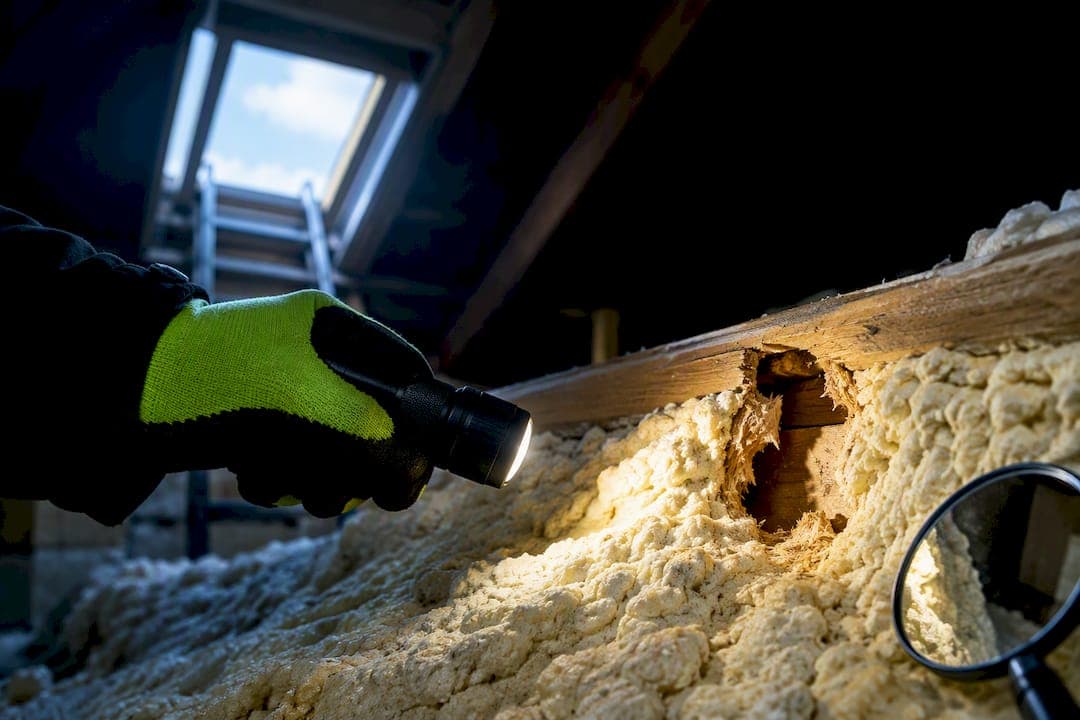
Spray foam helps stop mice by sealing the hairline cracks they use to enter, but it is not automatically chew-proof. Closed-cell foam resists rodents far better than open-cell, and even then it usually needs reinforcement with steel wool or mesh to hold. If mice are already active in your insulation, never seal over them. Evict and treat the infestation first, then repair.
TL;DR:
- Closed-cell spray foam provides better resistance against mice than open-cell, but reinforcement with steel wool or mesh is necessary for long-term effectiveness.
- Gaps left around penetrations, uneven surfaces, or where foam is too thin can be chewed through, especially if foam is not properly reinforced or applied densely.
- Mice prefer fibrous insulation for nesting, so sealing entry points before infestation prevents them from setting up habitat inside walls or lofts.
- Pest control should always precede sealing to avoid trapping active nests, which increases odors, health risks, and insulation degradation.
- For significant infestations or damaged foam, professional removal and certification are recommended to ensure safe and compliant repair, especially for mortgage purposes.
Table of Contents
- How spray foam helps and where it fails
- Open-cell vs closed-cell: what to choose where rodent resistance matters
- What studies and inspections tell us about mice and insulation
- Practical sealing techniques: reinforcement and installation steps
- Remediation when mice have already infested foam or insulation
- Deciding between DIY, pest control, insulation contractors and specialists
- Monitoring and seasonal maintenance checklist
- Field perspective: common mistakes and priorities
- When specialist removal or certification is the right step
- Further reading and primary sources
- Sources
- FAQ
How spray foam helps and where it fails
Spray foam expands to fill the small, irregular gaps that mice actually use to get inside. Pipe penetrations, rim joists, gaps around cables, and hairline cracks in a loft floor are all classic entry points, and a well-applied bead of foam closes them in a way that loose fill or batt insulation simply cannot. That is genuinely useful. Air sealing with foam catches bypasses that a visual pest inspection often misses, and combining foam sealing with pest treatment reduces re-entry more reliably than either step alone.
The limitation is chewability. A mouse only needs a gap the width of a pencil to squeeze through, and its incisors can work through cured foam, particularly open-cell foam, if it senses an opening or a food source behind it. Foam on its own is a seal, not armour.
Watch for these common failure points:
- Foam applied too thin around large service penetrations, leaving a chewable edge exposed
- Gaps left where foam met an uneven surface, such as old brickwork or timber joists
- Cracks that reopen as a building settles, especially around loft hatches and soffits
- Foam applied without any mechanical backing in areas with known rodent pressure
Get the material right and the gaps sealed properly, and foam earns its place. Skip the reinforcement, and it is just a soft barrier waiting to be tested.
Open-cell vs closed-cell: what to choose where rodent resistance matters
Closed-cell spray foam is the stronger choice wherever rodent exclusion is the priority. It cures into a dense, rigid structure, whereas open-cell foam stays soft and spongy, which makes it easier for a determined mouse to tunnel through. Density is the whole story here: closed-cell foam typically cures far denser than open-cell, and that rigidity is what resists gnawing rather than merely resisting airflow.
Where each type tends to get used:
- Closed-cell: rim joists, external wall seams, foundation penetrations, and anywhere moisture resistance also matters
- Open-cell: loft rafter fills and interior cavities where sound dampening and lower cost outweigh pest risk
- Mixed approach: closed-cell at known entry points, open-cell elsewhere in the building envelope
The trade-off is cost and breathability. Closed-cell foam costs more per square metre and is less vapour-permeable, which can matter in older solid-wall properties prone to damp. UK-focused guidance recommends pairing closed-cell spray foam with mineral wool slabs in pest-prone spots, using each material where its strengths actually apply rather than defaulting to one type throughout a property. If you are unsure which combination suits your loft or wall build-up, a spray foam insulation guide is worth reading before you commit either way.
What studies and inspections tell us about mice and insulation
No insulation material tested so far is immune to mice, and that includes foam. A six-month trial from the University of Nebraska found mice caused significant damage across extruded polystyrene, fibreglass, rock wool and vermiculite, with mouse populations actually increasing inside the test panels over the course of the study.
Key finding: mice did not just chew through these materials to pass through them. They nested inside the cavities, meaning insulation became habitat, not just an obstacle.
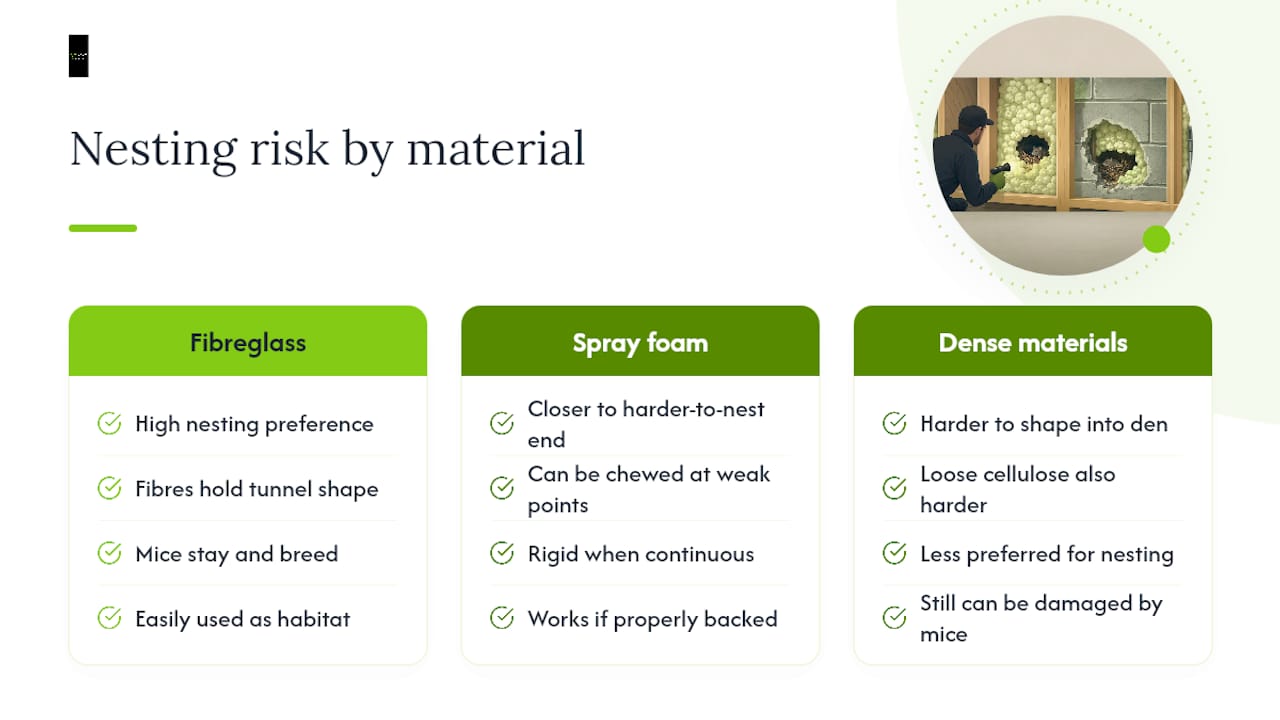
That distinction matters for how you plan remediation. Home inspectors report a related pattern: mice strongly prefer fibrous materials like fibreglass because the fibres hold a tunnel shape that suits nesting, while denser materials or loose cellulose are harder to shape into a den. Spray foam, once cured, sits closer to the "harder to nest in" end of that scale than fibreglass does, even though it can still be chewed through at weak points.
The practical takeaway for anyone planning new insulation or repairing existing coverage: prioritise closing the entry points a mouse would use to reach the cavity at all, because once mice are inside a fibrous material, they tend to stay and breed rather than pass through. Foam's rigidity works in your favour here, but only where it is continuous and properly backed.
Practical sealing techniques: reinforcement and installation steps
Foam alone is a partial answer. Pairing it with gnaw-proof mechanical materials at every known access point is what actually holds up over years, not months. Here is the order that works:
- Inspect first. Walk the loft, rim joists, and any external penetrations in daylight, looking for droppings, grease marks along skirting, or gaps you can fit a pencil through.
- Clear and clean the gap. Remove old fill, debris, or damaged material before you start, so foam bonds to a clean surface rather than trapping dirt against it.
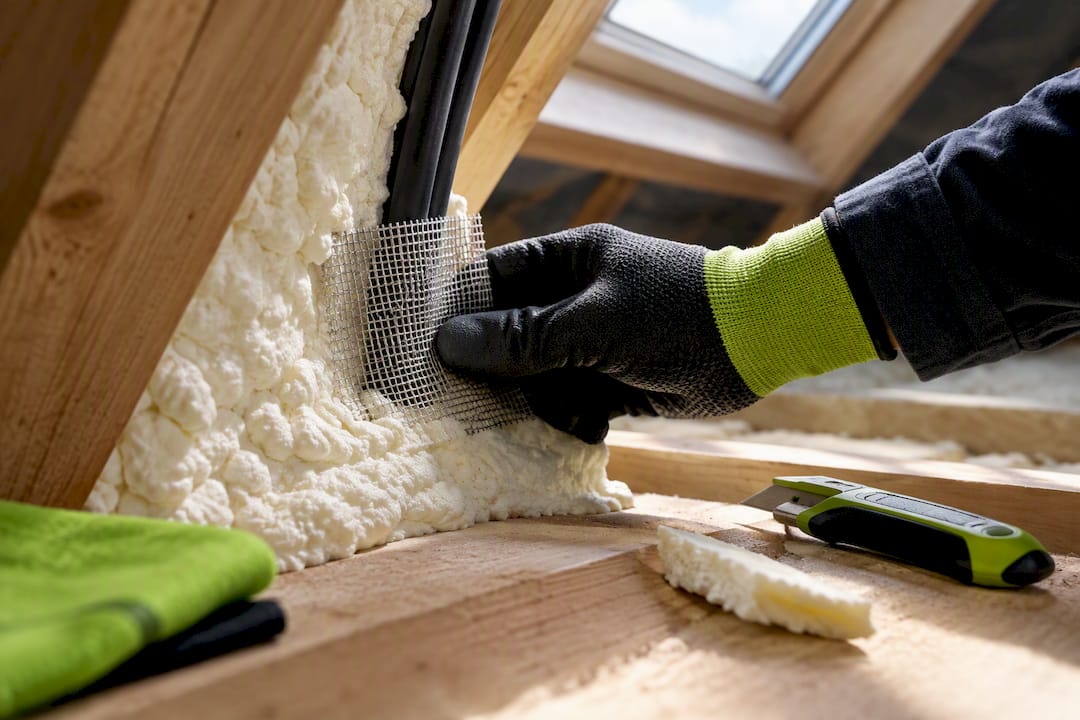
- Pack the gap with a gnaw-proof material. Steel wool, copper mesh, or galvanised hardware cloth pushed firmly into the opening gives foam something rigid to bond around, rather than leaving it as the only barrier.
- Apply closed-cell foam over and around the mesh. This locks the reinforcement in place and finishes the seal against draughts and moisture.
- Add a mechanical outer barrier where openings are large. Metal flashing or hardware cloth screwed over big penetrations, such as old vent holes or soil pipe gaps, stops mice from working at the foam's edge at all.
- Recheck the cure. Closed-cell foam should feel rigid within 24 hours; if it stays soft or spongy, the mix ratio or ambient temperature during application was likely wrong.
Pro Tip: Never rely on foam alone at rim joists or loft hatches. These two spots see the most rodent pressure in a typical home, and a strip of copper mesh behind the foam costs very little compared with redoing the seal in a year.
The most common installation mistake is rushing coverage across a whole loft floor while skipping the mesh at penetrations, because it feels like the fiddly, slow part. It is also the part that actually stops a mouse.
Remediation when mice have already infested foam or insulation
If mice are already living in your insulation, sealing the area is the wrong first move. Evicting and treating the infestation always comes before repair work, for reasons beyond simple pest control:
- Sealing over an active nest traps live and dead rodents inside the cavity, which leads to persistent odour as remains decompose
- Trapped urine and droppings degrade insulation performance and can encourage mould growth in the surrounding structure
- Contaminated insulation carries genuine health risks, including exposure to hantavirus and salmonella from rodent waste, so disturbing it without protection is unsafe
- Foam that has already been chewed through in multiple spots may have lost its air-sealing value entirely, regardless of how solid it looks from outside
Once the infestation is cleared and treated, the repair route depends on scale. A single chewed penetration with no wider nesting can often be patched locally: clean the area, reinforce with mesh, and reform. Where mice have tunnelled through a wider section of loft insulation or where contamination is spread across multiple bays, partial or full removal is the more sensible route, because patching around contaminated material just leaves a problem under a new layer.
Professional spray foam removal work typically starts with an inspection to map how far the damage runs, followed by safe extraction of the affected foam, replacement insulation, and documentation that satisfies a mortgage lender or surveyor asking questions about the loft's condition.
Deciding between DIY, pest control, insulation contractors and specialists
Small, isolated gaps around a single pipe or cable are reasonable DIY territory: mesh, a small foam kit, and twenty minutes of care usually gets you a solid result. Wider infestations, structural gaps, or anywhere you would need to disturb old foam are a different job, because rodent droppings and dust from cured foam are both things you do not want to breathe without proper equipment.
Before hiring anyone, ask:
- Are your technicians certified for spray foam removal or installation, and can you show relevant insurance?
- Will the work be mortgage-compliant, with documentation a surveyor or lender will actually accept?
- Do you coordinate with pest control, or will I need to arrange that separately before you seal anything?
- What warranty backs the work, and for how long?
Coordinated work tends to outperform either service on its own: pest control clearing the infestation, followed by targeted closed-cell sealing with metal backing, holds up longer than sealing done in isolation. If a contractor cannot answer where pest treatment fits into their process, that is worth noting before you book anything.
Monitoring and seasonal maintenance checklist
A seal that worked last year is not guaranteed to work this year, particularly as buildings settle and foam ages around its edges. Build a light seasonal habit around it:
- Check loft hatches, rim joists, and known penetration points every three months for fresh gnaw marks or new droppings
- Press firmly on cured foam at old repair points; if it feels soft or crumbly, the seal has likely degraded
- Keep a couple of low-cost snap traps near past entry points as an early-warning system, not a primary control method
- Note any new gaps that open up after cold weather, since freeze-thaw cycles are a common cause of reopened seams
Pro Tip: A torch and ten minutes each season catches most problems while they are still a five-minute fix, rather than a full loft clearance six months later.
Field perspective: common mistakes and priorities
The mistake seen most often on site is sealing straight over signs of activity, using soft filler with no backing, because it looks finished from below. Nests get trapped, odour builds, and the "fix" fails within months. Pest control and sealing need to happen in that order, every time. Specialist removal and certification work exists precisely to catch what a quick DIY patch misses.
— jessica
When specialist removal or certification is the right step
If you have read this far and you are staring at chewed foam, a musty smell from the loft, or a mortgage survey that has flagged the insulation, it is time to stop patching and get a proper look. A direct alternative to going through a call centre or a lead-selling website is to speak straight to technicians actually doing the work, with fixed, transparent pricing and no hidden fees.

A specialist visit typically starts with a survey to establish how far contamination or damage has spread, followed by safe extraction of affected foam, replacement insulation, and paperwork that satisfies a lender or surveyor. That last part matters more than most homeowners expect: undocumented spray foam removal is a common reason a sale or remortgage stalls. Some providers back their work with a 10-year insurance-backed warranty and have completed jobs for numerous homeowners in the London and Southeast areas.
If your loft shows signs of rodent activity in or around the foam, start with a survey and cost estimate to see what removal or reinforcement would actually involve, or browse the full range of survey and certification services if you need documentation for a sale or remortgage.
Further reading and primary sources
For deeper reading on the evidence behind this guide: the University of Nebraska's rodent damage study, UK pest-proof insulation guidance, and practical advice on air sealing against attic mice. Homeowners tackling draughts elsewhere in the house may also find this guide to draught-proofing doors useful, since gaps around doors are another common rodent entry route.
Sources
- Rodent damage to insulation (University of Nebraska research)
- Do mice eat spray foam insulation? - Barrie Pest
- Pest-proof insulation for UK homes - Axiom Eco Homes
- Are your recommendations based on accurate information? - ASHI reporter
FAQ
Will mice get into spray foam insulation?
Yes, mice can get into spray foam insulation, particularly open-cell foam or foam applied without mechanical backing at gaps and penetrations. Closed-cell foam resists chewing far better once cured, but no foam type is completely immune, so reinforcement at known entry points still matters.
What gets rid of mice immediately?
Snap traps and sealing off food sources give the fastest results for a small, early infestation, while larger or established infestations usually need a pest control professional to clear safely. Whatever method you use, treat the infestation fully before sealing any gaps, since sealing over an active nest traps rodents inside the cavity.
What smell do mice absolutely hate?
Peppermint oil is the scent most commonly cited as a mouse deterrent, though it works better as a short-term repellent near entry points than as a standalone solution. It is not a substitute for physical exclusion. A mouse motivated by shelter or food will usually push past a scent it dislikes if the gap behind it is still open.
What sealant can mice not chew through?
No single sealant is entirely chew-proof, but steel wool, copper mesh, and galvanised hardware cloth packed into a gap before foam is applied come closest, because mice cannot easily gnaw through metal fibres. Closed-cell spray foam applied over that mesh backing gives you both the air seal and the mechanical barrier in one repair.