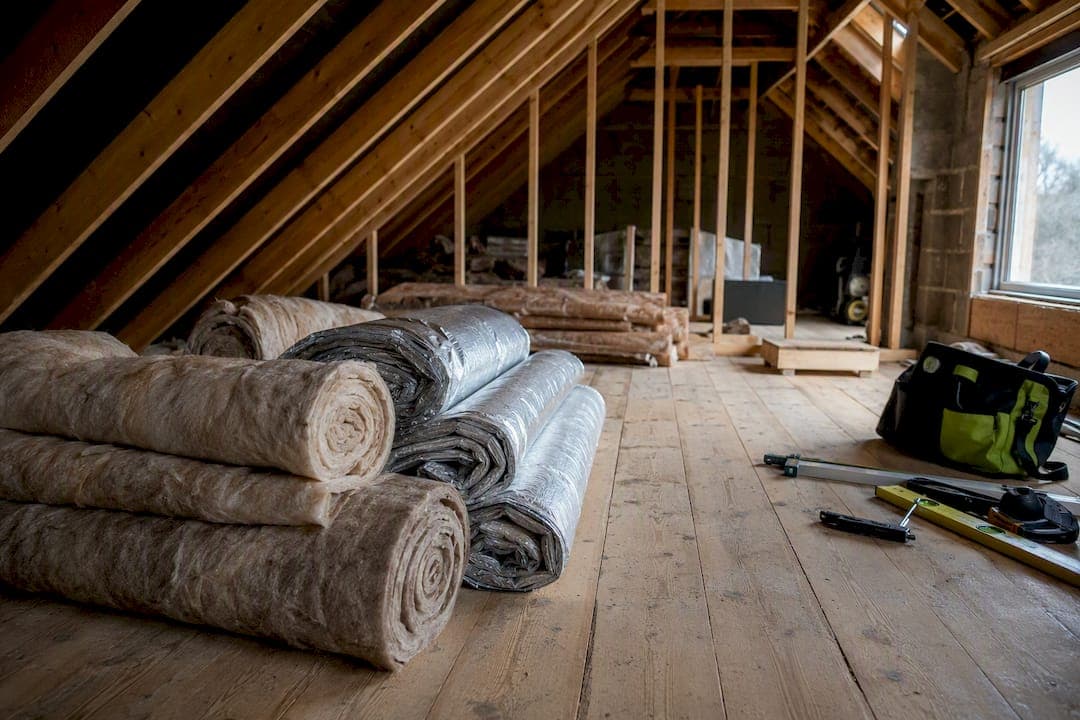
Professional SuperFOIL installation costs vary widely depending on size and complexity, generally ranging from lower amounts for small loft voids to higher amounts for large or complex roof lining jobs, with average costs for semi-detached and terraced properties sitting in the mid-range. That figure covers survey, materials, labour, VAT and access, but certification, the paperwork lenders actually want to see, is not always automatically included. Whether a mortgage lender or surveyor accepts the work later depends far more on the installer's credentials and documentation than on the total you paid.
TL;DR:
- Accurate quotes require a detailed, itemized breakdown of survey, materials, labour, VAT, and certification to avoid hidden costs or insufficient documentation.
- Costs increase significantly for complex roof types, difficult access, or when existing insulation requires removal or remediation before installing SuperFOIL.
- Lenders prioritize proper documentation, including signed certificates and photographic evidence, over product claims, making certification essential for mortgage approval.
- Most installations take one to three days, depending on scope, with minimal disruption if the site is prepared and stored items are clear beforehand.
- Choosing certified, insured installers ensures compliance with building regulations, protects your budget, and simplifies mortgage or sale processes.
Table of Contents
- What does superfoil insulation cost actually include?
- What factors push the price up or down?
- What do lenders and surveyors expect for mortgage compliance?
- How do you get an accurate, mortgage-compliant quote?
- How long does the job take and how disruptive is it?
- Why certified, insured installation actually protects your budget
- How Revive Maintenance handles SuperFOIL installation and certification
- Sources
- FAQ
What does superfoil insulation cost actually include?
A superfoil insulation cost quote should never be a single number scrawled on the back of a van. It's a breakdown of five distinct elements, and knowing what each one covers helps you spot a lowball quote that will cause problems later, or a fair one you can defend to a surveyor.
The site survey comes first. A proper installer assesses roof structure, existing insulation, ventilation paths and any timber issues before quoting, because SuperFOIL performs differently depending on what it's being fitted against. Skipping this step is the single biggest reason quotes go wrong later.
Materials are the SuperFOIL multifoil product itself, plus tape, battens, and fixings. Labour varies by job type: some installers charge a fixed job price for standard lofts, others charge by the day for larger or irregular roofs, and team size (one or two fitters) affects both speed and cost.
- Access and waste: scaffolding for pitched roof exteriors, loft boarding removal, and disposal of old insulation material
- VAT: charged at the standard rate on most residential installation work
- Certification: an installation certificate and photographic record, sometimes bundled in, sometimes billed separately
Professional installation costs for SuperFOIL projects vary by property type and scope, and industry cost guides confirm that a compliant quote should always itemise survey, materials, labour, VAT and certification separately rather than folding them into one vague figure.
Worked examples: a two-bedroom terrace loft with easy access typically sits near the lower end of the range. A detached house with a converted loft, pitched roof lining and boarded storage space pushes towards the top, especially where scaffolding is needed for external access to gable ends.
What factors push the price up or down?
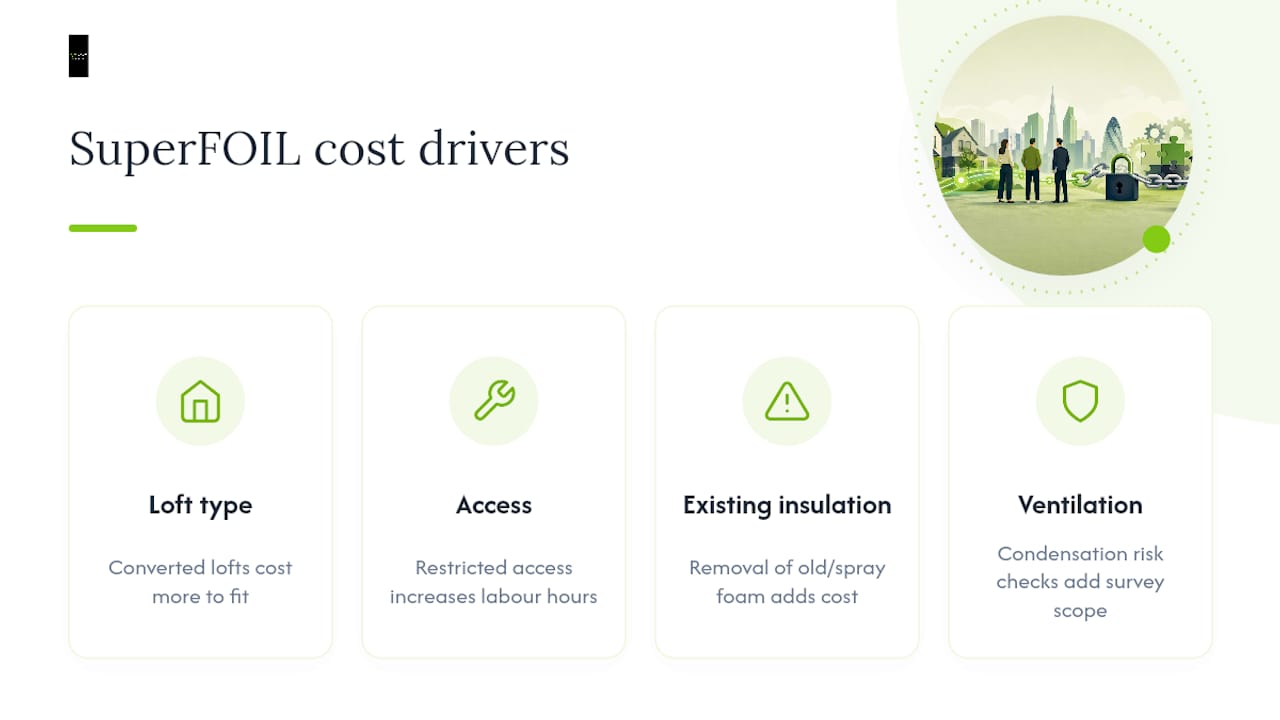
The element being insulated matters most. A simple loft void between joists costs far less to insulate than a converted loft with pitched roof lining, where SuperFOIL has to be fitted around rafters, dormers and awkward junctions.
Access difficulties add cost quickly. A cramped loft hatch, restricted headroom, or a roof that needs scaffolding for external work all add labour hours before a single roll of insulation goes up. Non-standard roof structures, older timber, unusual truss spacing, or signs of past damp, often trigger additional timber checks that a careful installer should flag during the survey rather than after the invoice arrives.
Existing insulation is another major variable. If there's old, degraded material in the loft, or worse, spray foam that needs removing before SuperFOIL can go in, the job changes shape entirely. Removal and remediation work is a separate cost line, and it can be substantial if timber inspection or repair is needed underneath.
Ventilation and condensation risk assessments can also add scope. Surveyors increasingly expect evidence that a loft won't trap moisture once multifoil is fitted, particularly in older properties with limited roof ventilation. Local authority building control requirements vary by area too, and some councils ask for more detailed evidence of compliance than others before signing off thermal element work.
What do lenders and surveyors expect for mortgage compliance?
This is where most cost-conscious buyers get caught out. RICS guidance makes clear that lenders and surveyors focus less on the product name and far more on whether the installation is properly documented: a signed contract, an installation certificate, and photographic evidence of the work.
Because multifoil R-value claims vary enormously depending on the test method used, local authority technical notes recommend installers use products carrying an Agrement or BBA certificate wherever one exists, since this gives building control a recognised standard to check against rather than a manufacturer's own marketing figures.
A mortgage-ready paperwork trail usually includes:
- An installation certificate referencing the product's accredited test or Agrement details
- A signed scope of works matching what was actually installed
- Before-and-after photographs of the roof void or loft space
- A statement on how the work affects the element's U-value, since Building Regulations link insulation upgrades to Approved Document L standards
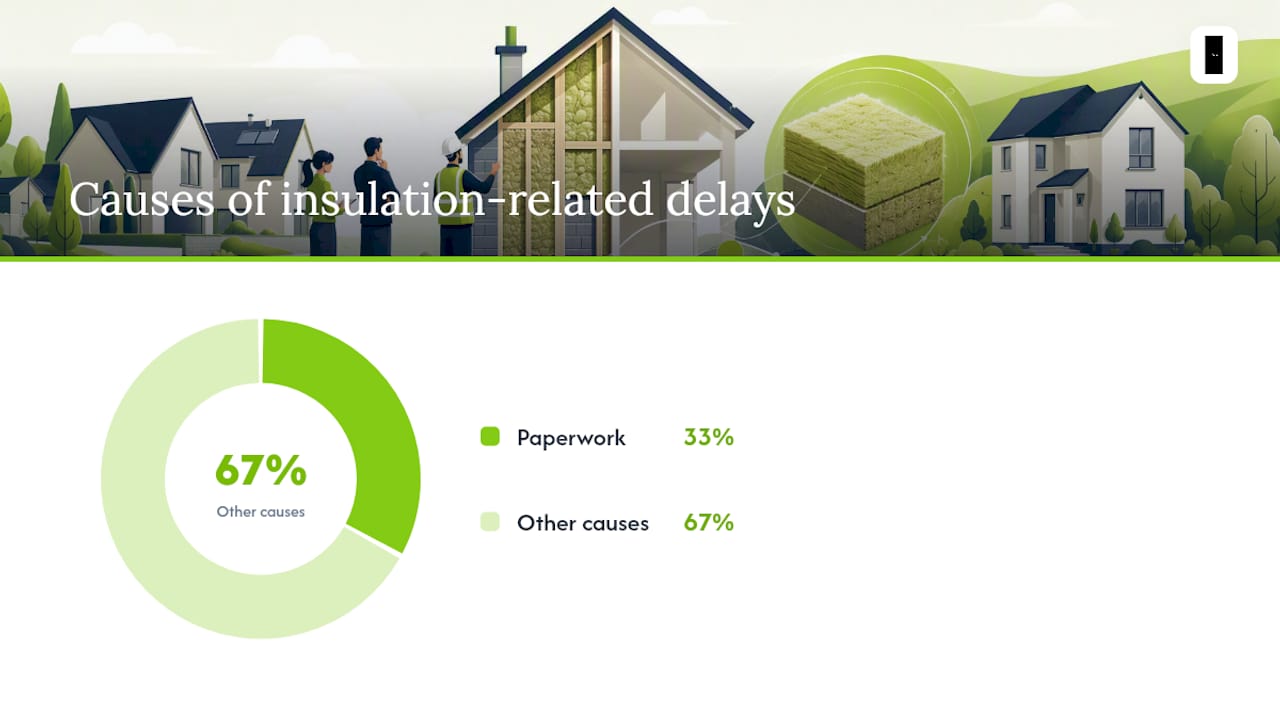
Roughly one in three insulation-related mortgage delays traces back to missing or inadequate paperwork rather than the quality of the physical work itself, and Mortgage Strategy has reported that lenders will refuse to proceed until problematic installations are either removed or professionally rectified. If your paperwork is missing, expect the surveyor to flag it, the lender to pause the case, and you to be scrambling for retrospective documentation that some installers simply can't produce months later.
How do you get an accurate, mortgage-compliant quote?
Getting this right at the quote stage saves weeks of stress at the mortgage stage. Work through this checklist with every installer you speak to.
- Book an on-site survey first. Never accept a phone or photo-based quote for a job that needs to satisfy a lender later.
- Insist on an itemised written quotation covering survey, materials, labour, VAT, access and certification as separate lines.
- Ask for accreditation and insurance proof. Competent installers typically hold at least £2 million in public liability cover, and you should ask to see it.
- Request sample installation paperwork so you know what certificate you'll actually receive at the end.
- Confirm before-and-after photographs are standard practice, and ask how the installer would explain the U-value change if a surveyor queries it.
- Check warranty terms, ideally an insurance-backed warranty that survives if the installer ceases trading.
Pro Tip: Ask every installer the same question: "If my mortgage surveyor asked for proof this meets Building Regulations tomorrow, what would you send me?" A confident, specific answer separates the installers who understand mortgage compliance from those who've never been asked.
How long does the job take and how disruptive is it?
Most straightforward loft installations take a single day, once the survey and quote stage is complete. Larger converted lofts or full pitched roof lining jobs can run two to three days. Anything involving removal of old spray foam or timber repair extends the timeline considerably, since remediation and re-insulation are effectively two projects run back to back.
Expect on the day:
- Noise from cutting and fixing battens, particularly in the morning
- Some dust, especially if old insulation is being cleared out first
- Restricted access to loft space and possibly one bedroom below the work area
- Vans and equipment on the drive or street for the day
Cover stored items in the loft beforehand and clear a path to the hatch. It saves the installer time, which keeps your final invoice closer to the quote.
Why certified, insured installation actually protects your budget
Surveyors don't flag SuperFOIL itself. They flag missing certificates, unverifiable R-values, and installers who can't produce a signed scope of works. That's the gap PCA-certified, insurance-backed installation closes, and it's the difference between a smooth remortgage and a stalled one.
For estate agents: if a property has recent insulation work, ask the seller for the installation paperwork before you list it. A missing certificate is a question every buyer's surveyor will ask, and it's far easier to answer before an offer than during a chain.
— jessica
How Revive Maintenance handles SuperFOIL installation and certification
Revive Maintenance installs SuperFOIL with the same standard we apply to every job: PCA-certified technicians, direct pricing with no middlemen marking up the invoice, and paperwork built for mortgage scrutiny from day one, not assembled retrospectively when a surveyor asks for it.

If you've read this far because a remortgage, sale, or surveyor's report is on the horizon, the honest next step is getting your loft or roof looked at by someone who installs and removes both SuperFOIL and spray foam daily across London and the South East. We've served over 1,000 homeowners, back every job with a 10-year insurance-backed warranty, and you deal directly with the technician doing the work, not a call centre reading from a script. Whether you need a fresh installation, a certification check on existing work, or a full assessment before you list a property, book a free inspection and get a written, itemised quote you can hand straight to a lender.
Sources
For regulatory detail beyond this guide, consult RICS's consumer guidance on insulation, Planning Portal's notes on Building Regulations and Part L, and our own breakdown of multifoil building regulations for UK homeowners.
- RICS consumer guide: spray foam insulation
- Planning Portal: building regulations — insulation and thermal elements
- RICS launches guidance on the use of spray foam (Mortgage Strategy)
- Local authority technical note: use of multifoil insulation
FAQ
Is certification always included in a superfoil insulation cost quote?
Not always. Some installers bundle the installation certificate and photographic record into the total price, while others charge it as a separate line, so always ask before comparing quotes.
Why would a mortgage lender query SuperFOIL installation?
Lenders and surveyors care about documentation, not the product name, so an installation without a signed contract, certificate, or photographic evidence can trigger delays under RICS guidance.
Does SuperFOIL need Building Regulations approval?
Work that alters a thermal element like a roof or loft usually falls under Building Regulations Part L, which may require U-value evidence from the installer.
How much does professional SuperFOIL installation typically cost?
Most UK jobs typically cost from a lower amount for small, easy-access lofts to higher amounts for large or complex roof lining projects, with survey, materials, labour and VAT all included.
What should I do if my existing insulation lacks proper certificates?
Book an independent inspection before a sale or remortgage rather than waiting for a surveyor to flag it, since Revive Maintenance's free inspection can identify gaps and produce mortgage-ready paperwork before they cause a delay.