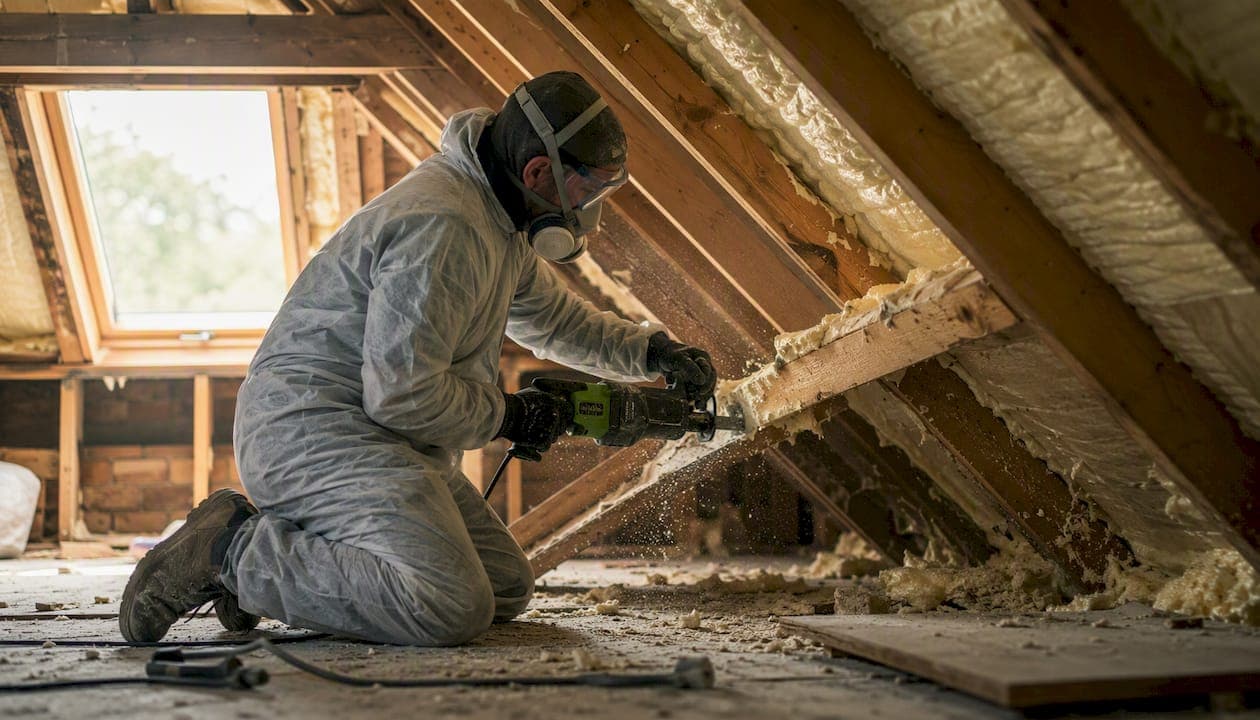
Some lenders will consider a property with spray foam insulation, but most require independent, mortgage-grade evidence before they will proceed. If your home has spray foam in the roof space, take three steps now: gather every piece of original paperwork from the installer, commission an independent specialist report that follows PCA inspection protocols, and speak to a mortgage broker who has experience placing loans on post-foam properties. Those three actions resolve the majority of lending problems before they reach a full refusal.
The core issue is not the foam itself. It is that surveyors cannot inspect roof timbers once foam covers them, which forces a conservative valuation. The BBC has reported that a sizeable minority of major UK lenders will not lend against homes with spray foam in the roof, citing trapped moisture and the inability to inspect the structure beneath. That does not mean every door is closed. It means you need the right paperwork, and sometimes the right specialist, to open them.
Key takeaways
Lenders and spray foam are not an impossible combination, but the outcome depends almost entirely on the quality of the evidence you can provide.
| Point | Details |
|---|---|
| Lender stance varies | Some lenders decline outright; most operate case-by-case and require an independent PCA-protocol specialist report. |
| Paperwork is decisive | Retain BBA or Kiwa product certificates, the installation contract, installer warranty, and an independent specialist report. |
| Independent report beats installer certificate | Lenders trust a third-party PCA-protocol report over an installer's own completion certificate. |
| Removal is not always necessary | Where a specialist report confirms low risk and documentation exists, removal may not be required. |
| Sprayfoamremovalhelp | Provides PCA-protocol inspections, certified removal, completion reports, and a 10-year insurance-backed warranty across London and the Southeast. |
Table of Contents
- What spray foam insulation is and why its location matters
- Why lenders and surveyors are concerned about spray foam
- How lenders currently treat properties with spray foam
- What documents lenders usually ask for
- Practical steps if you have spray foam or are buying a property that does
- How professional removal and mortgage-compliant certification work
- Typical costs and timescales for inspections, removal, and resolving lender objections
- Official guidance homeowners should consult
- What the paperwork problem really looks like in practice
- Sprayfoamremovalhelp resolves the mortgage problem, not just the foam
- Sources
- FAQ
What spray foam insulation is and why its location matters
Spray polyurethane foam (SPF) is a two-component insulation material applied as a liquid that expands and sets hard within seconds. There are two main types, and they behave very differently.
Closed-cell foam is dense, rigid, and largely impermeable to moisture. It bonds tightly to timber and is difficult to remove without risk of damage to the structure beneath. Open-cell foam is softer, more flexible, and allows some vapour movement, but it still obscures roof timbers from visual inspection.
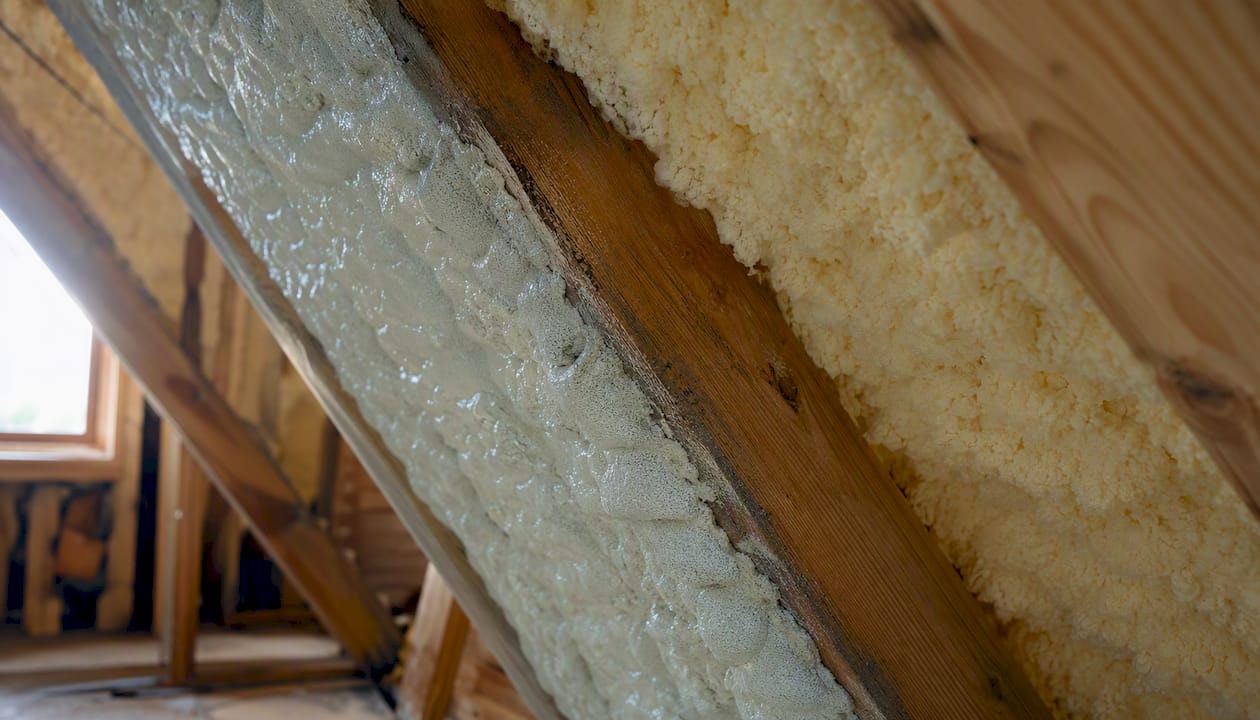
Both types are commonly sprayed directly onto the underside of roof rafters, filling the space between the tiles and the loft floor. That is the location that concerns lenders. When foam is applied at ceiling level, below the joists, it is far less likely to trigger a valuation problem because the roof structure remains accessible. Roof-level application is the scenario this guide addresses throughout.
The thermal performance of spray foam is genuine. The problem for lenders is structural, not thermal:
- Foam bonds to and conceals roof timbers, preventing visual inspection for decay, beetle damage, or inadequate repairs.
- Closed-cell foam, in particular, can trap moisture against timber if incorrectly specified or applied to a roof that was already damp.
- Removal, once the foam has cured, can be disruptive and costly, which affects the property's residual value in a lender's eyes.
- Older or uncertified installations carry unknown product specifications, making risk assessment harder.
Why lenders and surveyors are concerned about spray foam
The single biggest driver of mortgage refusals on post-foam homes is a valuation process limitation, not a blanket policy decision. When a surveyor visits a property and finds spray foam covering the roof timbers, they often cannot complete a standard visual inspection. Faced with that constraint, many issue a nil valuation or a reduced valuation pending a specialist report. That triggers a refusal at the lender's underwriting stage, even when the lender's own policy is technically case-by-case.
Beyond the inspection problem, there are genuine technical risks. Incorrectly specified foam, particularly closed-cell products applied to roofs with pre-existing moisture, can accelerate timber decay by trapping water against the wood. Industry experts emphasise that the problem is frequently poor or uncertified past installations rather than the foam product itself. Correctly installed, certificated foam should not automatically prevent lending. The difficulty is that many installations carried out during the Green Homes Grant period and before lacked independent quality assurance, leaving homeowners with foam but no credible paperwork.
Surveyors also face professional indemnity pressure. Signing off a property where they cannot see the structure creates personal liability risk, so conservative decisions are rational from their perspective.
The RICS consumer guide on spray foam is clear: spray foam is a significant modification to a property. Homeowners should retain the original installation contract, independent test certificates such as BBA or Kiwa approvals, and any warranties. Without these, valuers and lenders have no objective basis on which to assess the property, and a conservative decision becomes the only defensible one.
How lenders currently treat properties with spray foam
Lender policy is not uniform. Querying multiple lenders reveals a spectrum of responses, and the House of Commons Library briefing on spray foam and mortgages confirms that some homeowners have struggled to remortgage or sell, while government advice is that correctly installed foam should not necessarily require removal.
| Lender policy category | What it means in practice |
|---|---|
| Blanket decline | Lender will not consider any property with spray foam in the roof, regardless of paperwork. Application must go elsewhere. |
| Case-by-case with specialist report | Lender will proceed if an independent PCA-protocol specialist report confirms low risk and adequate installation. Most common category. |
| Will lend with installer documentation | Lender accepts original BBA/Kiwa certificates, installer warranty, and completion report without requiring a separate independent inspection. Less common. |
| Equity release / older-home restrictions | Stricter criteria apply; some equity release providers decline categorically due to long-term asset risk. |
A typical scenario: a homeowner in South London attempts to remortgage after installing spray foam under the Green Homes Grant. The lender's surveyor cannot inspect the timbers and issues a nil valuation. The homeowner commissions a PCA-protocol independent specialist report, which finds the installation is correctly specified and the timbers show no signs of decay. The lender reassesses and the remortgage proceeds. The delay: typically several weeks to a few months.
The phrase "no blanket ban" that appears in some press coverage can be misleading. Even lenders with case-by-case policies rely on their valuers, and if the valuer cannot inspect the roof, the practical outcome often feels identical to a ban. The paperwork and the specialist report are what break that cycle.
What documents lenders usually ask for
Getting a mortgage decision on a post-foam property comes down to the quality and completeness of your paperwork file. Lenders and valuers commonly request the following:
- Original installation contract, showing the installer's name, date, product used, and scope of work.
- BBA or Kiwa product certificate for the specific foam product installed. These are independent approval certificates issued by the British Board of Agrément (BBA) or Kiwa, confirming the product meets recognised performance standards.
- Installer warranty, ideally insurance-backed and transferable to a new owner.
- Independent PCA-protocol specialist report from a surveyor or specialist who has inspected the property following the PCA inspection protocol. This is the document lenders trust most, because it is third-party and objective.
- Photographic evidence from the installation, showing the roof condition before and after application.
- Completion report from the installer, confirming the work was carried out to specification.
The distinction between an installer's own completion certificate and an independent specialist report is critical. An installer's certificate confirms what they did. An independent PCA-protocol report confirms the current condition of the roof structure and whether the installation poses a risk. Lenders who are on the fence almost always require the latter, not the former.
Pro Tip: Organise your paperwork file in this order: BBA/Kiwa certificate first, then the installation contract, then the installer warranty, then the independent specialist report, then photographs. Valuers work quickly; having the most authoritative document on top means it gets read first.
A spray foam certificate that meets lender expectations will reference the PCA protocol, name the inspecting specialist, confirm the inspection date, and state clearly whether the installation is low, medium, or high risk.
Practical steps if you have spray foam or are buying a property that does
Whether you are a seller, a buyer, or a landlord, the sequence below gives you the clearest path through a lending problem.
-
Locate all original paperwork. Search for the installation contract, product data sheets, BBA or Kiwa certificates, and any warranty documents. If you had the foam installed under the Green Homes Grant, the installer should have been TrustMark-registered and required to provide documentation.
-
Commission an independent specialist report. Instruct a specialist who follows the PCA inspection protocol. This is not the same as asking the original installer to revisit. The report must be independent and must assess the current condition of the roof timbers, not just confirm what was installed.
-
Speak to a mortgage broker before approaching lenders directly. A broker who understands the post-foam lending market can identify which lenders are genuinely case-by-case and save you from triggering refusals that leave a footprint on your credit file.
-
Consider targeted remedial work if the report identifies problems. If the specialist finds moisture ingress or early timber decay, remediation or partial removal may be required before a lender will proceed. This is not always the case, but it is better to know early.
-
If paperwork cannot be obtained, plan for removal. Where an installation is old, uncertified, or carried out by a company that no longer exists, obtaining the necessary documentation is often impossible. In those cases, professional removal followed by a post-removal inspection is typically the most reliable route to a mortgage-compliant property.
Red flags to watch for:
- Cold callers offering spray foam removal at unusually low prices with no written contract.
- Contractors who cannot provide PCA membership credentials or evidence of insurance-backed guarantees.
- Anyone who promises a specific lender outcome before they have inspected the property.
- Removal quotes with no mention of a post-removal inspection or completion report.
If you are a buyer, insist on seeing the full paperwork file before exchange. Budget for a possible delay of several weeks if the file is incomplete, and factor potential remediation costs into your offer.
How professional removal and mortgage-compliant certification work
Professional spray foam removal is a structured process, not a simple strip-out. Understanding the steps helps you ask the right questions when choosing a contractor.
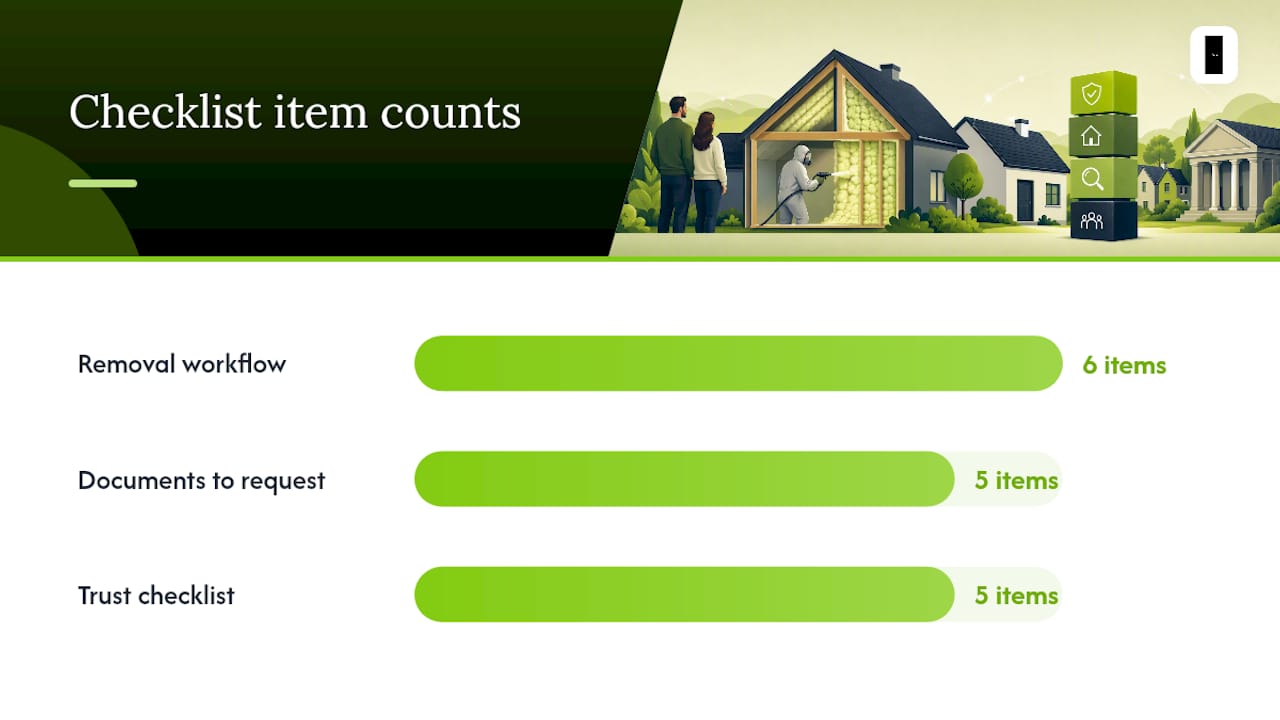
The removal and certification workflow:
- Site assessment: A specialist visits to assess the foam type (open or closed cell), the extent of coverage, the condition of the roof timbers, and access constraints. This assessment determines the scope and cost of the work.
- Containment: The loft space is prepared to contain debris and protect the living areas below. Appropriate PPE and ventilation are established.
- Removal: Foam is carefully removed using specialist tools. Closed-cell foam, which bonds rigidly to timber, requires more time and care than open-cell. The goal is to remove the foam without damaging the roof structure.
- Timber inspection: Once the foam is removed, the timbers are inspected for decay, beetle damage, or structural weakness. Any issues are documented and, where necessary, remediated before certification.
- Remediation: Damaged or weakened timbers are repaired or replaced as required. This stage is what separates a mortgage-compliant removal from a cosmetic strip-out.
- Certification: A completion report is produced, along with a PCA-protocol inspection report confirming the post-removal condition of the roof. This is the document your lender and valuer need.
Documents to request from your contractor:
- Completion report confirming the scope and date of removal.
- Post-removal PCA-protocol inspection report.
- Evidence of BBA or Kiwa certification for any replacement insulation installed.
- Insurance-backed warranty (a 10-year warranty is a recognised trust signal for lenders).
- Contractor's PCA membership or certified technician credentials.
Trust checklist when choosing a contractor:
- PCA membership or PCA-certified technician on the team.
- Insurance-backed guarantees, not just a verbal promise.
- Transparent, written pricing with no hidden fees.
- Independent references from previous mortgage-compliant removals.
- Clear explanation of what the completion report will contain and which lenders have accepted it.
Sprayfoamremovalhelp's property assessment service follows PCA protocols and produces the completion reports and certification that lenders in London and the Southeast recognise. Every job is carried out by PCA-certified technicians, and the 10-year insurance-backed warranty is transferable to a new owner, which matters at the point of sale.
Typical costs and timescales for inspections, removal, and resolving lender objections
Setting realistic expectations on cost and time prevents unpleasant surprises during a sale or remortgage. The figures below are indicative ranges; actual costs depend on property size, foam type, and access.
Typical spend bands:
- Independent specialist report (PCA protocol): Several hundred pounds for a standard loft inspection and written report. This is the first spend and often the only one needed if the installation is sound.
- Partial remediation (addressing specific areas of concern identified in the report): Costs vary considerably depending on the extent of the problem and whether timber repairs are required.
- Full removal (closed-cell foam from a standard semi-detached roof): Costs vary based on property size, foam depth, and access. See spray foam removal costs for current guidance on typical ranges.
- Replacement insulation (such as Superfoil or mineral wool after removal): An additional cost, but one that restores the property to a standard lender-acceptable specification.
Timeline for each stage:
- Booking a specialist report: typically one to three weeks from instruction.
- Completing a full removal on a standard property: usually one to three days on site.
- Obtaining the final completion report and certification: typically within one week of the removal being completed.
- Lender reassessment following receipt of the specialist report: two to six weeks, depending on the lender's internal process.
Factors that lengthen costs and timescales:
- Listed building status, which may require consent before any work begins.
- Poor access to the loft (low headroom, restricted hatch, or complex roof geometry).
- Extensive foam coverage or multiple foam types applied at different times.
- Timber decay discovered during removal, requiring structural repairs before certification.
Official guidance homeowners should consult
The documents below are the ones lenders and surveyors actually reference. Reading the right one at the right stage saves time.
-
RICS consumer guide on spray foam insulation: The starting point for any homeowner. Explains what paperwork to retain, what surveyors look for, and why the modification is treated as significant. Most useful before you instruct any specialist.
-
PCA sprayed foam insulation guidance: The professional body's position on inspection and assessment. Explains what a PCA-protocol report covers and why it carries weight with lenders. Read this before commissioning any specialist report.
-
PCA inspection protocol (March 2023): The detailed technical document that sets out exactly what an independent specialist report must include. Useful for checking whether a report you have received is genuinely protocol-compliant.
-
Gov.uk technical note on spray foam applied to timber sloped roofs: Government technical context on decay risk and inspection considerations. Surveyors and lenders refer to this when assessing older or uncertified installations.
-
House of Commons Library briefing on spray foam and mortgages: A clear parliamentary overview of the consumer problem, the government's position, and why blanket removal is not the official recommendation where installations meet standards. Useful context for conversations with lenders or estate agents.
-
BBC News reporting on lender refusals: Accessible summary of the market-wide problem. Useful for sharing with buyers or solicitors who are unfamiliar with why the issue exists.
The PCA protocol and the RICS consumer guide are the two documents most commonly referenced during valuations. If a valuer raises spray foam as a concern, pointing them to these sources, alongside your specialist report, is the most effective response.
What the paperwork problem really looks like in practice
Most homeowners who contact us are not dealing with a fundamentally unsellable property. They are dealing with a paperwork gap that a surveyor has no choice but to treat conservatively.
The cases that take longest to resolve are not the ones with the worst foam. They are the ones where the original installer has gone out of business, the homeowner accepted a verbal assurance instead of a written warranty, and the only document in the file is a single-page invoice. A valuer presented with that file has nothing to work with. The conservative decision is the only defensible one, and the homeowner is left feeling the system has failed them.
What actually changes a valuer's opinion is a well-structured independent report that follows the PCA protocol, states clearly what was found, and confirms the current condition of the timbers. When that document is in the file, alongside a BBA or Kiwa certificate for the product used, most case-by-case lenders can proceed. The foam does not need to be perfect. The evidence does.
The mistake I see most often is homeowners accepting a doorstep removal quote from a contractor who cannot explain what a PCA-protocol report is, let alone produce one. Removing the foam without generating the right post-removal documentation leaves you with a stripped loft and still no mortgage. The removal is only half the job. The certification is what the lender actually needs.
Sprayfoamremovalhelp resolves the mortgage problem, not just the foam
When spray foam is blocking your sale or remortgage, the fastest path forward is a specialist who understands what lenders actually need, not just how to remove foam.

Sprayfoamremovalhelp's PCA-certified technicians carry out free property assessments, produce PCA-protocol specialist reports, and complete certified removal with a 10-year insurance-backed warranty. Every job is handled directly by the team doing the work, with transparent pricing and no hidden fees. Over 1,000 homeowners across London and the Southeast have used the service to resolve exactly the lending problem this guide describes.
If you need a specialist report to satisfy a lender, or if removal and full certification is the right route for your property, the spray foam removal guide explains the process in detail. To book a free inspection or request a quote, visit the free inspection page and a member of the team will be in touch within one working day.
This article is general information, not a substitute for advice from a qualified financial advisor. Consult a qualified financial professional about your own circumstances before acting on anything here.
Sources
- Major lenders reject homes with spray foam insulation - BBC News
- Spray foam insulation (RICS consumer guide)
- Spray foam insulation and mortgages - House of Commons Library
- Spray foam insulation applied to timber sloped roofs in dwellings (technical note)
FAQ
Do lenders like spray foam insulation?
Most UK mortgage lenders treat spray foam in roof spaces with caution. Some decline outright; others will consider the property if an independent PCA-protocol specialist report confirms the installation is low risk and adequate documentation exists.
Can I still get a mortgage after spray foam has been removed?
Yes. Once spray foam has been professionally removed and a post-removal PCA-protocol inspection report confirms the roof timbers are in sound condition, most lenders will treat the property as standard. A completion report and insurance-backed warranty strengthen the file further.
Which mortgage lenders accept spray foam insulation?
Lender policies vary and change over time, so no fixed list is reliable. A mortgage broker experienced in post-foam lending is the most efficient way to identify which lenders are currently operating case-by-case policies and what evidence they require.
Is spray foam insulation banned in the UK?
Spray foam insulation is not banned in the UK. The House of Commons Library briefing confirms that government advice is that correctly installed foam should not automatically require removal. The lending difficulty arises from inspection limitations and documentation gaps, not a legal prohibition.