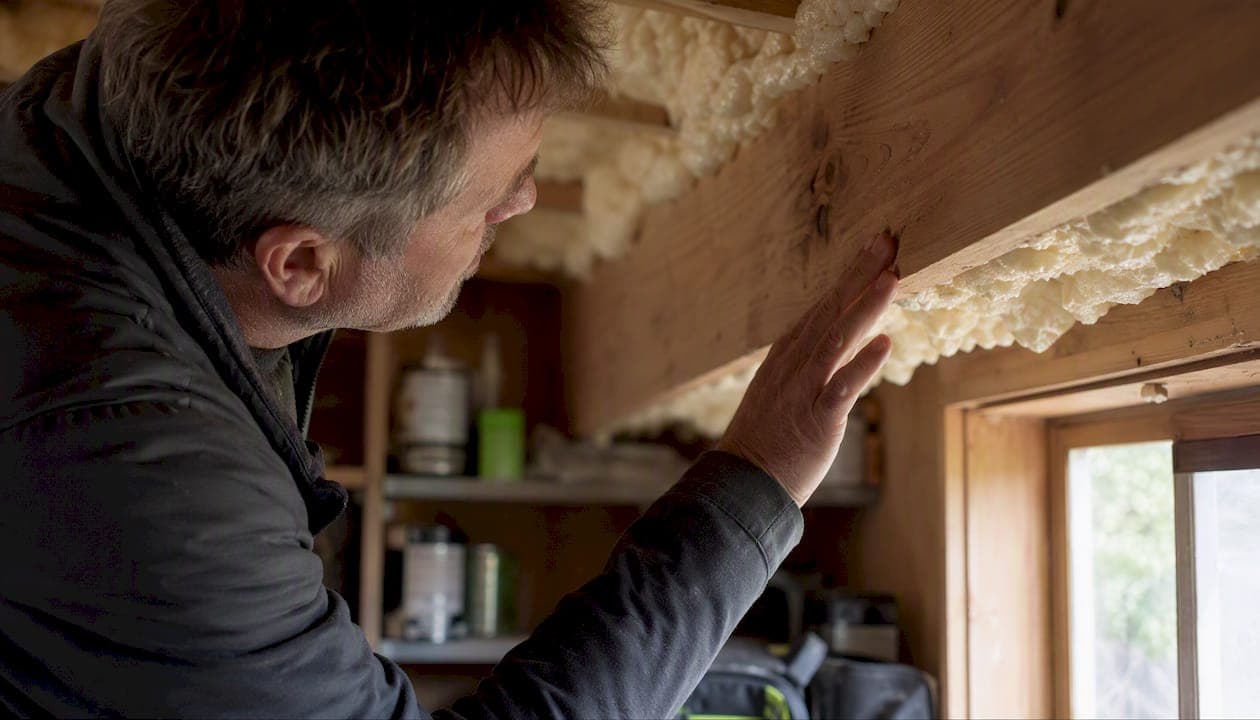
RICS treats spray foam insulation as a significant alteration to a property, one that can affect a surveyor's opinion of value, a lender's willingness to advance funds, and your ability to sell or remortgage without delay. That's the headline finding from the RICS consumer guide, and it's the reason so many homeowners get an unwelcome surprise at survey stage. If you have spray foam in your loft, or you're buying a property that does, the priority this week is simple: get independent specialist advice and pull together every scrap of installation paperwork you can find.
Do this before you speak to an estate agent, before you accept a quote from whoever installed the foam, and certainly before you sign anything with a cold-calling contractor.
This week's checklist:
- Contact a RICS-regulated surveyor or an independent building pathology specialist, not the original installer.
- Request the installation contract, any guarantees, and BBA or Kiwa certification if the work was certified.
- Tell your mortgage lender or estate agent if a sale or remortgage is already in motion.
- Take photos of the foam, its location, and any signs of damp, staining, or timber movement nearby.
Why this matters immediately:
- Lenders often ask for a RICS Level 3 Building Survey or a specialist report once spray foam is flagged, and that takes time.
- Missing paperwork is the single biggest reason inspections stall, according to industry guidance from bodies including the Property Care Association.
- Acting early gives you leverage. Acting after an offer has fallen through does not.
Key Takeaways
Following RICS spray foam guidance means treating documentation and independent inspection as the two levers that determine whether a sale, remortgage, or mould problem gets resolved quickly or drags on for months.
| Point | Details |
|---|---|
| Get independent advice first | Contact a RICS surveyor or independent specialist, never the original installer, for an impartial assessment. |
| Gather paperwork immediately | Installation contracts, BBA or Kiwa certificates, and completion reports all speed up lender decisions. |
| Expect a specialist report | Lenders often request a RICS Level 3 survey or JPS22-compliant inspection before approving finance. |
| Know when removal is necessary | Timber decay, missing ventilation, or lender insistence are the clearest triggers for full removal. |
| Choose certified contractors | Sprayfoamremovalhelp provides PCA-certified removal with insurance-backed warranties and lender-ready completion reports. |
This article is general information, not a substitute for advice from a qualified financial advisor. Consult a qualified financial professional about your own circumstances before acting on anything here.
Table of Contents
- What the RICS spray foam guidance actually covers
- Open cell versus closed cell: why the type of foam changes everything
- The risks RICS wants homeowners to understand
- How spray foam affects your survey, valuation and ability to sell
- What BS 5250:2021 and Approved Document C say about moisture risk
- What surveyors and lenders actually check during an inspection
- When removal becomes the only sensible option
- Choosing a surveyor or removal contractor without getting burned
- Documents to gather and a realistic timeline
- What a certified removal job actually looks like
- Certified removal and inspection support across London and the Southeast
- Sources
- FAQ
What the RICS spray foam guidance actually covers
RICS published its consumer guide specifically because so many homeowners had spray foam installed under energy-saving schemes without understanding the long-term consequences. The guide is aimed at four groups: homeowners living with existing spray foam, buyers considering a purchase, surveyors carrying out valuations, and lenders assessing risk on a mortgage application.
It isn't a technical manual for installers. It's impartial consumer advice covering what spray foam is, the risks it can introduce into a roof space, what documentation matters, and when to call in independent expertise rather than relying on the company that fitted the foam in the first place.
RICS positions itself as the professional standards body for UK surveying, and its Find a Surveyor service is the practical route most homeowners use to locate a RICS-regulated professional. That independence is the whole point of the guidance: RICS repeatedly stresses that advice should come from someone with no commercial stake in whether foam stays or goes, a principle echoed in the RICS press release announcing the guide.
Three things make this guidance the reference point industry professionals reach for:
- It sets out clear dos and don'ts, including a warning against accepting unsolicited offers to install or remove foam.
- It flags the documentation lenders and surveyors are likely to ask for, well before a sale is underway.
- It explains, in plain terms, why spray foam is harder to reverse than most other insulation upgrades.
Open cell versus closed cell: why the type of foam changes everything
Spray polyurethane foam (SPF) is applied wet and expands to fill gaps, sticking permanently to rafters, sarking felt, and roofing timbers. In UK homes it's most commonly found sprayed directly onto the underside of roof slopes in lofts, either over the original felt or, in older installations, directly against the back of the tiles.
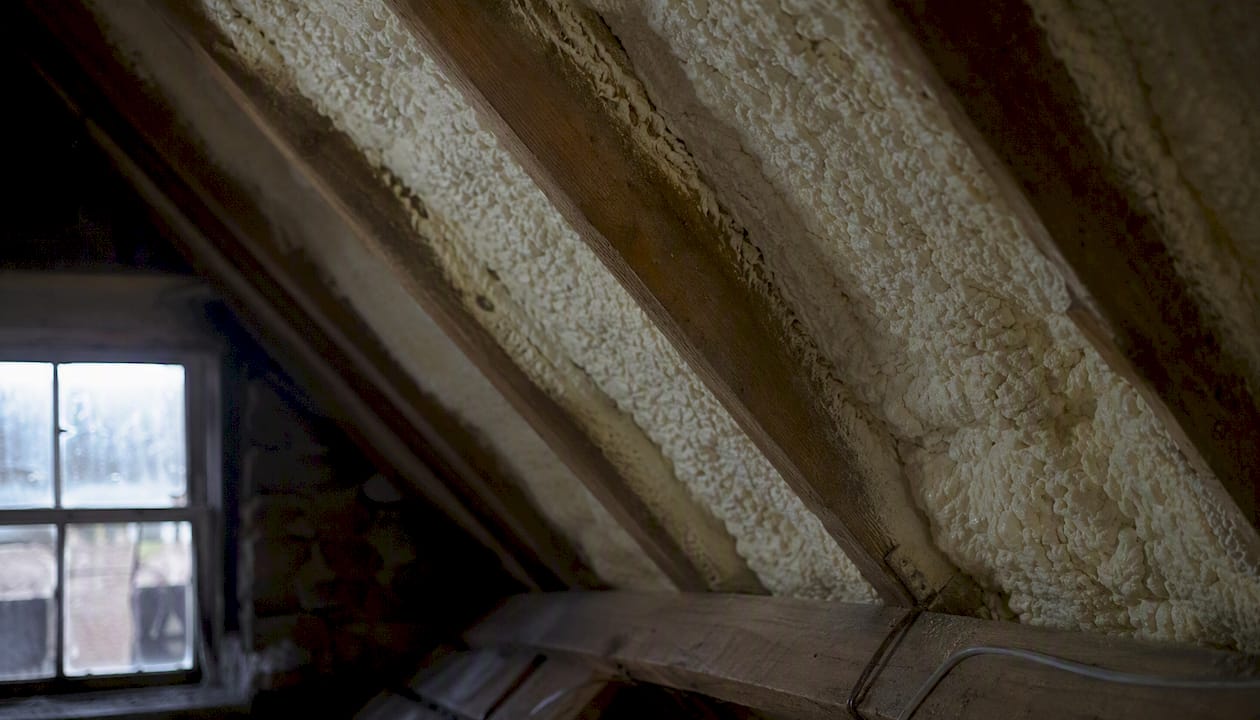
There are two types, and the difference matters enormously for risk assessment.
| Feature | Open-cell foam | Closed-cell foam |
|---|---|---|
| Vapour permeability | Higher, allows some moisture movement | Very low, effectively vapour-tight |
| Typical density | Lighter, softer texture | Denser, rigid once cured |
| Common use in lofts | Loft insulation between rafters | Direct application to roof timbers or tiles |
| Moisture risk profile | Lower risk if ventilation is adequate | Higher risk of trapped moisture without a vapour control layer |
| Ease of removal | Generally easier to strip back | Harder to remove without damaging timber or felt |
Closed-cell foam tends to trigger the most concern from surveyors and lenders, particularly where it has been sprayed directly against roofing felt or tiles with no ventilated void behind it. Trapped moisture has nowhere to go, which is precisely the scenario that hygrothermal modelling flags as high risk. If you want a deeper technical breakdown of how the two types behave over time, our guide to open-cell versus closed-cell spray foam covers the practical differences in more depth.
The risks RICS wants homeowners to understand
RICS doesn't claim spray foam is always dangerous. It claims the risks are real, often hidden, and frequently irreversible once they take hold. The consumer guide sets out several specific hazards that recur across problem installations.
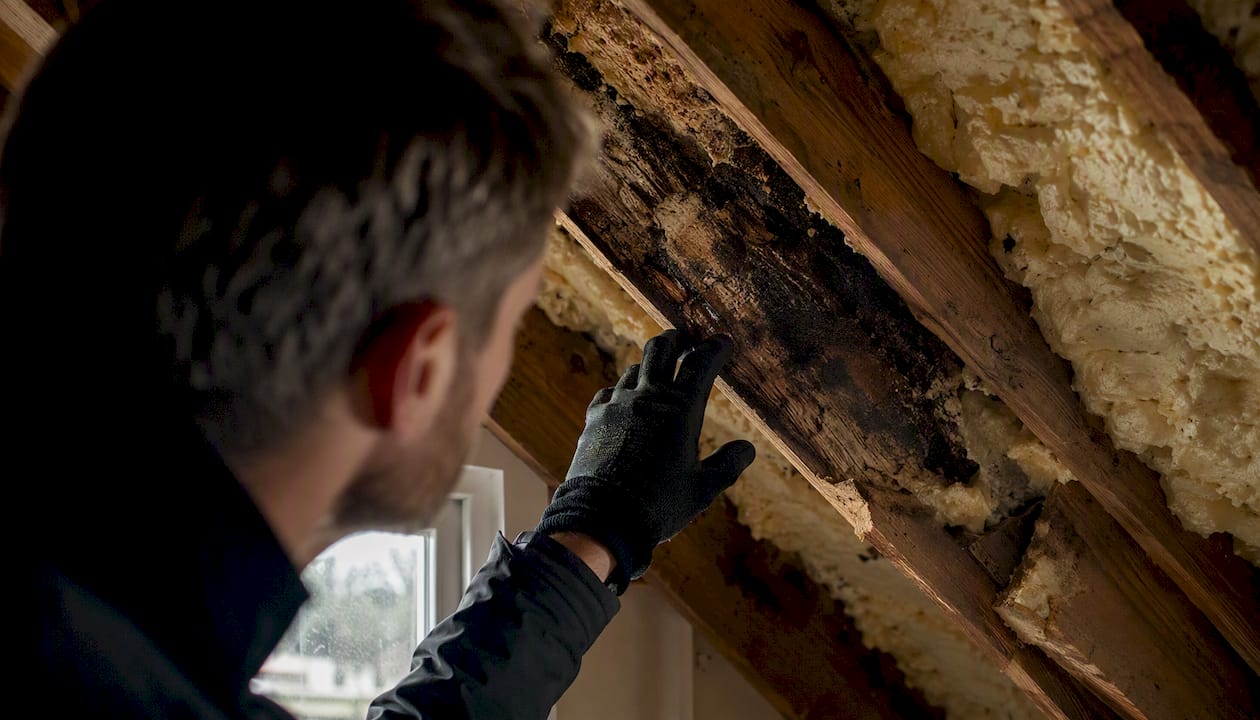
- Condensation and mould. Trapped moisture vapour condenses against cold roofing timber when there's no route for it to escape.
- Timber decay. Sustained damp against rafters and battens can lead to rot that isn't visible until it's advanced.
- Concealed water ingress. Foam can mask a slipped tile or a slow roof leak for years, because the leak no longer shows as a stain on the ceiling below.
- Fire and cabling risk. Foam sprayed over or near electrical cabling can obscure faults and complicate future rewiring work.
- Irreversibility. Once cured, foam bonds to timber and felt. Removing it without damaging the roof structure requires skill, not brute force.
Poor installation makes every one of these worse. A rushed job that skips an airtight vapour control layer, or fails to leave a ventilated void behind the foam, removes the roof's ability to manage moisture on its own terms.
Pro Tip: You can safely check for obvious signs like musty smells, visible black mould on exposed timber edges, or foam that looks patchy and uneven. Do not attempt to probe, cut, or lift foam yourself, especially near cabling. That's a job for a specialist with the right tools and insurance.
| Risk | What it means for you |
|---|---|
| Hidden roof leaks | Foam can hide a slow leak until timber damage is already extensive |
| Reduced ventilation | Blocked airflow raises humidity inside the roof void |
| Timber decay | Rot weakens rafters and can be expensive to repair once discovered |
| Irreversible bonding | Removal is a skilled job, not a weekend DIY task |
How spray foam affects your survey, valuation and ability to sell
A surveyor who identifies spray foam during a valuation isn't simply noting it and moving on. RICS is explicit that its presence can alter a surveyor's professional opinion of value, and that a specialist report may be recommended before a valuation can be finalised, a point set out clearly in the RICS consumer guide. For anyone selling or remortgaging, that's the moment the process can slow down.
Lenders typically respond in one of a few predictable ways once spray foam is flagged:
- They request a RICS Level 3 Building Survey rather than accepting a standard mortgage valuation.
- They ask for installer paperwork, including any BBA or Kiwa certification for the product used.
- They request an independent specialist report addressing moisture risk and structural condition.
- In some cases, they decline to lend against the property until remedial work or removal has taken place.
A House of Commons Library briefing on the topic notes that lenders rely heavily on their valuers' judgement, and that being able to evidence correct installation materially affects the outcome of a mortgage application, as set out in the House of Commons briefing on spray foam and mortgages. Homeowners with a complete paper trail tend to move through this stage far faster than those without one.
Practically speaking, expect a sale or remortgage involving spray foam to take longer than a standard transaction. Where documentation exists and the installation meets recognised standards, delays might be measured in weeks. Where foam is undocumented, closer to a formal remedial plan or full removal, with the associated cost and timeline, becomes the likely outcome. Our spray foam mortgage guide sets out lender behaviour in more detail if you're already mid-transaction.
What BS 5250:2021 and Approved Document C say about moisture risk
RICS guidance leans heavily on technical standards rather than blanket bans, and the most important of these is BS 5250:2021, the British Standard covering moisture control in buildings. For warm pitched roofs, it sets out prescriptive measures, including an airtight vapour control layer (AVCL) and ventilated voids of a specified minimum depth, that are designed to keep humidity within a roof structure at safe levels.
A hygrothermal modelling report commissioned to test these scenarios found that following BS 5250's prescriptive guidance can produce a moisture-safe design, with relative humidity profiles staying below the thresholds associated with timber decay, according to the modelling report on spray foam applied to timber sloped roofs. That's a genuinely useful finding: it means spray foam isn't automatically unsafe, provided the underlying build-up follows recognised guidance.
The same modelling identified where things go wrong. High-risk scenarios in the accompanying appendices included foam sprayed directly onto tiles with no ventilated void, and setups using high-resistance underlay without adequate ventilation, both of which produced sustained high humidity levels in simulations run for London and Newcastle climates, as detailed in the appendices to the modelling report.
| Design element | Recommended value or approach | Risk if omitted |
|---|---|---|
| Airtight vapour control layer | Fitted on the warm side of the insulation | Moisture migrates freely into the roof void |
| Ventilated void behind foam | Minimum depth as specified in BS 5250:2021 | Trapped humidity accelerates timber decay |
| Underlay type | Low-resistance (LR) performs better with foam than high-resistance (HR) | HR underlay without ventilation raises condensation risk |
| Foam applied to tiles directly | Not recommended without a ventilated void | Modelling shows sustained high humidity in this scenario |
Approved Document C, the building regulations guidance covering resistance to moisture, also applies here, though older editions didn't anticipate retrofit spray foam in the way current thinking does. That historical gap is part of why so many existing installations predate the standards now used to assess them. If ventilation is part of your remedial plan, our guide to roof ventilation types explains how the options relate to these BS 5250 requirements.
What surveyors and lenders actually check during an inspection
A surveyor who spots spray foam during a routine visit follows a fairly consistent process. First, they identify the foam type where possible, open or closed cell, and note its location and extent. Then they check for visible signs of moisture damage, timber decay, or ventilation obstruction. Where doubt remains, they'll typically recommend an independent specialist report rather than offering a definitive opinion themselves.
That escalation to a specialist isn't optional box-ticking. It follows the Joint Position Statement (JPS22), an inspection protocol developed to standardise how spray foam should be assessed across the surveying and insulation industries.
A consistent, protocol-led inspection matters because it gives lenders something they can actually rely on. Without a standardised approach, one surveyor's cautious opinion and another's relaxed one produce wildly different outcomes on properties with near-identical foam installations. JPS22 exists to close that gap and give both sides, buyer and lender, a shared basis for decision-making.
During an inspection, expect questions and checks along these lines:
- When was the foam installed, and by whom?
- Is there certification from a body such as BBA or Kiwa for the product used?
- Can moisture readings be taken from exposed timber, and do they fall within safe ranges?
- Is there evidence of a vapour control layer and ventilated void behind the foam?
- Have there been any previous specialist reports or remedial works?
Turning up to survey day with clear answers to those questions, backed by paperwork, is the single biggest thing you can do to keep the process moving.
When removal becomes the only sensible option
Not every spray foam installation needs to come out. But certain conditions push the decision firmly towards removal rather than remedial patching.
Signs removal is likely necessary:
- Timber decay is already visible or moisture readings are consistently high.
- There's evidence of concealed leaks that the foam has been masking.
- No ventilated void exists behind the foam, and retrofitting one isn't practical without stripping it back.
- Your lender or insurer explicitly requires removal as a condition of cover or lending.
- The installation was undocumented and the installer can't be traced or verified.
Where removal is the recommended route, it typically involves careful stripping of the cured foam from timber and felt, inspection of the roof structure once it's exposed, and repair of any decay found underneath. That's a specialist job, not a DIY weekend, because aggressive stripping can damage rafters, sarking felt, and even roof tiles if it's rushed.
Partial remedial work, adding ventilation, fitting a vapour control layer, or treating localised decay, can sometimes resolve the issue without full removal. A specialist will usually base that decision on moisture readings, the extent of any decay, and whether the existing build-up can realistically be brought in line with BS 5250 without stripping everything back to bare timber. Where full removal is the answer, our spray foam removal guide sets out what the process and realistic costs look like.
Choosing a surveyor or removal contractor without getting burned
The credentials gap between a good specialist and a chancer with a van is wide, and it's worth knowing exactly what to check before you hand over any money.
Credentials to look for:
- AssocRICS, MRICS, or FRICS designation for surveyors.
- PCA (Property Care Association) membership for removal contractors.
- Evidence of manufacturer-specific training where a particular foam product is involved.
- BBA or Kiwa certification referenced in any completion paperwork.
Questions worth asking before you commit:
- Can you show public liability and employer's liability insurance?
- Does your inspection process follow the JPS22 protocol?
- Can you provide examples of previous reports accepted by mortgage lenders?
- Is the work backed by an insurance-backed warranty, and for how long?
Red flags that should stop you signing anything:
- Cold calls or door-knockers offering "free" surveys or urgent removal deals.
- Pressure to sign up before any inspection has taken place.
- No independent references or verifiable track record.
- Reluctance to provide certification or insurance documents on request.
Documents to gather and a realistic timeline
If you're heading towards a sale or remortgage with spray foam in the picture, the paperwork you can produce matters as much as the physical condition of the roof.
Document checklist:
- Original installation contract and invoice.
- Method statement describing how the foam was applied.
- BBA, Kiwa, or manufacturer certification.
- Completion report from the original installer, if one exists.
- Photographs of the works taken at the time.
- Any previous specialist or remedial reports.
Our completion reports page explains what lenders expect to see in this kind of paperwork if you're starting from scratch.
A typical timeline looks like this:
- Discovery at survey. A surveyor flags spray foam during a standard valuation or building survey.
- Document request. The surveyor or lender asks for installation records and certification.
- Specialist inspection. An independent report is commissioned, usually taking one to three weeks depending on availability.
- Lender decision or remedial works. The lender either proceeds, requests remedial work, or declines pending further evidence. This stage varies most in length.
- Final mortgage approval. Once satisfied, the lender confirms the offer and the sale or remortgage proceeds.
The fastest way through this sequence is to front-load it. Gather documents before survey day, instruct an independent inspector the moment foam is flagged rather than waiting for the lender to chase you, and tell your estate agent or broker early so they can manage buyer expectations. Our spray foam survey form is a useful starting point for organising what you already have.
What a certified removal job actually looks like
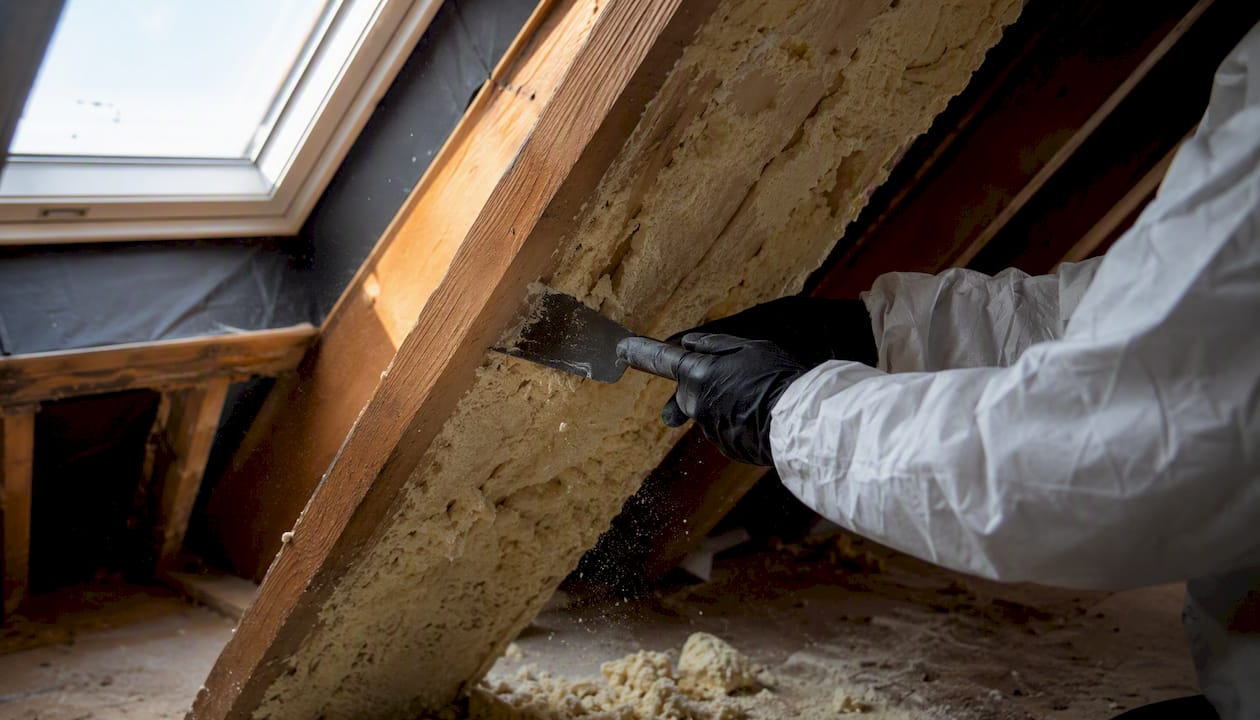
Understanding the removal process helps you judge whether a contractor's quote and report are up to standard.
A typical certified removal workflow:
- Initial inspection. A specialist assesses foam type, extent, and visible condition, often taking moisture readings from exposed timber.
- Containment setup. Dust sheets and ventilation are arranged to protect the rest of the property during removal.
- Foam removal. Cured foam is carefully stripped from rafters, felt, and battens without damaging the roof structure.
- Timber inspection and repair. Once exposed, timber is checked for decay, and any damaged sections are repaired or replaced.
- Final certification and handover. The homeowner receives a completion report, photographic evidence, and warranty documentation.
What a lender-acceptable removal report typically includes:
- Before-and-after photographs of the roof structure.
- A written method statement describing the removal process.
- Pre and post-removal moisture readings.
- An insurance-backed warranty covering the work carried out.
Pro Tip: Before accepting any removal quote, ask specifically whether the warranty is insurance-backed, meaning it's protected even if the contractor later closes down. A verbal promise or a company-issued guarantee alone offers far less protection than a policy underwritten by a third-party insurer.
A specialist's view on documentation and mortgage outcomes
Homeowners often assume that spray foam is either "fine" or "a disaster," when the reality sits somewhere in between and depends almost entirely on how it was installed and what evidence exists to prove it. The misconception that costs people the most time is believing the original installer's reassurance is enough. Lenders don't want a sales pitch, they want independent, documented proof.
I've seen cases where a homeowner with a complete paper trail, invoice, certification, and photographs, moved through a specialist report and mortgage approval in a matter of weeks. Compare that with a near-identical installation next door with no paperwork at all, where the process stretched into months of back-and-forth and eventually required a full removal before the lender would proceed. The foam itself wasn't necessarily different. The evidence was.
Reputable, PCA-certified contractors don't push removal as the default answer, because it isn't always the right one. Good practice means assessing the roof honestly against BS 5250 and the JPS22 inspection protocol, then recommending whatever brings the property back into a mortgage-compliant, moisture-safe condition, whether that's targeted remedial work or full removal.
Certified removal and inspection support across London and the Southeast
If your survey has flagged spray foam and you need clarity fast, Sprayfoamremovalhelp gives you a direct line to the technicians actually doing the work, not a call centre passing your job to a subcontractor. Every removal is carried out by PCA-certified specialists, and every job comes with the completion reports, photographic records, and warranty documentation that surveyors and lenders actually ask for.

That paperwork matters more than most homeowners realise. A completion report that clearly documents pre and post-removal moisture readings, method statements, and certification is exactly what turns a stalled mortgage application into an approved one. Sprayfoamremovalhelp backs every job with a 10-year insurance-backed warranty, so lenders and future buyers have something concrete to rely on, not just a verbal assurance.
If you're unsure whether removal is even necessary, start with an honest assessment rather than a sales call. Book a free inspection and get an impartial view of your roof's condition, or if the situation is urgent, our emergency removal service covers same-day response across London and the Southeast.
Sources
- Spray foam insulation — RICS consumer guide
- Spray foam insulation applied to timber sloped roofs in dwellings — modelling report
- House of Commons Library briefing on spray foam and mortgages
- Sprayed foam insulation | Professional Surveyor Guidance — Property Care Association
FAQ
Do you have to disclose spray foam insulation when selling?
Yes. Sellers must answer the TA6 property information form honestly, and failing to disclose known spray foam can expose you to legal claims after completion.
What certification should a spray foam installer or remover hold?
Look for BBA or Kiwa product certification for the foam itself, and PCA membership for the contractor carrying out removal or remedial work.
Can you get a mortgage on a property with spray foam in the loft?
Often, yes, but expect the lender to request a RICS Level 3 survey or an independent specialist report before approving the loan, particularly for closed-cell installations.
Can I sell my house with spray foam still in place?
Yes, though buyers' lenders may request the same specialist reports and documentation, so gathering paperwork early helps prevent delays during the sale.