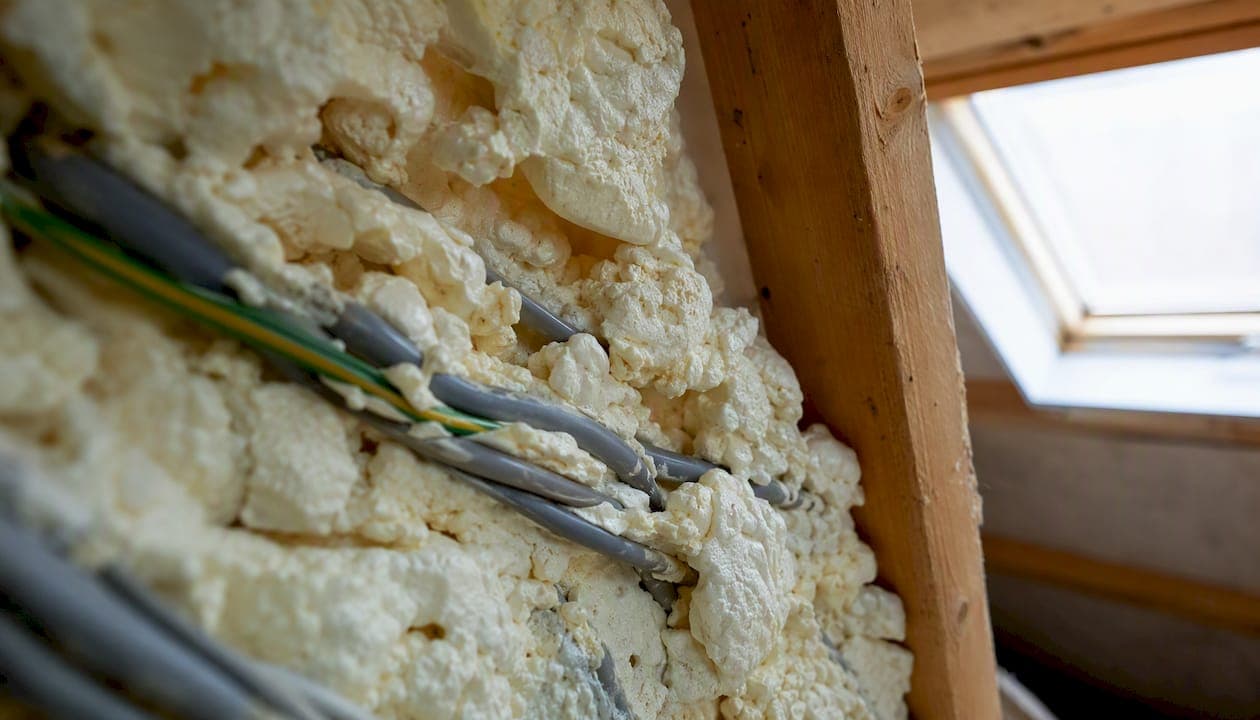
If spray foam is covering electrical wiring in your property, the single correct first step is to arrange a certified inspection — not to attempt removal yourself. A PCA/RPSA-protocol inspection combined with an EICR (Electrical Installation Condition Report) produces the documented evidence that lenders, surveyors, and insurers require. Revive Maintenance, the team behind Sprayfoamremovalhelp, carries out exactly this work across London and the Southeast: PCA-aligned inspections, EICR coordination, and mortgage-compliant removal with a 10-year insurance-backed warranty.
Getting this right from the start secures three things:
- Safety: concealed wiring cannot be assessed or tested without a specialist on site.
- Mortgage evidence: lenders including Santander, HSBC, Lloyds, and Nationwide require a specialist report before they will lend on affected properties.
- Insurance protection: a certified, documented removal protects your warranty and your insurer's position.
Pro Tip: Book your inspection before instructing an estate agent or solicitor — lenders will ask for the report, and having it ready prevents delays at the point of sale or remortgage.
Key takeaways
Spray foam covering electrical wiring requires a certified PCA/RPSA inspection and an EICR before any removal work begins — documentation is what converts lender caution into mortgage approval.
| Point | Details |
|---|---|
| Get a certified inspection first | A PCA/RPSA-protocol inspection and EICR are the evidence lenders require before lending on affected properties. |
| Do not attempt DIY removal | Incorrect removal can embrittle PVC sheathing and compromise fire-stopping, creating new safety and compliance problems. |
| Documentation drives lender decisions | Around a quarter of major UK lenders reject properties with spray foam unless specialist evidence is provided. |
| Reinstate fire-stopping after removal | BS 7671 Section 527 requires tested intumescent seals at cable penetrations — PU foam is not an acceptable substitute. |
| Sprayfoamremovalhelp covers the full process | Revive Maintenance provides PCA-aligned inspections, EICR coordination, certified removal, and lender-ready reports across London and the Southeast. |
Table of Contents
- Why spray foam on wiring is a problem: safety, UK rules, and lender risk
- What to do right now: safety and evidence preservation
- What a mortgage-compliant inspection and electrical testing involve
- How certified removal is carried out and what to expect
- Typical costs, timelines, and the impact on your sale or remortgage
- How to choose a qualified specialist: questions to ask and red flags
- An honest view on spray foam and wiring from the Sprayfoamremovalhelp team
- Sprayfoamremovalhelp: certified removal and mortgage-ready reporting
- Sources
- FAQ
Why spray foam on wiring is a problem: safety, UK rules, and lender risk
Spray foam electrical insulation is not a recognised or safe application. When spray foam covers wiring, it traps heat that cables are designed to dissipate into surrounding air. Sustained heat build-up raises the risk of insulation degradation and, in the worst cases, fire. Certain foam formulations can also embrittle PVC cable sheathing over time, making the outer jacket brittle and prone to cracking under mechanical stress during any future work.
The regulatory position is clear. BS 7671 Section 527 requires that wiring penetrations maintain their original fire resistance; any seal disturbed during alteration must be reinstated with tested materials. Spray foam applied over cables frequently compromises those seals, and expanding polyurethane foams are generally not suitable as penetration seals — tested intumescent products are required instead. RICS guidance reinforces this: surveyors need physical access to timbers and wiring to make a robust assessment, and foam that obstructs that access triggers a valuation flag.
The lender picture is equally serious. Around a quarter of the UK's largest mortgage providers frequently reject properties with retrofitted spray foam unless specialist evidence is provided. Santander, HSBC, Lloyds, and Nationwide each assess cases individually, but all commonly request a specialist report before proceeding. The primary driver for lender caution is not the foam itself — it is the absence of verifiable installation paperwork.
Key risks at a glance:
- Inhibited heat dissipation from covered cables
- Potential embrittlement of PVC sheathing depending on foam type
- Compromised fire-stopping at cable penetrations
- Obstructed access for surveyors and RICS valuers
- Lender refusal or mortgage delay without a specialist report
What to do right now: safety and evidence preservation
Do not touch the foam. Do not drill, cut, or scrape near covered cables. If you suspect a fault, contact a qualified electrician to isolate affected circuits before anyone else enters the roof space.
Your immediate checklist:
- Photograph everything — visible foam coverage, cable routing, any labels or markings on cables, and the condition of the surrounding timbers.
- Locate original paperwork — installer name, product data sheets, batch numbers, BBA or KIWA certification if available, and any condensation risk analysis supplied at installation.
- Preserve access routes — do not store items in the loft or block the hatch; inspectors need clear, safe access.
- Contact the original installer — the IMA advises homeowners to request retrospective documentation from installers or manufacturers before ordering removal.
- Do not commission DIY removal — aggressive scraping or incorrect solvents can immediately compromise sheathing integrity.
Pro Tip: Use the spray foam survey form to record site details, visible wiring locations, and photographic evidence before your inspection appointment — it speeds up the specialist's assessment considerably.
What a mortgage-compliant inspection and electrical testing involve
A PCA/RPSA-protocol inspection is the industry-standard route to producing the evidence lenders need. Specialist inspections following this protocol are what surveyors and lenders recognise as credible, case-by-case evidence.
The inspection covers:
- Visual assessment of timbers and visible cable routing for signs of damage or embrittlement
- Condensation risk analysis and moisture readings on structural timbers
- Photographic audit of foam coverage, penetrations, and cable conditions
- Review of any installation documentation the homeowner can supply
The electrical element centres on the EICR. This report, produced by a qualified electrician, tests the condition of circuits, identifies any defects, and classifies them by severity. Lenders treat an EICR as essential evidence that the electrical installation is safe after foam has been present or removed. Santander, HSBC, Lloyds, and Nationwide have each confirmed they assess spray foam cases individually and commonly request this documentation before lending.
The deliverables a lender typically expects are:
- A PCA/RPSA-protocol inspection report
- EICR results for affected circuits
- Photographic before-and-after evidence
- Installation pack items: product certification, BBA/KIWA documentation, batch numbers, condensation risk analysis
- An insurance-backed warranty covering the removal works
Sprayfoamremovalhelp provides completion reports in exactly this format, ready to submit directly to your lender or surveyor.
How certified removal is carried out and what to expect
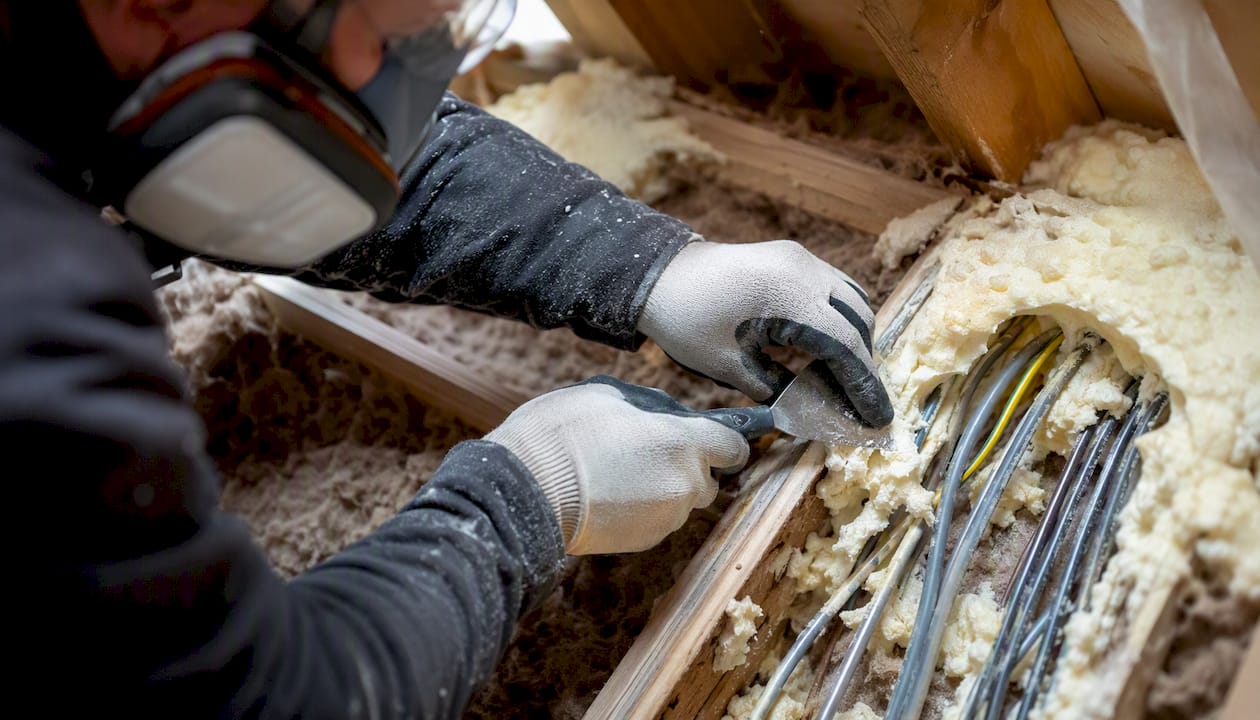
Professional removal of spray foam from cable assemblies is slow, deliberate work. Technicians use mechanical extraction — controlled cutting and careful manual separation — to free foam from cables without abrading the sheathing. Chemical approaches are occasionally used on open-cell foam but require careful product selection; the wrong solvent can accelerate the very embrittlement it is meant to address.
Throughout the process, the team manages:
- Containment: dust and vapour controls to protect the working environment and adjacent rooms
- Cable protection: avoiding abrasion or kinking of cables during extraction
- Fire-stopping reinstatement: once foam is cleared from penetrations, tested intumescent seals replace any disturbed material, restoring compliance with BS 7671 Regulation 527
Post-removal, every affected circuit is tested. If the EICR reveals compromised sheathing, cable replacement follows before the circuit is re-energised. Removal sometimes exposes pre-existing damage — cracked insulation, undersized cables, or corroded connections — that the foam had been concealing. That is not a complication; it is the inspection working as intended.
Pro Tip: Ask your specialist to confirm in writing whether cable replacement is included in the quoted scope or priced separately — this prevents surprises if testing reveals embrittlement after extraction.
Typical costs, timelines, and the impact on your sale or remortgage
Removal costs vary with foam type, roof size, and cable condition. Closed-cell foam is denser and more labour-intensive than open-cell; a larger or more complex roof space adds time and therefore cost. Consumer reporting and market checks indicate that removing spray foam from a typical three-bed detached roof can run to several thousand pounds, with closed-cell foam and larger roofs pushing costs substantially higher. For a detailed cost estimate, the spray foam removal costs guide sets out current pricing ranges.
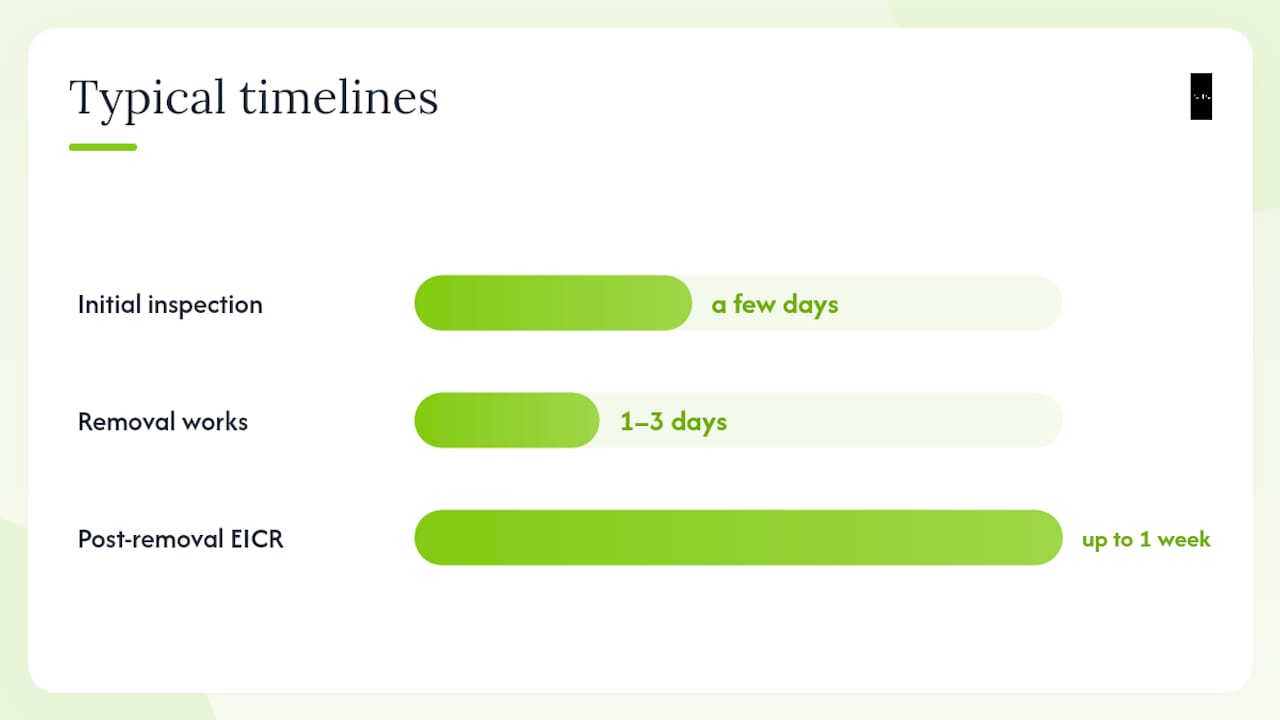
A typical timeline looks like this:
- Initial inspection: usually completed within a few days of booking
- Removal works: one to three days for a standard residential roof space, depending on foam type and extent
- Post-removal EICR and report: typically issued within a week of works completing
- Lender decision: once a complete report pack is submitted, many lenders re-evaluate within their standard processing window
The mortgage impact of getting this right is significant. A certified lender-ready report — covering the PCA/RPSA protocol, EICR, photographic audit, and installation pack — converts what looks like a blocker into a manageable case. No public funding exists for removal, so the cost falls to the homeowner; however, where an original installer is still trading, the IMA advises pursuing them for remediation or guarantee cover before commissioning independent removal.
How to choose a qualified specialist: questions to ask and red flags
Not every company advertising spray foam removal has the credentials to handle wiring safely or produce lender-compliant documentation. Vetting a specialist properly takes ten minutes and can save months of delay.
Essential questions to ask:
- Are your technicians PCA or RPSA accredited?
- Do you have specific experience removing foam from electrical wiring?
- Do you coordinate an EICR with a qualified electrician, or do you work alongside one?
- Can you provide proof of public liability insurance and an insurance-backed warranty?
- Will you supply a photographic audit and a lender-ready written report?
Red flags to walk away from:
- No written quote or scope of works
- Unusually low price with no explanation of what is included
- Refusal to provide sample reports or references
- No mention of fire-stopping reinstatement
- Cannot confirm BBA/KIWA or manufacturer authorisation for the foam type they are removing
Decision checklist:
- Verify PCA or RPSA accreditation on the association's own register.
- Request a sample completion report to confirm it meets lender expectations.
- Confirm the timeline for inspection, removal, and report issue in writing.
- Obtain a written quote that separates inspection, removal, and any cable replacement costs.
- Check that the warranty is insurance-backed and transferable to a buyer.
An honest view on spray foam and wiring from the Sprayfoamremovalhelp team
The most common mistake homeowners make is waiting. They discover spray foam covering wiring during a survey, the lender flags it, and suddenly they are trying to arrange a specialist inspection with a completion deadline two weeks away. The documentation gap — no installation pack, no EICR, no photographic record — is what turns a manageable situation into a sale falling through.
What the evidence actually shows is that lenders are not categorically opposed to properties with spray foam. The House of Commons Library briefing makes this clear: the issue is verifiable evidence, not the foam itself. A well-documented removal, with a PCA-aligned inspection report and a clean EICR, gives a lender exactly what it needs to proceed.
The second mistake is treating this as purely an electrical problem. Spray foam on wiring is simultaneously a structural, fire-safety, and mortgage-compliance issue. Handling only one dimension — say, getting an electrician in without a PCA-protocol inspection — leaves gaps that surveyors will find and lenders will query.
Sprayfoamremovalhelp: certified removal and mortgage-ready reporting
When spray foam covers electrical wiring, Revive Maintenance delivers the complete solution: a PCA-aligned inspection, EICR coordination with a qualified electrician, controlled removal with intumescent fire-stopping reinstatement, and a lender-ready report pack. Every job comes with a 10-year insurance-backed warranty and transparent, fixed pricing — no middlemen, no hidden fees, and no pressure.

You speak directly with the technicians doing the work, which means accurate scoping, honest timelines, and a report that actually satisfies your lender. Sprayfoamremovalhelp serves homeowners, landlords, and estate agents across London and the Southeast, with same-day emergency appointments available for urgent cases.
Ready to move forward? Book a free inspection or visit the spray foam removal guide to understand exactly what the process involves before you commit.
Sources
Key references for homeowners, landlords, estate agents, and surveyors:
- Spray foam insulation: what it means for your mortgage | House of Commons Library
- Property Care Association (PCA)
- Assessing the risks of spray foam insulation – Mortgage Strategy
- Sealing wiring system penetrations | Voltimum
FAQ
Does spray foam on wiring create a fire hazard?
Yes, it can. Foam covering cables inhibits heat dissipation, and certain formulations may embrittle PVC sheathing over time — both conditions increase risk and require a specialist electrical assessment.
Which lenders are affected by spray foam on wiring?
Santander, HSBC, Lloyds, and Nationwide all assess spray foam cases individually and commonly request a specialist inspection report and EICR before agreeing to lend.
What documents does a lender need after spray foam removal?
Lenders typically require a PCA/RPSA-protocol inspection report, an EICR for affected circuits, photographic before-and-after evidence, and installation pack items such as BBA/KIWA certification and batch numbers.
Can Sprayfoamremovalhelp produce lender-ready reports?
Yes. Revive Maintenance provides PCA-aligned inspection reports, EICR coordination, and completion documentation formatted for direct submission to lenders and surveyors across London and the Southeast.
Is there any public funding to help cover removal costs?
No. The House of Commons Library briefing confirms there is no government funding for spray foam removal; homeowners should pursue the original installer or their guarantee first, and commission independent removal if that route fails.