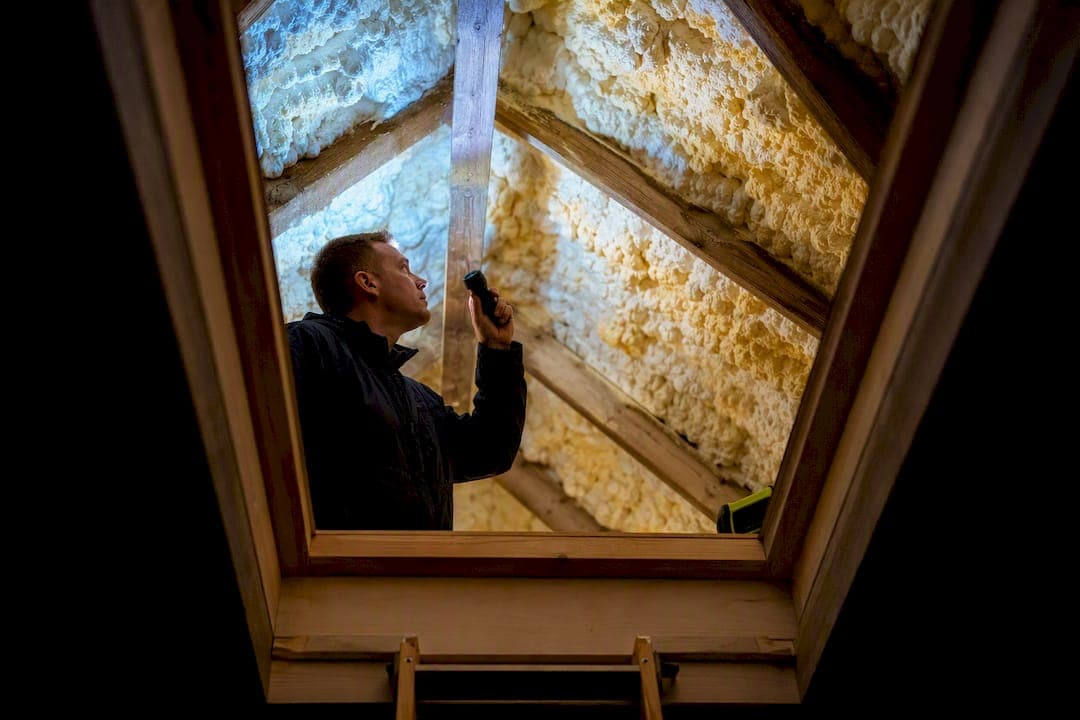
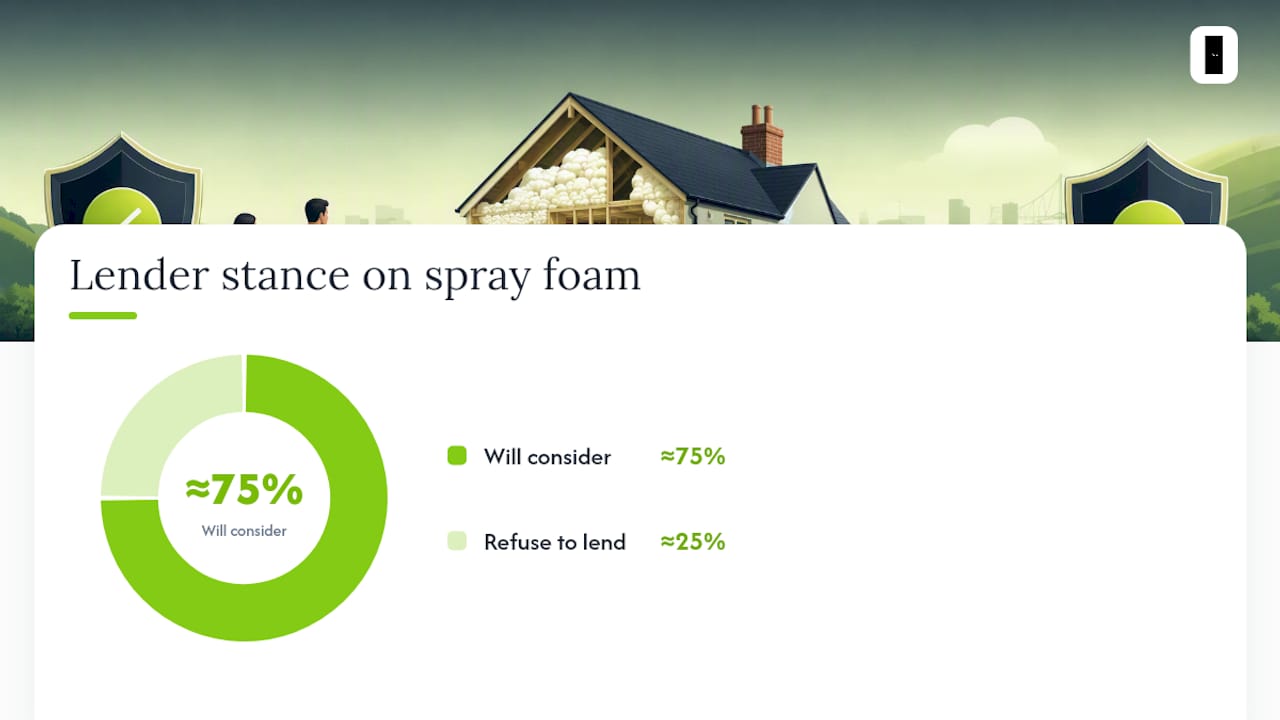
Spray foam insulation rarely destroys a property's value outright, but it does something arguably worse for a seller in a hurry: it stalls the sale. Roughly a quarter of major UK lenders won't touch a mortgage application on a home with retrofit spray foam in the roof, according to BBC News, and the rest usually want to proof the timbers underneath are sound. Your first move isn't panic. It's paperwork. Get a Property Care Association (PCA) inspection booked or your installation documents gathered before you list or remortgage, and read on for the evidence and remediation options that follow.
TL;DR:
- Certification from a PCA inspection or a product warranty can significantly improve mortgage prospects, but missing documents raise red flags and delay approvals.
- Removal of spray foam, especially when decay or moisture issues are present, can cost from several thousand up to over ten thousand pounds, affecting overall property value.
- A comprehensive evidence pack, including original installation documents and independent inspections, is essential to prevent delays and increase lender confidence.
- Buyers relying on mortgage finance are much less likely to purchase homes with foam insulation unless clear, verified certification or removal reports are provided.
Table of Contents
- Why spray foam worries lenders and surveyors
- How lenders actually treat homes with spray foam in the UK
- How spray foam affects property value and the buyer pool
- Documentation and evidence lenders accept
- Remediation options: removal, certification, or both
- Costs and timelines for surveys, removal and re-listing
- What to do if spray foam is discovered during sale or remortgage
- How certified removal or inspection restores marketability
- Common mistakes, red flags and rogue operators
- Get your property mortgage ready again
- Sources
- FAQ
Why spray foam worries lenders and surveyors
Lenders aren't reacting to the foam itself. They're reacting to what it hides.
Open cell foam is soft, breathable, and allows some vapour movement through the roof structure. Closed cell foam is rigid and forms a much tighter seal, which is exactly the problem: it can trap moisture against timber rafters and battens rather than letting the roof breathe as it was designed to. GOV.UK's technical paper on spray foam applied to timber sloped roofs sets out exactly this risk: when ventilation is compromised, condensation can form where nobody can see it, and timber decay follows quietly over years.
That's the crux of the valuation problem. A surveyor's job is to assess the condition of the roof structure, and spray foam physically prevents that. You can't see through it. You can't easily probe behind it. A valuer standing in a loft covered edge to edge in yellow or white foam has no way of confirming whether the rafters underneath are sound timber or slowly rotting.
This is why RICS treats spray foam as a significant modification rather than a routine upgrade. Its consumer guidance recommends independent advice from professionals with no commercial stake in the original installation, precisely because the installer telling you it's fine isn't the same as a surveyor confirming it.
What tends to show up in a surveyor's report once foam is spotted:
- A note that roof timbers "could not be fully inspected" due to obstruction
- A recommendation for a specialist report before the valuation is finalised
- Flags for visible staining, damp patches, or musty smells near eaves
- A caveat that the valuation figure is provisional pending further evidence
Pro Tip: Ask your installer for the original spec sheet showing which foam type was used and where. If that document doesn't exist, treat it as your first red flag, not a minor inconvenience.
None of this means every foam-insulated roof is rotting. Many aren't. But a surveyor who can't verify condition will write "cannot confirm" rather than "satisfactory," and that single phrase is often enough to trigger a lender's caution.
How lenders actually treat homes with spray foam in the UK
There's no single UK-wide ban on lending against spray foam properties, despite what some anxious sellers assume. What exists is a patchwork of caution that varies sharply by lender and by loan type.
The clearest data point comes from BBC News, whose 2024 survey found that a notable minority of the UK's biggest mortgage providers wouldn't lend at all on homes with retrofit spray foam in the roof. That leaves roughly three-quarters willing to consider it, but "consider" rarely means "approve without question."
Industry reporting suggests the issue touches a meaningful slice of the housing stock, with figures in the range of 230,000 to 250,000 English homes thought to have some form of spray foam installed, and most lenders now handling applications case-by-case rather than with a blanket rule. That's the good news for sellers: a case-by-case approach means good evidence can genuinely change the outcome.
What typically happens once foam is flagged during a mortgage application:
- Outright decline. Some lenders, particularly on certain product ranges, simply won't lend while foam is present in the roof, regardless of condition.
- Request for a specialist report. The most common response. The lender pauses the application pending a PCA inspection or equivalent evidence of timber condition.
- Insistence on removal. If a report flags decay, damp, or inadequate ventilation, some lenders will only proceed once the foam is stripped out and the roof re-inspected.
- Acceptance following certification. Where a clean PCA report or valid installation certificate exists, several lenders will proceed as normal.
Equity release lenders tend to sit at the stricter end of this spectrum. Because those products are secured against the full value of the property over a longer, less flexible term, providers are generally far less tolerant of any uncertainty around roof condition than a standard residential mortgage lender might be.
The Commons Library briefing on spray foam and mortgages confirms this pattern from a policy angle: spray foam impedes inspection of roof timbers, and that inspection gap, not the foam's insulating performance, is what has left some homeowners struggling to remortgage or sell. It's a documentation problem dressed up as a structural one, and documentation problems have documentation solutions.
How spray foam affects property value and the buyer pool
The financial hit from spray foam rarely shows up as a flat percentage knocked off asking price. It shows up as a shrinking pool of people who can actually buy your house.
Cash buyers don't need a mortgage valuation, so they're immune to the lending caution described above. That's exactly why they tend to be the ones circling spray foam properties, usually with an offer well under the asking price, because they know most mortgaged buyers have been scared off or turned down. Consumer guidance from SFAC describes sales collapsing at conveyancing stage once foam is discovered late, often after a buyer has already committed emotionally and financially to the purchase.
Here's the mechanism behind the discount, in plain terms:
- A valuer who can't confirm roof condition writes a cautious or "subject to" valuation rather than a clean figure.
- Lenders that require further evidence pause the mortgage offer, sometimes for weeks.
- Buyers relying on a mortgage either walk away or renegotiate the price downward to cover their own risk.
- The seller is left choosing between a lower cash offer, a delayed mortgaged sale, or removal before re-listing.
Additional survey work triggered by a spray foam discovery typically adds £400 to £800 in extra fees, on top of any delay. That's before anyone has decided whether removal is even necessary.
Disclosure matters here too. The TA6 property information form, which every seller completes during conveyancing, asks directly about alterations and insulation works. Answering vaguely or omitting spray foam doesn't make the problem disappear. It just moves the discovery point later in the process, usually right when a buyer's solicitor is running final checks, which is the worst possible time for a nasty surprise to surface.
Documentation and evidence lenders accept
The single biggest lever you have over how a lender treats your application is paperwork. Homeowners who arrive with a complete evidence pack get taken far more seriously than those who arrive with a shrug and a hope.
Here's what to gather, in order of priority:
- The original installation contract. This confirms who installed the foam, when, and which product was used. Missing this document is the first thing that makes a lender nervous.
- Warranty or insurance-backed guarantee. A valid, transferable guarantee signals the work was done to a recognised standard and gives the lender a fallback if something later goes wrong.
- BBA or Kiwa certification for the specific product used. These are the recognised UK technical approval marks for construction products, and a certificate ties your installation to an independently tested specification rather than an unverifiable claim.
- A PCA sprayed foam inspection report. The Property Care Association developed this protocol specifically to give lenders a standardised, trusted way to assess timber condition beneath existing foam, carried out by trained, registered assessors. A clear PCA report explicitly states whether ventilation is impaired or decay is present, and that clarity often removes the need for any further action at all.
- An independent RICS survey, where the lender or your own caution suggests it's warranted. This is separate from and typically more detailed than a standard mortgage valuation, and it carries more weight precisely because RICS surveyors have no financial stake in the original installation.
Once you have these documents, present them proactively rather than waiting to be asked. Send them to your broker or lender alongside the mortgage application, and flag them again to the surveyor before their visit if you can. A valuer who arrives already knowing a PCA report exists is far more likely to write a measured note rather than an alarmed one, and every one of our guides on lender expectations around spray foam points to the same conclusion: evidence offered early saves weeks later.
Remediation options: removal, certification, or both
Not every spray foam roof needs stripping back to bare rafters. The right route depends entirely on what a specialist inspection actually finds.
- Certification alone, when a PCA inspection confirms ventilation is adequate and timbers show no decay. Several lenders will proceed on the strength of a clean report without any physical work being needed.
- Partial removal, targeted at specific areas flagged during inspection, such as around eaves or valleys where moisture tends to collect.
- Full removal, usually required where decay, mould, or significant ventilation failure has already been identified, or where a lender simply won't accept certification alone regardless of condition.
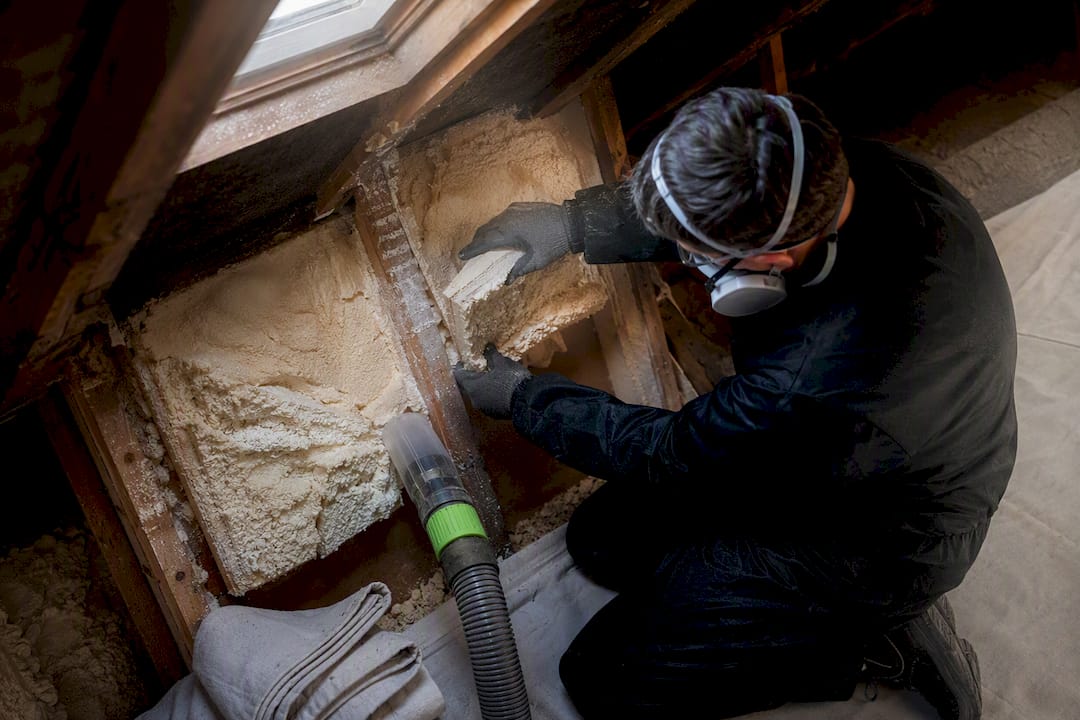
Closed cell foam is generally the harder and more expensive of the two to remove. Its rigid, densely bonded structure means it has to be mechanically stripped away in sections, often with more risk of damaging the timber underneath in the process. Open cell foam tends to lift away more easily, though "easier" still means specialist equipment and proper dust containment, not a weekend DIY job.
Pro Tip: Never agree to removal before you've had a specialist inspection. If certification alone would satisfy your lender, paying for full removal is money spent solving a problem you didn't actually have.
A competent removal contractor should run dust control throughout the job, inspect the exposed timbers once the foam is out, and provide a follow-up report confirming structural condition afterwards. That final certificate is what you hand to your lender or buyer's solicitor, and it's what turns a stalled application into a moving one. Our guide to how spray foam removal actually works covers the practical steps in more detail.
Costs and timelines for surveys, removal and re-listing
Numbers help here more than reassurance does, so here's a realistic UK picture.
A PCA sprayed foam inspection typically costs a modest fixed fee, often cheaper than the additional survey work that a spray foam discovery triggers mid-sale, which industry guidance puts at £400 to £800 on top of a standard valuation. Booking the inspection before you list, rather than after a buyer's surveyor flags it, almost always works out cheaper and faster.
Removal costs vary far more widely. According to the HomeOwners Alliance, full removal can run from a few thousand pounds up to over ten thousand pounds, depending on roof size, foam type, and how much timber repair is needed afterwards. A small terraced house with open cell foam in a straightforward loft sits at the lower end. A larger detached property with closed cell foam sprayed into an awkward, multi-pitched roof sits firmly at the upper end.
Realistic timelines:
- Inspection booking to report: typically one to two weeks, depending on assessor availability in your area.
- Removal work itself: anywhere from one day for a small, straightforward loft to several days for a larger or more complex roof.
- Timber repair, if needed: adds days rather than weeks in most cases, unless decay is extensive.
- Re-listing or resuming a stalled sale: once certification is in hand, most sellers can move again within two to three weeks of the original inspection.
Here's the cost-benefit sketch worth doing before you commit to anything: if a cash buyer's discount on your property is likely to run into the tens of thousands, and removal plus certification costs somewhere between £2,000 and £15,000, removal is very often the financially sensible route rather than the expensive one. Get a survey cost breakdown before assuming either figure.
What to do if spray foam is discovered during sale or remortgage
Speed and order matter here. Follow this sequence rather than reacting to the first piece of advice you hear:
- Pause, don't panic. Stop any planned work on the roof until you know what you're dealing with.
- Gather every existing document on the original installation: contract, warranty, product certificates.
- Book a PCA-registered inspection and, if your lender or solicitor suggests it, an independent RICS survey too.
- If the report is clean, submit the certification to your lender or buyer's solicitor immediately.
- If the report flags issues, get two or three removal quotes before committing to any contractor.
- Weigh a cash-buyer offer against removal cost if you're short on time, since a quick sale isn't always the better deal once the discount is factored in.
- Keep every document together in one folder for your conveyancer. Missing paperwork is the single most common cause of delay at this stage.
How certified removal or inspection restores marketability
A clean PCA report or a certified removal job doesn't just satisfy curiosity. It's the specific evidence most UK lenders are asking for when they pause an application over spray foam.
Specialist technicians working to PCA-certified standards can provide inspection and removal services that meet the protocols lenders recognise. Direct communication with the team performing the work, rather than through call centres, can be important when mortgage deadlines are tight.
The work can come backed by an insurance-backed warranty, and some specialists have experience completing jobs for many homeowners in London and the Southeast. What to expect when you hire a specialist includes transparent, upfront pricing with no hidden extras, and a written follow-up report suitable for submission to lenders or solicitors.
Common mistakes, red flags and rogue operators
Watch for cold callers offering "free" spray foam surveys out of nowhere, or anyone promising removal "guaranteed to pass" a lender before they've even inspected your roof. Genuine assessors don't need to pressure you into same-week removal.
Before you agree to anything, check credentials properly: PCA membership, RICS registration, and TrustMark listing all mean something. Ask any contractor for their certification number and for references from recent jobs, and don't be shy about asking to see a copy of a previous client's report.
Pro Tip: Get at least two independent inspection or removal quotes before signing anything. A single quote gives you a price. Two quotes give you a benchmark.
— jessica
Get your property mortgage ready again
There are other ways to approach a spray foam problem, from DIY research to waiting it out for a cash buyer at a discount. Neither gets you a clean mortgage valuation, and neither removes the underlying uncertainty a lender or a mortgaged buyer will eventually have to confront.
There are companies offering direct, PCA-certified assessment or removal services backed by insurance-backed warranties, with no call centres and no hidden pricing between customers and the technicians doing the work.

If you're preparing to sell or remortgage, the most useful next step is a straightforward one. Book a free inspection to find out exactly what condition your roof timbers are in before a lender or a buyer's surveyor does it for you. If removal turns out to be the right route, the spray foam removal service covers the work and the certification together, so you leave with one report and one point of contact throughout.
Sources
For readers who want to check the primary evidence directly: RICS publishes consumer guidance on spray foam covering surveyor considerations, GOV.UK holds the technical paper on moisture risk in timber roofs, the Property Care Association maintains its inspection protocol and assessor register, and the Commons Library briefing sets out the policy context behind lender caution.
This article is general information, not a substitute for advice from a qualified financial advisor. Consult a qualified financial professional about your own circumstances before acting on anything here.
- BBC News — Homeowners with spray foam insulated roofs struggle to remortgage
- Commons Library — Spray foam insulation and mortgages (briefing)
- RICS — Consumer guide: spray foam insulation
- GOV.UK technical paper — Spray foam insulation applied to timber sloped roofs in dwellings
FAQ
Can you sell a house with spray foam insulation?
Yes. Many sales complete successfully, but expect a smaller pool of mortgaged buyers and possible delays unless you have PCA certification or an installation warranty ready to show.
What is the value impact of spray foam on a property?
Spray foam itself rarely adds resale value, and its main effect on price comes indirectly: a valuer who can't confirm roof timber condition may write a cautious valuation, which can lead to cash-buyer discounts or delayed mortgaged offers.
Is spray foam insulation illegal in the UK?
No, spray foam insulation is not illegal in the UK. The issue lenders and surveyors raise is inspection difficulty and moisture risk in timber roofs, not the legality of the product itself.
Can you get a mortgage on a house with spray foam insulation?
Often, yes, though around a quarter of major UK lenders decline outright according to BBC News, and most others require a specialist report such as a PCA inspection before approving the loan.