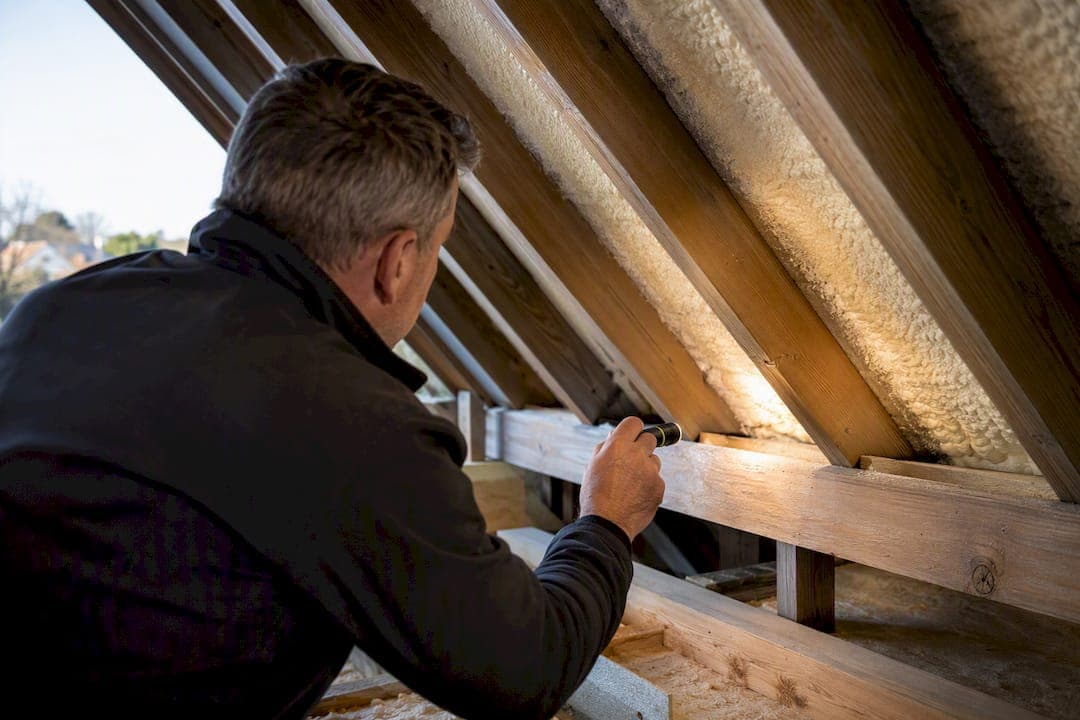
A PCA spray foam inspection is a non-invasive visual survey that checks what type of foam is in your roof, where it's been applied, and whether it's created hidden moisture or timber risks. It follows the Property Care Association's (PCA) published protocol, and while it gives lenders and surveyors evidence to work from, it does not guarantee mortgage approval. Around 25% of the UK's largest lenders still refuse to lend on properties with foam-insulated roofs regardless of the inspection findings.
TL;DR:
- A PCA spray foam inspection visually evaluates foam type, application, bonding, and moisture presence, but cannot uncover hidden defects behind insulation.
- Inappropriate foam application, such as spraying directly onto roof covering or covering breathable layers, significantly increases the risk of concealed timber decay.
- Proper documentation before inspection, including installation details and prior survey reports, improves the chances of mortgage acceptance despite current lender restrictions.
- Around 25% of the UK's largest lenders refuse mortgages on properties with foam-insulated roofs, regardless of inspection results, unless extensive supporting evidence is provided.
- The inspection outcome often leads to recommendations for intrusive investigation or removal only when visible moisture, timber decay, or improper installation are identified.
Table of Contents
- What does a PCA spray foam inspection cover?
- The spray foam inspection checklist: what an assessor actually does on site
- Common defects a PCA inspection flags, and why they matter
- Gathering the right paperwork before your inspection
- How mortgage lenders actually respond to spray foam findings
- When removal becomes the recommended next step
- What Revive Maintenance sees on site, week after week
- Why homeowners keep misreading what this inspection can do
- Get a PCA-aligned inspection without the guesswork
- Where to check the primary sources yourself
- Sources
- FAQ
What does a PCA spray foam inspection cover?
The PCA protocol was written to standardise something that had become a mess of conflicting opinions: what a competent, non-invasive check of sprayed foam should actually look like. It's designed for pitched roofs insulated with sprayed polyurethane (PU) foam, and it gives assessors a fixed checklist rather than a free-form opinion.
An inspector working to the protocol records:
- Whether the foam is open cell or closed cell
- Exactly where it's been applied (rafters only, or over sarking boards and tiles too)
- How well it's bonded to the substrate, and its approximate depth
- Ventilation provision within the roof void
- Any visible defects: staining, mould, sagging, or gaps
Crucially, the protocol has firm limits. It's a visual assessment, not exploratory surgery. Where the inspector can't see enough to reach a confident conclusion, they're required to say so and record their assumptions rather than guess. That's a deliberate safeguard against the vague, contradictory reports that used to leave homeowners and lenders none the wiser. If access is blocked or evidence is inconclusive, the protocol points towards recommending intrusive investigation instead of a best guess.
The spray foam inspection checklist: what an assessor actually does on site
If you understand the PCA foam inspection process before your surveyor arrives, you'll read the resulting report far more confidently. Here's roughly how it unfolds.
- Identify the foam type. Closed cell foam is rigid, dense, and typically pale in colour with a slightly glossy surface. Open cell foam is softer, more textured, and absorbs moisture more readily. This distinction matters enormously for risk. Closed cell foam is largely impermeable to vapour, so if it's been sprayed directly onto the underside of roofing felt or sarking, moisture can become trapped between the foam and the timber with nowhere to escape.
- Check where the foam sits. Has it been applied only to the rafters, leaving ventilation paths open, or has it been sprayed continuously across sarking boards, battens, and even the backs of tiles? The latter is a significantly higher-risk installation, because it removes the roof's ability to breathe.
- Assess bonding and continuity. Patchy application, voids behind the foam, or poor adhesion to timber can indicate a rushed or substandard install.
- Look for overspray and encapsulation. Foam creeping over electrical cables, downlights, or timber members it shouldn't touch is a common defect and a sign the original installer wasn't careful.
- Take moisture spot readings. Where accessible, inspectors use a moisture meter on exposed timber to flag early signs of damp before they become visible staining.
- Photograph everything. Depth, location, and condition all get recorded with images, because a written description alone rarely satisfies a lender's underwriter later.
Certain findings should trigger a recommendation for intrusive investigation: persistent damp readings, visible black mould, timber that feels soft or spongy to a probe, or foam so extensive that no meaningful visual check of the structure is possible. Understanding the difference between open cell and closed cell spray foam before the visit helps you ask the right questions when the report lands.
Pro Tip: Ask your inspector for the raw moisture meter readings, not just a summary verdict like "elevated" or "acceptable." Lenders and future surveyors take numbers far more seriously than adjectives.
Common defects a PCA inspection flags, and why they matter
Most reports don't come back clean. Industry data referenced in submissions to government has pointed to a defect rate as high as 35% across inspected properties, which gives some sense of how often problems turn up once someone actually looks properly.
The recurring red flags are:
- Elevated moisture readings at wall plates, spar feet, valley boards, and purlins, the timber junctions most prone to concealed wetting
- Dark staining or active mould growth on rafters and boarding
- Closed cell foam sprayed directly onto sarking, felt, or the backs of tiles rather than left as an air gap
- Non-vapour-permeable underlays trapping moisture against encapsulated timber
- Overspray encasing structural timber so thoroughly that its condition can't be judged at all
Each of these matters because timber decay is slow and largely invisible until it's advanced. Surveyors flag moisture stress at wall plates and purlins specifically because these locations statistically fail first, and once foam has sealed over them, nobody can check again without removing it. That's the core problem the protocol is trying to solve: foam doesn't just insulate, it can also hide the exact evidence a surveyor needs to make a judgement. Where closed cell foam sits directly against primary roof coverings, PCA and RPSA guidance often points towards early roof renewal, simply because there's no other reliable way to confirm the timber underneath hasn't already started to fail.
Gathering the right paperwork before your inspection
A PCA spray foam inspection is only as useful as the evidence available to support it. Turn up with nothing and the surveyor has little choice but to be cautious. Turn up with the right paperwork and you give them something concrete to work from.
Try to assemble:
- The original installation handover pack, including product specification and installer details
- Evidence of the roof's condition before installation, if any exists
- A hygrothermal assessment, if one was carried out at the time
- Dated photographs from the original install
- Invoices, warranties, and any prior surveys or damp reports
Targeted moisture readings or hygrothermal modelling become genuinely worth commissioning when a visual inspection alone can't settle the question. If foam coverage is extensive and access is limited, spending on a proper moisture or thermal assessment can sometimes avoid an unnecessary full removal recommendation. Reading up on PCA certification requirements before you start collecting documents helps you understand exactly what a lender or surveyor is likely to ask for.
Pro Tip: Keep a single folder, physical or digital, with every document and photo related to the foam from day one. Homeowners who lose this paperwork in a house move are the ones who end up facing the most conservative surveyor recommendations years later.
How mortgage lenders actually respond to spray foam findings
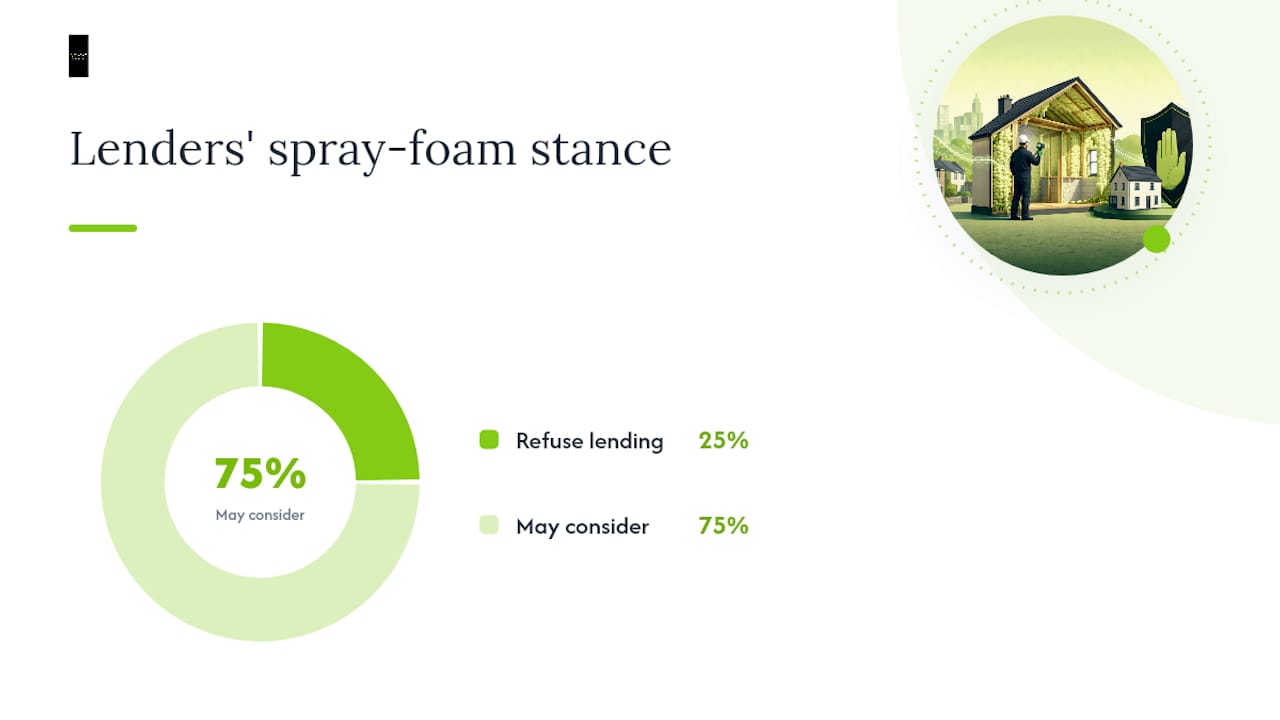
The gap between what a PCA inspection promises and what lenders actually do is the single most misunderstood part of this whole process. The protocol was built to move lenders towards case-by-case decisions instead of blanket refusals, but that shift has been slower than homeowners hoped.
Around 25% of the UK's largest mortgage lenders will not lend against a property with spray foam in the roof at all, regardless of the inspection findings. Equity release lenders are even more restrictive and generally decline such properties outright. Lenders willing to consider the property typically ask for:
- A specialist survey report, ideally PCA-aligned
- Documentary proof the foam was correctly installed
- Evidence the underlay is vapour-permeable, or hygrothermal modelling showing acceptable moisture performance
A PCA-accredited inspection paired with solid supporting paperwork can shift some lenders towards acceptance, but it's never a certainty. If you're facing a remortgage, read up on what lenders specifically require before your valuation, and brief your estate agent early if you're selling. An agent who understands the remortgage implications of spray foam can manage buyer expectations far better than one caught off guard mid-sale.
When removal becomes the recommended next step
Not every inspection ends in a removal recommendation, and the PCA's own consumer guidance is clear that foam doesn't always need to come out where risk is genuinely low. But certain findings tend to push assessors firmly towards removal rather than monitoring.
Removal is usually recommended when:
- Closed cell foam has been sprayed directly onto primary roof coverings with no ventilation gap
- Moisture readings or visible signs point to active timber decay
- Installation paperwork is missing entirely, leaving no way to verify the product or method used
- The extent of coverage makes any future visual check of the roof structure impossible
Where the picture is less clear-cut, targeted opening up, ongoing moisture monitoring, or hygrothermal modelling can sometimes settle the question without full removal. These routes take longer and cost more than a straightforward visual inspection, but they can occasionally save a roof from unnecessary strip-out. Cost is naturally the next question most homeowners ask, and it depends heavily on roof size, foam type, and access.
What Revive Maintenance sees on site, week after week
The single biggest gap I see between homeowners and a smooth inspection outcome is paperwork. Most people who had foam installed years ago have no idea where the installation pack went, if they ever had one.
That absence forces even a good inspector into caution, because the protocol requires them to record what they can't verify. Choosing a competent assessor matters just as much: look for PCA membership, current professional indemnity insurance, and independence from any removal company recommending its own work. Some PCA-certified technicians work directly with homeowners, with no middlemen and transparent pricing, and offer insurance-backed warranties and have experience with many homeowners.

Why homeowners keep misreading what this inspection can do
The biggest misconception is treating a PCA inspection as a fix rather than evidence. It doesn't change a lender's policy, it only gives everyone involved something factual to argue from. That distinction gets lost constantly.
The homeowners who fare best are the ones who gather paperwork before they book anyone, not after a mortgage application stalls. Start there. Then commission the inspection, and only consider removal or intrusive investigation once you have a specific recommendation in hand, not before. Guesswork solves nothing here; evidence does.
— jessica
Get a PCA-aligned inspection without the guesswork
Sprayfoamremovalhelp is the direct alternative to piecing this process together yourself or hiring a removal firm that also marks its own homework. Our PCA-certified technicians inspect first and recommend honestly, with transparent pricing and no hidden fees, because you deal straight with the team doing the work, not a call centre passing you along.

If you're unsure where your roof stands, start with a free inspection to get a PCA-aligned assessment before you commit to anything. If the findings point towards removal, our spray foam removal guide walks through exactly what happens next, backed by a 10-year insurance-backed warranty and the trust of more than 1,000 homeowners across London and the Southeast. Book your inspection today and get a straight answer instead of a guess.
Where to check the primary sources yourself
For the inspection method itself, read the PCA protocol directly. For lender behaviour and statistics, the Commons Library briefing is the most current summary. For general consumer advice on whether removal is necessary, the PCA's homeowner guidance is the clearest starting point.
Sources
- Spray foam insulation and mortgages - Commons Library
- Sprayed Foam Insulation Inspection Protocol - March 2023
FAQ
Is spray foam insulation illegal in the UK?
No, spray foam insulation is legal to install in the UK. The mortgage and resale problems it causes stem from lender caution and installation quality, not from any legal ban.
Who can issue a spray foam removal certificate?
A PCA-certified specialist or accredited assessor typically issues documentation confirming safe, correct removal, which lenders and buyers can then rely on. PCA-certified specialists or accredited assessors typically provide mortgage-compliant certification as part of spray foam removal services.
Is spray foam insulation still available in the UK?
Yes, spray foam insulation remains available and is still installed in UK properties, though many lenders now scrutinise it closely at survey stage. The current concern centres on historic installations that didn't follow proper ventilation or documentation practices.
How do I check for spray foam insulation in my loft?
Look in your loft for a solid, foam-like coating sprayed onto the underside of the roof rafters or boards, rather than the loose fibre or fluffy batt insulation most people expect. If you're unsure, a PCA-aligned inspection will confirm the type and extent within a single visit.
Does a PCA inspection guarantee my mortgage will be approved?
No. It provides evidence a lender can use, but around a quarter of major UK lenders decline properties with spray foam regardless of inspection findings.