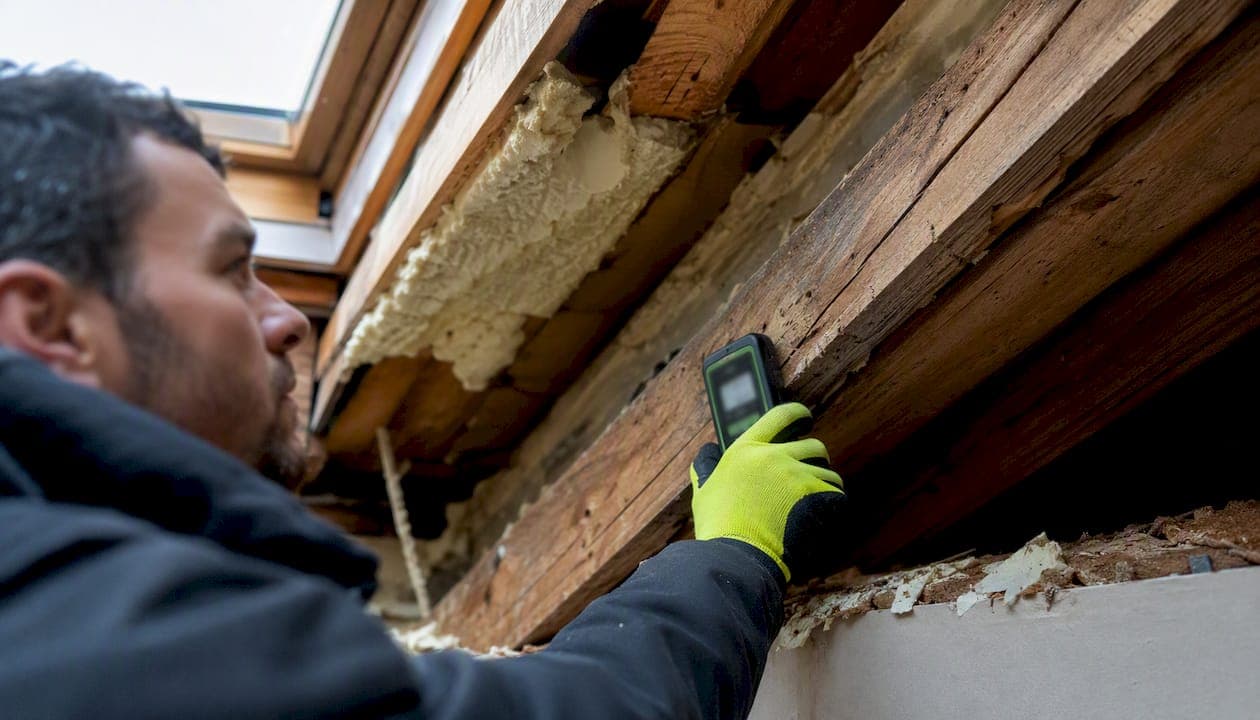
Post-removal certification is the formal paperwork that confirms hazardous material has been safely removed from a property. For licensed asbestos work, you need a Certificate of Reoccupation issued by an independent, UKAS-accredited analyst following a four-stage clearance process. For non-licensed asbestos work, a Statement of Cleanliness after a thorough visual inspection is the accepted standard. For problematic spray foam insulation, lenders and valuers expect a mortgage-compliant post-removal report containing photographic evidence, timber condition data, and ventilation assessments.
Here is a quick reference for which document applies to your situation:
- Licensed asbestos removal: Certificate of Reoccupation (UKAS-accredited, four-stage clearance, independent analyst)
- Non-licensed asbestos removal: Statement of Cleanliness (visual inspection; optional reassurance air testing)
- Spray foam insulation removal: Mortgage-compliant post-removal report with photos, timber and ventilation checks, and waste disposal records
Key takeaways
Post-removal certification in the UK requires the right document for the right type of work: a UKAS-backed Certificate of Reoccupation for licensed asbestos, a Statement of Cleanliness for non-licensed work, and a mortgage-compliant post-removal report for spray foam.
| Point | Details |
|---|---|
| Licensed asbestos: four-stage clearance | A Certificate of Reoccupation from a UKAS-accredited analyst is mandatory before reoccupation. |
| Non-licensed asbestos: Statement of Cleanliness | A visual inspection confirming no visible debris is the accepted standard; air testing is optional but advisable. |
| Spray foam: structured report required | Lenders expect photos, timber moisture readings, ventilation data, and waste consignment notes. |
| Appoint the analyst independently | HSE guidance requires the analyst to be independent of the removal contractor to preserve certificate validity. |
| Keep the full handover file | Retain all certificates, waste notes, photos, and warranties in digital and physical form for sale or remortgage. |
| Sprayfoamremovalhelp for spray foam removal | Revive Maintenance provides PCA-certified, mortgage-compliant removal with a 10-year insurance-backed warranty across London and the Southeast. |
Table of Contents
- What does post-removal certification cover in the UK?
- How does the four-stage asbestos clearance process work?
- When is a Statement of Cleanliness acceptable?
- What documentation do lenders expect after spray foam removal?
- Who can issue a clearance certificate and what accreditations should you check?
- How long will the site be off limits and what drives the cost?
- What paperwork must you keep after removal?
- How do you appoint an accredited analyst and what should you ask?
- How Revive Maintenance supports compliant post-removal certification
- An experienced contractor's view: pitfalls that cost homeowners dearly
- Sprayfoamremovalhelp: mortgage-compliant removal, done properly
- Sources
- FAQ
What does post-removal certification cover in the UK?
The phrase "post-removal certification" is not a single regulated term. It describes a family of documents that confirm a hazardous material removal has been completed safely and to a standard that satisfies health and safety law, mortgage lenders, and property valuers. Knowing which document applies to your situation prevents costly delays at sale or remortgage.
Core terms and when each applies
- Certificate of Reoccupation (also called a site clearance certificate for reoccupation): issued after licensed asbestos removal, following a formal four-stage clearance. Required before the enclosure is dismantled and the area reoccupied.
- Statement of Cleanliness: issued after non-licensed asbestos work. Confirms the area has been visually inspected and is free of visible asbestos debris. No formal air testing is legally required, though it is sometimes commissioned for reassurance.
- Clearance testing: the air monitoring and fibre counting carried out during stage three of the four-stage process. Results must meet the World Health Organisation clearance criterion of 0.01 fibres per millilitre of air.
- UKAS (United Kingdom Accreditation Service): the national body that accredits laboratories and inspection organisations. Certificates of Reoccupation must come from UKAS-accredited organisations.
- ISO 17025 / ISO 17020: the international standards that UKAS-accredited laboratories (ISO 17025) and inspection bodies (ISO 17020) must meet. Regulation 20 of CAR 2012 requires that air-measurement and clearance assessment work be performed by organisations meeting these criteria.
- RICS-style post-removal report: not a formal certificate but a structured report that surveyors and lenders expect after spray foam removal. No central RICS certificate exists; the content of the report is what matters.
Which materials this article covers
This article focuses on the two scenarios most likely to affect a UK property transaction: asbestos-containing materials and problematic spray foam insulation. Other hazardous materials, such as lead paint or Japanese knotweed, carry their own documentation requirements and are outside the scope of this guide.
Licensed versus non-licensed: the key decision rule
Whether you need a Certificate of Reoccupation or a Statement of Cleanliness depends on whether the work was licensable under the Control of Asbestos Regulations 2012. Licensed work is triggered by:
- Asbestos insulation, asbestos insulating board, or asbestos coating
- Any work where sporadic low-intensity exposure cannot be guaranteed
- Work in confined spaces or on friable materials
- Any work lasting more than one hour per week per person
If any of these apply, a licensed contractor and a four-stage clearance are mandatory.
How does the four-stage asbestos clearance process work?
HSG248 states that licensable asbestos removal must conclude with a formal four-stage clearance and that a Certificate of Reoccupation must be issued by an independent, UKAS-accredited analyst. The four stages are sequential; no stage can be skipped.
-
Preliminary check (Stage 1): The licensed contractor carries out an initial visual inspection of the enclosure before the independent analyst arrives. The purpose is to confirm that bulk removal is complete and the area is ready for formal assessment. The contractor documents this check.
-
Thorough visual inspection (Stage 2): The independent UKAS-accredited analyst enters the enclosure and conducts a detailed visual examination of all surfaces, including ledges, joints, and hidden voids. Any visible dust, debris, or residual material fails the inspection and requires further cleaning before the process continues.
-
Air monitoring and fibre testing (Stage 3): The analyst takes air samples inside the enclosure using personal or static sampling equipment. Samples are analysed by a UKAS-accredited laboratory to ISO 17025. The accepted clearance criterion is 0.01 fibres per millilitre of air. If results exceed this level, the enclosure is re-cleaned and re-tested.
-
Final assessment and Certificate of Reoccupation (Stage 4): Once air test results pass, the enclosure is dismantled under supervision. The analyst carries out a final visual check of the now-exposed area. If satisfied, the analyst issues the Certificate of Reoccupation, confirming the area is safe for reoccupation.
What the documentation looks like at each stage
- Stage 1: Contractor's preliminary check record (kept by contractor and client)
- Stage 2: Analyst's visual inspection report (issued to client)
- Stage 3: Laboratory air test report with fibre counts (issued to client and analyst)
- Stage 4: Certificate of Reoccupation (issued to client; copy retained by analyst)
Pro Tip: Appoint the analyst yourself, not through the contractor. HSE guidance is explicit that the analyst must be independent of the removal contractor to preserve the legal weight of the Certificate of Reoccupation. An analyst appointed by the contractor cannot be considered impartial, and some lenders and solicitors will query the certificate if the same company arranged both removal and clearance.
When is a Statement of Cleanliness acceptable?
For non-licensed asbestos work, a formal Certificate of Reoccupation is not required. The HSE's Approved Code of Practice L143 advises that a Statement of Cleanliness is appropriate after visual inspection confirming no visible dust or debris remains.
Non-licensed work typically covers:
- Removal of small quantities of asbestos cement products
- Disturbance of textured decorative coatings (such as Artex) in limited areas
- Minor repairs to asbestos-containing floor tiles
- Work where sporadic low-intensity exposure is maintained throughout
What a Statement of Cleanliness must confirm
A compliant Statement of Cleanliness should include:
- The address and specific area where work was carried out
- The date of the visual inspection
- The name and company of the person who carried out the inspection
- A clear statement that no visible asbestos dust or debris was present at the time of inspection
- The type of asbestos-containing material that was disturbed or removed
Some homeowners and property professionals choose to commission reassurance air testing even for non-licensed work. This is not a legal requirement, but it produces a laboratory report that can be included in a property handover file and may satisfy cautious lenders or buyers who are aware asbestos-containing materials were present. The cost is relatively modest compared to the delays a missing document can cause at exchange.
What documentation do lenders expect after spray foam removal?
RICS does not issue a central spray foam removal certificate. What RICS advises is that owners maintain a comprehensive building work handover file after spray foam removal, because surveyors and lenders commonly request photographic records, timber condition assessments, and ventilation information before accepting mortgageability.
The absence of this documentation is one of the most common reasons a property sale stalls after spray foam removal. A verbal assurance from a contractor is not sufficient; lenders want a paper trail.
What lenders and valuers commonly request
- Before, during, and after photographs: a structured photographic sequence showing the roof structure before removal, during the process, and after full clearance. Timbers must be visible and clearly free of residual foam.
- Timber condition and moisture readings: a written assessment confirming the structural timbers are sound, with moisture meter readings taken at multiple points. Elevated moisture can indicate trapped condensation caused by the foam.
- Ventilation assessment: confirmation that roof ventilation has been restored or improved to current standards following removal.
- Removal methodology statement: a description of how the foam was removed (mechanical, chemical, or thermal), which materials were used, and how residues were managed.
- Waste disposal records: consignment notes and duty of care documentation confirming the foam was disposed of lawfully.
- Contractor credentials: evidence that the removal was carried out by a trained, certified operative, such as PCA certification.
For listed buildings or properties with historic fabric, full documentation is especially important. Surveyors will scrutinise the impact of both the original foam application and its removal on the structural integrity and character of the building. A spray foam removal certificate that includes all of the above elements gives valuers the confidence to proceed.
Who can issue a clearance certificate and what accreditations should you check?
Not every contractor or laboratory is authorised to issue a Certificate of Reoccupation. HSG248 requires UKAS-accredited organisations for clearance testing, specifies ISO 17020 and ISO 17025 criteria, and emphasises analyst impartiality and desktop quality assurance of completed certificates.
A Certificate of Reoccupation issued by an organisation without the correct UKAS scope of accreditation carries no regulatory weight. Solicitors, lenders, and building control officers are increasingly checking accreditation status before accepting clearance paperwork. Always verify the certificate number and scope on the UKAS website before the work begins, not after.
Accreditations to verify
- UKAS accreditation for laboratories (ISO 17025): confirms the lab is competent to analyse air samples and report fibre counts to the required standard.
- UKAS accreditation for inspection bodies (ISO 17020): confirms the analyst or inspection organisation is competent to carry out visual inspections and issue Certificates of Reoccupation.
- HSG247 compliance: the licensed contractor's guide sets out supervision, training, and documentation obligations that licensed contractors must meet.
How to verify credentials before you book
- Search the UKAS website (ukas.com) by organisation name and confirm the scope includes asbestos air testing or asbestos inspection as appropriate.
- Ask the analyst for their UKAS certificate number and the schedule of accreditation; a legitimate analyst will provide this without hesitation.
- Confirm the analyst is independent of the removal contractor (different company, no financial relationship).
- Ask the laboratory for their ISO 17025 certificate number and the specific test methods covered.
- Check the HSE's licensed asbestos contractor register to confirm the removal contractor holds a current licence.
How long will the site be off limits and what drives the cost?
The time a site remains inaccessible depends on the scale of the removal and the speed of the clearance process. A small non-licensed job, such as removing a section of asbestos cement soffit, may be completed and cleared within a single day. A full enclosure licensed removal in a domestic loft, with four-stage clearance, typically takes two to four days from start to Certificate of Reoccupation, assuming air test results pass first time.
Common cost drivers
- Size of the enclosure: larger enclosures require more cleaning time, more air samples, and longer analyst attendance.
- Complexity of access: confined spaces, high rooflines, or restricted entry points add time and specialist equipment costs.
- Timber or structural remediation: if the removal reveals damp timbers, rot, or structural damage, remediation work adds cost and may delay clearance.
- Number of clearance samples: the analyst determines the minimum number of samples based on enclosure size; larger or more complex enclosures require more samples, each of which carries a laboratory analysis fee.
- Remediation of poor initial containment: if the original enclosure was inadequately sealed, additional cleaning rounds are needed before air tests can pass.
Red flags that push time and price up
- Water ingress or active damp within the enclosure
- Structural damage to timbers or roof decking discovered during removal
- Residual foam or debris found during the analyst's visual inspection
- Air test results above the clearance criterion, requiring re-cleaning and re-testing
Always request a written estimate that separates the removal contractor's fee from the independent analyst and laboratory testing fees. These are distinct services and should be priced separately. For spray foam, you can review removal cost guidance to understand typical price ranges before committing.
What paperwork must you keep after removal?
Every homeowner and property professional should build a building work handover file after any hazardous material removal. RICS recommends a complete file containing contracts, manufacturer instructions, before/after photos, and post-removal documentation, because this file is what valuers and lenders examine during sale or remortgage.
Documents to retain
- Certificate of Reoccupation / site clearance certificate: the primary document for licensed asbestos work; keep the original and a digital copy.
- Statement of Cleanliness: for non-licensed asbestos work; keep with the analyst's contact details.
- Clearance air test reports: laboratory reports showing fibre counts and pass/fail results.
- Waste consignment notes: Gov explains the duty of care requirements; these notes confirm hazardous waste was removed and disposed of lawfully by a registered carrier.
- Before, during, and after photographs: timestamped images showing the full removal sequence.
- Timber condition and moisture assessment: written report with readings.
- Ventilation assessment: confirmation that ventilation meets current standards.
- Removal contract and scope of works: the signed agreement with the contractor.
- Warranties and insurance-backed guarantees: any ten-year or other guarantees provided by the contractor.
- Analyst and laboratory contact details: names, company names, UKAS certificate numbers.
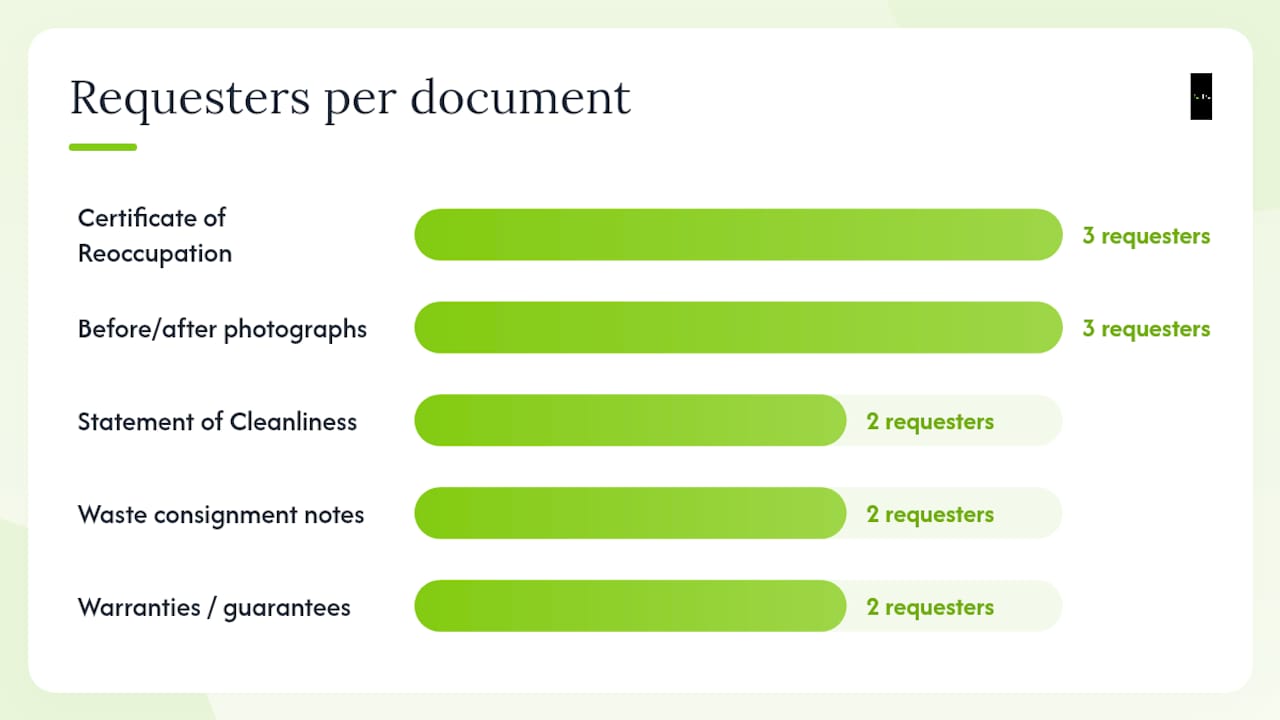
Who asks for which document
| Document | Who requests it |
|---|---|
| Certificate of Reoccupation | Lender, solicitor, building control |
| Statement of Cleanliness | Buyer's solicitor, lender |
| Waste consignment notes | Solicitor, Environment Agency if queried |
| Before/after photographs | Valuer, lender, buyer |
| Timber and ventilation assessment | Lender, valuer |
| Warranties / guarantees | Buyer, lender |
Store documents in both digital and physical formats. A shared folder (such as a cloud drive) accessible to your solicitor speeds up the conveyancing process considerably. You can also upload removal records directly through Sprayfoamremovalhelp's platform to keep everything in one place.
How do you appoint an accredited analyst and what should you ask?
Appointing the right analyst is the single most important step in the clearance process. Get this wrong and the certificate may be challenged.
- Scope the job first. Confirm with the licensed contractor whether the work is licensable and whether a four-stage clearance is required. Get this in writing.
- Search UKAS for accredited analysts. Go to ukas.com, search by "asbestos" and your region, and identify organisations with ISO 17020 scope for inspection or ISO 17025 scope for air testing.
- Confirm independence. The analyst must have no financial or employment relationship with the removal contractor. Ask directly: "Are you employed by or financially connected to the contractor carrying out this removal?"
- Agree the scope of testing. Confirm the number of air samples, the acceptance criterion (0.01 fibres per millilitre), and whether the analyst will witness smoke tests and the visual inspection.
- Book the analyst directly. Issue your own purchase order or booking confirmation to the analyst, not via the contractor.
- Agree deliverables in writing. Confirm what documents you will receive, who they will be addressed to, and the expected turnaround time for laboratory results.
Questions to ask before booking
- What UKAS accreditation do you hold, and what is your certificate number?
- Will you issue a Certificate of Reoccupation addressed to me as the building owner?
- Are you independent of the removal contractor?
- How many air samples will you take, and what is the acceptance criterion?
- What is your turnaround time for laboratory results?
- Will you attend site for the visual inspection and smoke tests in person?
Red flags to avoid
- Analyst is employed by or recommended exclusively by the removal contractor
- No UKAS accreditation or vague references to "equivalent" standards
- Unwillingness to issue the certificate directly to the building owner
- No written scope of testing agreed in advance
Deliverables you must receive
- Signed Certificate of Reoccupation addressed to you
- Laboratory air test report with fibre counts and pass/fail result
- Analyst's visual inspection report
- Analyst's UKAS certificate number and scope
How Revive Maintenance supports compliant post-removal certification
Sprayfoamremovalhelp, trading as Revive Maintenance, provides specialist spray foam removal services across London and the Southeast, with a clear focus on mortgage-compliant outcomes. Every job is carried out by PCA-certified technicians who understand what lenders and valuers need to see.
The service covers:
- Mortgage-compliant removal: closed and open cell spray foam removed safely, with the full photographic sequence, timber moisture readings, and ventilation assessment that lenders expect.
- Post-removal certificate and completion report: a structured completion report confirming removal methodology, timber condition, and ventilation status, suitable for submission to a valuer or lender.
- PCA/RICS-aware reporting: reports are structured to address the content RICS surveyors and mortgage lenders look for, reducing the risk of a valuer requesting further evidence.
- 10-year insurance-backed warranty: every completed job carries a warranty, giving buyers and lenders additional confidence.
- Direct service model: you deal directly with the team doing the work. No middlemen, no hidden fees, transparent pricing from the outset.
- Over 1,000 homeowners served across London and the Southeast.
When you book, you can expect an initial inspection, a clear written scope of works, the removal itself, and a final completion report. For properties where an independent analyst is also required, the team can advise on appointing one correctly. To book a certification inspection or arrange a free property assessment, visit the Sprayfoamremovalhelp website.
An experienced contractor's view: pitfalls that cost homeowners dearly
The most common compliance failures are not technical. They are administrative, and they are almost always avoidable.
Missing waste consignment notes come up repeatedly. A homeowner completes removal, the contractor takes the material away, and nobody asks for the consignment note. Months later, at exchange, the buyer's solicitor requests evidence of lawful disposal. Without the note, the seller either has to track down a contractor who may no longer be trading or pay for an indemnity policy. Neither is a good outcome.
The second recurring problem is the analyst appointed by the contractor. It happens because it is convenient, not because it is correct. The certificate looks legitimate, but when a sharp solicitor or lender queries the independence of the analyst, the whole clearance process is called into question. The cost of re-testing can exceed the original clearance fee.
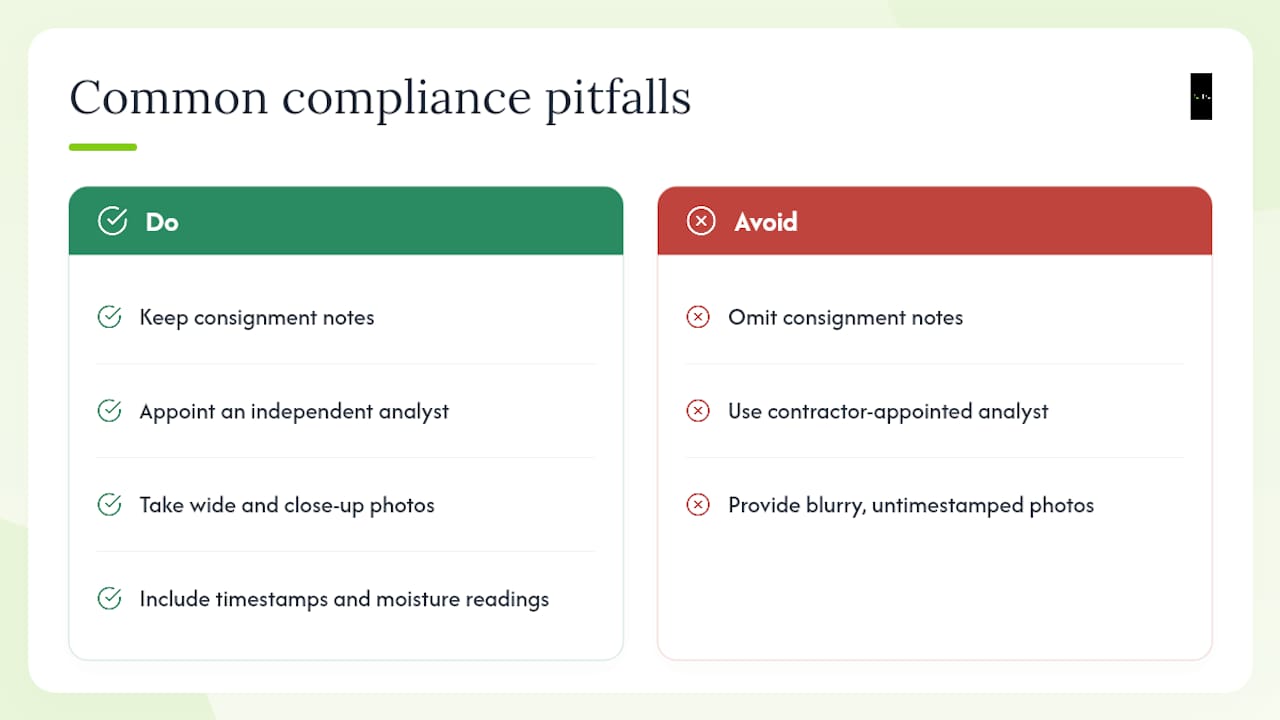
Poor photographic records are the third failure. A handful of blurry images taken on a phone, with no timestamps and no clear view of the timber structure, will not satisfy a valuer. The photographic sequence needs to be systematic: wide shots of the whole roof space, close-ups of individual timbers, moisture meter readings in frame, and a final clear image of the clean, exposed structure.
Dos and don'ts at handover
Do:
- Insist on a signed Certificate of Reoccupation or Statement of Cleanliness before the contractor leaves site
- Request waste consignment notes on the day of removal
- Appoint the analyst yourself, in writing, before work begins
- Keep a digital copy of every document in a named folder
Don't:
- Accept a verbal assurance that "the paperwork will follow"
- Allow the contractor to appoint the analyst on your behalf
- Sign off on completion without reviewing the photographic record
- Assume a certificate is valid without checking the UKAS accreditation number
A property professional once described a sale that fell through at the final week because the spray foam removal certificate contained no timber moisture data. The buyer's lender declined to lend without it. The seller had to commission a new inspection, wait three weeks for a report, and renegotiate the completion date. The original removal had been done correctly; the paperwork had simply not been thorough enough.
Sprayfoamremovalhelp: mortgage-compliant removal, done properly
Spray foam removal that leaves you without the right paperwork is removal that hasn't finished. Sprayfoamremovalhelp gives homeowners, estate agents, and landlords across London and the Southeast a complete service: safe removal by PCA-certified technicians, a structured post-removal report that satisfies RICS surveyors and mortgage lenders, and a 10-year insurance-backed warranty on every job.
Unlike general builders or insulation contractors, Revive Maintenance's team works directly with you, with no middlemen and no hidden fees. Every report includes the photographic sequence, timber moisture readings, and ventilation assessment that lenders actually ask for. Over 1,000 homeowners have used the service to resolve spray foam mortgage problems and complete their sales.
If your property has spray foam insulation and you need a spray foam mortgage guide or want to book a free inspection, visit Sprayfoamremovalhelp today. You can also go straight to the free inspection booking page to arrange an assessment at no cost.
This article is general information, not a substitute for advice from a qualified doctor. Consult a qualified healthcare professional about your own circumstances before acting on anything here.
Sources
These primary authorities are the definitive references for UK post-removal certification requirements:
- HSG248 - Asbestos: The Analysts' Guide
- Control of Asbestos Regulations 2012 — regulation 20
- Spray foam insulation — RICS consumer guide
- Gov
FAQ
Do you get a certificate after asbestos removal?
Yes. Licensed asbestos removal must conclude with a Certificate of Reoccupation issued by an independent, UKAS-accredited analyst following a four-stage clearance process. For non-licensed work, a Statement of Cleanliness is issued after a visual inspection confirming no visible debris remains.
What is the four-stage clearance for asbestos?
The four stages are: a preliminary check by the contractor, a thorough visual inspection by an independent UKAS-accredited analyst, air monitoring and fibre testing by an accredited laboratory, and a final assessment followed by issuance of the Certificate of Reoccupation once results pass.
What is a Statement of Cleanliness after non-licensed asbestos work?
A Statement of Cleanliness is a written confirmation, issued after non-licensed asbestos work, that the area has been visually inspected and is free of visible asbestos dust or debris. It is the standard document required by HSE's L143 Approved Code of Practice for lower-risk, non-licensable removal work.
What documentation do lenders need after spray foam removal?
Lenders and valuers typically require a structured post-removal report containing before, during, and after photographs, timber moisture readings, a ventilation assessment, the removal methodology, and waste consignment notes. RICS guidance recommends keeping all of this in a building work handover file.
Can the removal contractor appoint the clearance analyst?
No. HSE guidance is clear that the analyst must be appointed independently by the building owner, not by the removal contractor. An analyst appointed by the contractor cannot be considered impartial, and the resulting certificate may be challenged by lenders, solicitors, or building control.