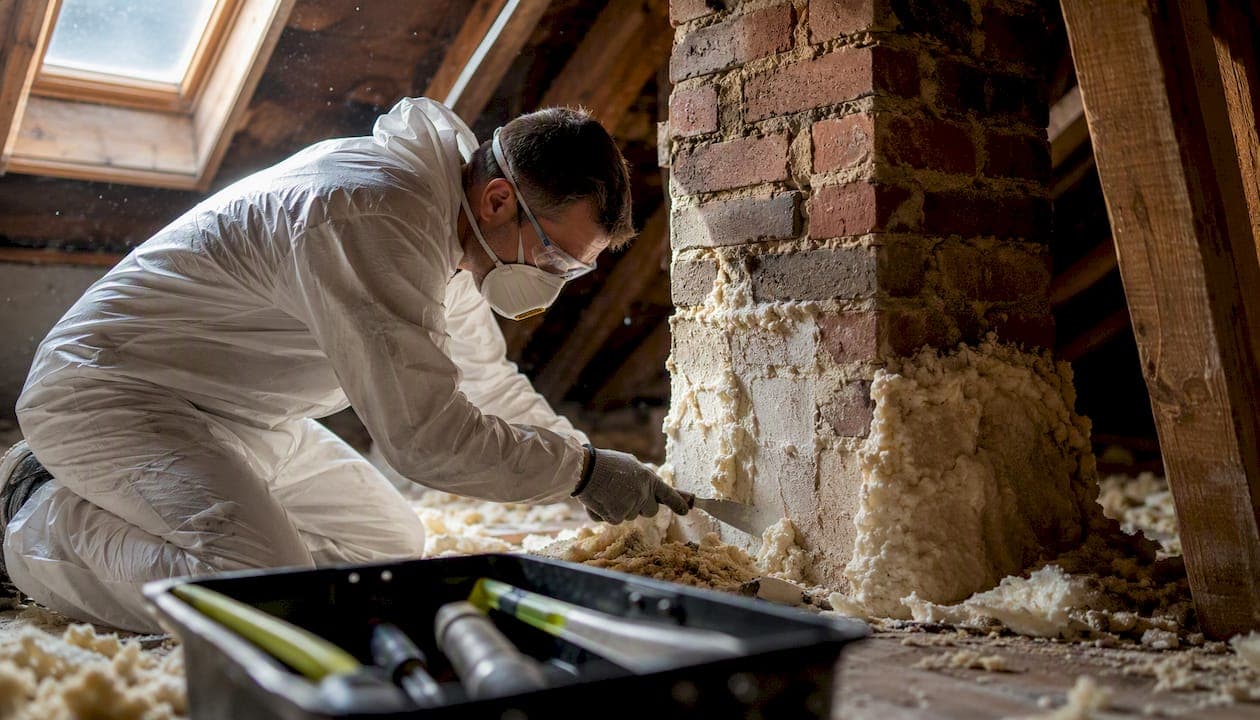
Spray foam installed around a chimney or flue can cause serious problems, including fire-safety concerns, trapped moisture, timber decay, and mortgage refusals. It is not automatically fatal to a sale, but undocumented or poorly installed foam near a chimney is one of the fastest ways to stall a remortgage or property transaction in the UK. Act on these three things first:
- Stop using the appliance if you notice unusual odours, staining on the breastplate, or visible foam touching the flue liner or masonry.
- Book an independent inspection from a PCA-certified or RICS-qualified surveyor before contacting any removal firm. An emergency inspection can usually be arranged within days.
- Gather your paperwork: installer invoices, British Board of Agrément (BBA) product certificates, before/after photos, and any TrustMark or PCA installer IDs. Lenders and surveyors will ask for all of it.
Pro Tip: Do not call a removal firm before you have an independent surveyor's report. Removal without that report can leave you with a large bill and still no mortgage-acceptable paperwork, as one homeowner discovered after paying £13,000 for removal and still struggling to satisfy lenders.
Key takeaways
Spray foam near a chimney is a manageable problem when handled by certified professionals with the right paperwork, but undocumented or poorly removed foam can stall a sale or remortgage indefinitely.
| Point | Details |
|---|---|
| Safety first | Stop using the appliance if you smell unusual odours or suspect foam is touching the flue liner. |
| Documentation drives lender decisions | BBA certificates, TrustMark/PCA installer IDs, and an independent RICS/PCA report are what lenders require. |
| Full cure takes 24–72 hours | Re-entry after spray foam work requires PPE until the space is fully cured and ventilated. |
| Avoid cold-call removal firms | Unsolicited removal offers frequently result in poor paperwork and no improvement in mortgageability. |
| Sprayfoamremovalhelp | Provides PCA-certified removal, independent inspection reports, and a 10-year insurance-backed warranty across London and the South East. |
Table of Contents
- Why chimneys and flues make spray foam a different problem
- The real chimney spray foam problems you need to know about
- How UK building-safety rules and lenders treat spray foam near chimneys
- What surveyors check when they find spray foam near a chimney
- A step-by-step action plan if you find spray foam around your chimney
- What safe removal and remediation actually look like
- How long before the space is safe after spray foam work
- How Revive Maintenance handles chimney-area spray foam
- The part of this problem most homeowners underestimate
- Sprayfoamremovalhelp: certified removal with the paperwork lenders accept
- Sources
- FAQ
Why chimneys and flues make spray foam a different problem
Spray polyurethane foam (SPF) is a two-component insulation material: a polyol resin and an isocyanate react on contact and expand to fill cavities. It is widely used in loft and roof insulation, but chimneys and flue areas present a distinct set of risks that standard loft applications do not.
The two main types behave very differently:
- Open-cell foam is soft, vapour-permeable, and lower density. It allows some moisture movement but offers less structural rigidity and is more prone to absorbing water over time.
- Closed-cell foam is dense, rigid, and acts as a vapour barrier. It bonds tightly to masonry and timber, making removal significantly harder and adding a combustible load to the structure.
Chimneys are different from a plain roof space for three reasons. First, flue temperatures can reach several hundred degrees Celsius during normal use, and any insulation material applied too close to a liner or masonry stack must be rated for that heat exposure. Second, chimneys require periodic inspection of masonry, liners, and flashings; foam that covers these surfaces physically blocks that access. Third, the combustion air supply to an open fire or stove depends on adequate ventilation paths, and foam that seals those paths can starve the appliance of air or cause dangerous backdraught. For a fuller breakdown of foam types and safe installation, the spray foam insulation guide covers both in plain terms.
The real chimney spray foam problems you need to know about
1. Condensation and timber decay
Chimneys are cold on the outside and warm on the inside during use. When foam seals the surrounding roof space, it disrupts the ventilation that normally keeps timbers dry. Which? warns that poorly installed spray foam can block ventilation and cause severe condensation, the primary mechanism for timber decay. Around a chimney stack, this is amplified: the temperature differential between the warm flue and the cold external masonry creates a persistent condensation point, and foam that traps that moisture against roof timbers accelerates rot.
2. Added combustible material near a heat source
Closed-cell SPF is combustible. Applied near a chimney breast or flue, it increases the fire load in a compartment that already carries significant heat risk. BRE testing found that retrospectively applied spray foam can change the fire performance of roof systems, and that exposed insulation often needs encapsulation or fire linings to meet Approved Document B expectations. Near a chimney, this is not a theoretical concern; it is a building-regulation compliance question.
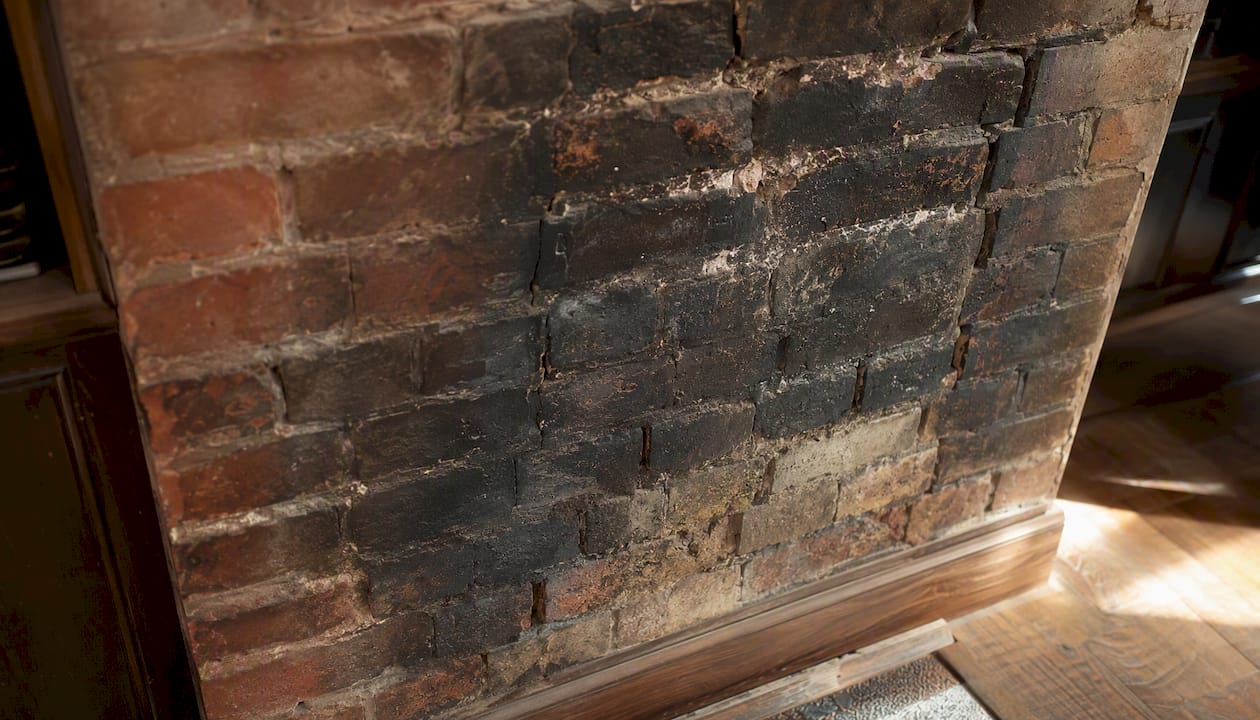
3. Blocked access to liners, flashings, and masonry
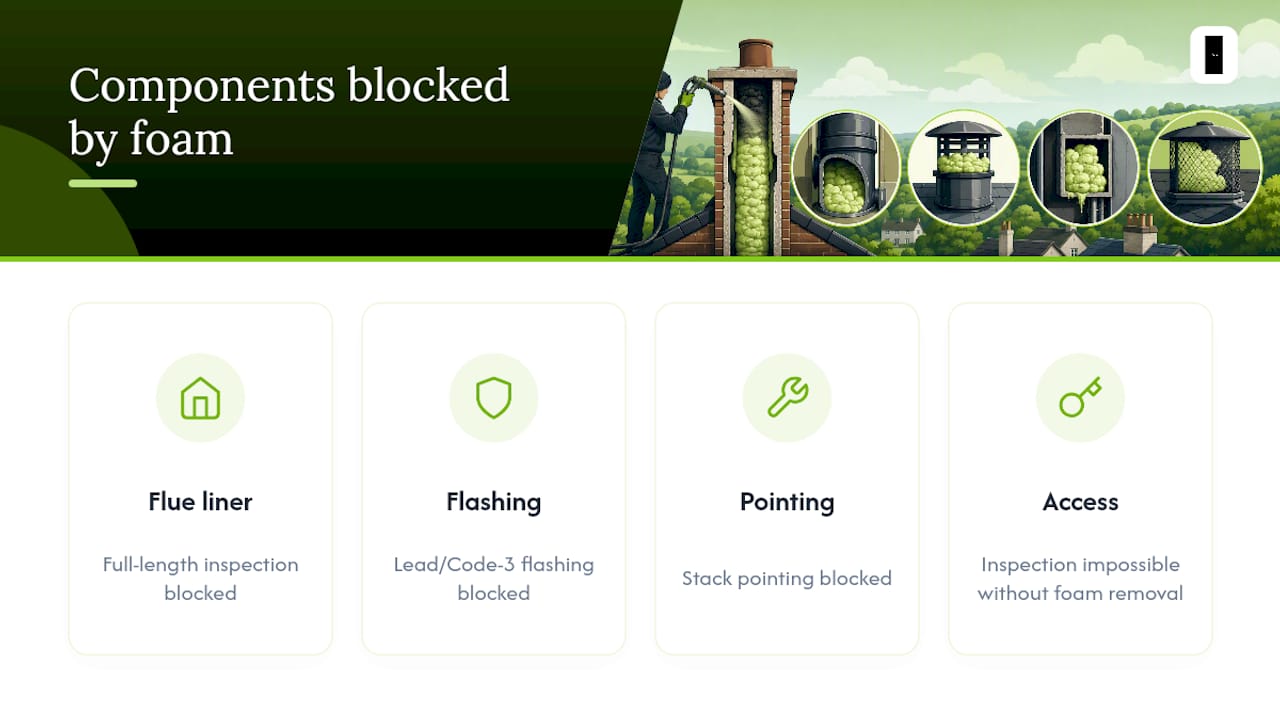
Surveyors and chimney sweeps need to inspect the full length of a flue liner, the lead or code-3 flashing at the roof junction, and the masonry pointing of the stack. Foam applied over these areas makes that inspection impossible without first removing the foam. Repairs to cracked liners or failed flashings, which are routine maintenance items, become major works once foam is in the way.
4. Combustion air starvation
Open fires and solid-fuel stoves require a defined volume of combustion air. Foam that seals gaps around the chimney breast at ceiling or floor level can reduce that air supply below safe operating levels, increasing the risk of carbon monoxide production. This is a safety issue, not just a cosmetic one.
5. Surveyor and lender consequences
The House of Commons Library reports that lenders have adopted a cautious, case-by-case approach because standardised inspection protocols are lacking, and cites PCA data showing a notable rate of defects in inspected properties. A surveyor who cannot visually confirm the condition of timbers and structural junctions around a chimney will flag the property as a risk, which commonly triggers a mortgage retention or outright refusal.
How UK building-safety rules and lenders treat spray foam near chimneys
The regulatory picture has several layers, and they interact in ways that catch homeowners off guard.
-
Approved Document B (fire safety) sets out the fire-performance requirements for building materials used in roofs and around chimneys. BRE testing commissioned by the government found that retrospectively applied SPF can alter external fire-spread classifications, and that encapsulation behind fire linings is a common mitigation strategy. Foam that was installed without reference to these requirements may not comply.
-
Building work classification matters because adding insulation to a roof or chimney area can constitute a material alteration under the Building Regulations. If the work worsens fire-safety performance, it triggers a compliance obligation that the original installer may not have addressed.
-
Lender behaviour has hardened since 2024. BBC reporting found that a significant share of mainstream lenders were refusing homes with spray foam in the roof, and that affected homeowners sometimes face cold-call removal offers that can worsen outcomes. Lenders typically require an independent surveyor's report, a BBA product certificate for the foam used, evidence of TrustMark or PCA installer membership, and an insurance-backed warranty before they will lend.
-
No universal ban exists. The Property Care Association (PCA), RICS, and the Homeowners Alliance all note that the outcome depends on the quality of installation and the completeness of documentation. A well-documented installation by a certified installer, with BBA certification and an independent inspection report, can satisfy many lenders.
Pro Tip: Ask your lender's surveyor directly which specific documents they need before commissioning any work. Different lenders have different thresholds; knowing the exact requirement saves you from paying for a report that does not satisfy your particular lender.
What surveyors check when they find spray foam near a chimney
A chartered surveyor or RICS valuer following standard practice will work through a defined checklist when spray foam is present near a chimney or flue.
- Visible timber condition — are rafters, purlins, and ceiling joists accessible, and is there any visible staining, softness, or discolouration suggesting moisture damage?
- Ventilation paths — are ridge vents, eaves vents, and any combustion air gaps still open, or has foam sealed them?
- Flue clearance — is the required air gap between the flue liner and any combustible material maintained?
- Moisture evidence — are there damp patches, salt deposits, or efflorescence on the chimney breast or surrounding masonry?
- Roof and tile condition — can the surveyor confirm that tiles and flashings are undamaged and accessible for future maintenance?
- Documentation review — does the homeowner hold a BBA certificate for the product, a TrustMark or PCA installer ID, before/after photographs, and an insurance-backed warranty?
The documents surveyors most commonly request are:
- BBA or equivalent product certification for the specific foam used
- Installer's TrustMark registration or PCA membership certificate
- Photographic evidence of the roof space before and after installation
- An independent inspection report from a PCA-registered surveyor
- A 10-year insurance-backed warranty from the installer
If you are arranging an inspection, ask the surveyor two specific questions: whether targeted remediation (improved venting, local encapsulation with a fire lining) could avoid full removal, and whether a RICS sign-off after any remediation will satisfy your lender. The answers will shape the scope and cost of any work. The spray foam certificate page explains what mortgage-compliant sign-off looks like in practice.
A step-by-step action plan if you find spray foam around your chimney
- Stop using the appliance until a qualified chimney sweep or surveyor has confirmed the flue is clear and combustion air supply is adequate.
- Ventilate the space naturally by opening loft hatches and windows; do not use fan heaters to force-dry a damp roof space, as this can accelerate timber movement.
- Keep children and pets away from the loft space until the inspection is complete.
- Gather all documentation: installer invoice, product safety data sheet (SDS), BBA certificate, TrustMark or PCA installer ID, any prior survey reports, and photographs.
- Arrange an independent inspection from a PCA-registered or RICS-qualified surveyor. Do not rely on the original installer's own assessment.
- Get written quotes from at least two certified removal firms if remediation is advised. Ask each firm for evidence of PCA membership, TrustMark registration, and their warranty terms.
- Request mortgage-compliant documentation in writing before any work begins: an independent RICS/PCA inspection report, waste transfer notes, and a 10-year insurance-backed warranty.
On cost: removal is labour-intensive and typically costs several thousand pounds, often more than the original installation. According to Checkatrade's cost guide, removal costs vary considerably depending on access, the extent of foam, and whether scaffolding or structural repairs are needed. Closed-cell foam costs more to remove than open-cell because of its rigidity and adhesion. Get itemised quotes and confirm what the price includes before signing anything.
Pro Tip: Check the certifications page to see exactly what PCA and TrustMark membership means and what questions to ask any firm you are considering.
What safe removal and remediation actually look like
Safe removal of spray foam near a chimney is not a DIY job. RICS guidance is explicit: spray foam is often treated as a permanent installation, and incorrect removal risks damaging tiles, electrics, and structural timbers. The process a reputable contractor follows typically covers:
- Scaffold access where needed for chimney-adjacent work, with dust containment sheeting.
- Mechanical cutting and scraping to remove the bulk of the foam, followed by careful hand-finishing around masonry, liners, and flashings.
- Dust control and PPE throughout, in line with COSHH requirements for isocyanate-containing materials.
- Local repairs to any tiles, flashings, or pointing disturbed during removal.
- Non-combustible lining or Superfoil installation where appropriate, to replace the thermal performance of the removed foam without adding combustible material near the flue.
- Photographic record at each stage, forming part of the completion documentation.
- Waste transfer notes confirming correct disposal of foam waste.
After removal, lenders will typically want an independent RICS or PCA inspection confirming the roof space is in satisfactory condition, along with the waste transfer notes and the installer's warranty. The removal process page sets out what to expect at each stage.
Pro Tip: Ask any removal firm whether their quote includes the independent post-removal inspection report. Some firms charge separately for this, and without it, your lender may still decline.
How long before the space is safe after spray foam work
The IMA Code of Practice (May 2023) sets out the practical standard for safe handling and re-entry. Full cure takes 24–72 hours depending on temperature, humidity, and the specific product used.
During and immediately after application or disturbance:
- The space must not be re-entered without appropriate PPE, including respiratory protection rated for isocyanate exposure.
- Symptoms of isocyanate exposure include eye and throat irritation, coughing, and in sensitised individuals, asthma-like reactions. Seek medical advice for any persistent symptoms.
- The product's SDS sets out the specific re-entry time and PPE requirements; always check the SDS for the exact product used, as formulations differ.
- COSHH regulations require that anyone working with or around uncured SPF has been assessed for exposure risk.
After removal work, the space should be ventilated thoroughly before re-entry without PPE. If foam dust is present, treat it as a respiratory hazard until the area has been cleaned and inspected.
Pro Tip: Request the SDS for the specific foam product from the original installer before any removal work begins. The re-entry time and PPE requirements in that document are the legal minimum; a reputable removal firm will follow them and document compliance.
How Revive Maintenance handles chimney-area spray foam
Sprayfoamremovalhelp (trading as Revive Maintenance) follows a structured, mortgage-compliant process for every chimney-area job across London and the South East.
The process begins with a rapid safety triage: a PCA-certified technician reviews the installer's paperwork (BBA certificate, TrustMark ID, warranty), photographs the full roof space and chimney junction, and identifies any immediate safety concerns with the flue or combustion air supply.
Removal follows the protocol above: scaffold access where required, mechanical removal with full dust control, local repairs to tiles and flashings, and Superfoil installation where a non-combustible thermal replacement is appropriate. Clients communicate directly with the team doing the work, with no middlemen and no hidden fees.
The paperwork Revive issues after completion is what lenders actually need:
- An independent PCA/RICS inspection report confirming the roof space is in satisfactory condition
- Waste transfer notes for all foam waste
- Product certificates for any replacement materials
- A 10-year insurance-backed warranty
That documentation package is what separates a successful remortgage from a stalled one. For the full picture on how spray foam affects mortgage applications, the mortgage problems page explains what lenders look for and why independent certification matters.
The part of this problem most homeowners underestimate
The spray foam removal industry has a cold-caller problem. The Guardian's reporting and the BBC's follow-up cases document a pattern: homeowners receive unsolicited calls, are told their foam must be removed urgently, pay thousands, and then discover the paperwork provided is not acceptable to their lender. One homeowner was left in £13,000 of debt after removal and still could not sell.
The foam itself is often not the primary problem. The House of Commons Library briefing makes this point clearly: the absence of standardised inspection protocols is what drives lender caution. A well-documented installation, or a professionally managed removal with independent sign-off, can restore mortgageability. An undocumented removal by an uncertified firm cannot.
My view is that homeowners should treat any unsolicited removal offer as a red flag, full stop. Get an independent PCA or RICS survey first. If the report recommends remediation, choose a firm with verifiable PCA membership, TrustMark registration, and a genuine insurance-backed warranty. The cost of doing it properly is real, but it is far less than paying twice.
Sprayfoamremovalhelp: certified removal with the paperwork lenders accept
If your surveyor has flagged spray foam near your chimney, Sprayfoamremovalhelp offers the mortgage-compliant route that actually resolves the problem. Services cover emergency inspections, closed and open-cell removal, Superfoil installation, and official PCA/RICS certification inspections across London and the South East.

Every job comes with an independent inspection report, waste transfer notes, and a 10-year insurance-backed warranty. You deal directly with the PCA-certified team doing the work, with transparent pricing and no hidden fees. Over 1,000 homeowners across London and the South East have used Revive Maintenance to restore their property's mortgageability.
Check removal costs or book a free inspection to get a clear picture of what your property needs and what it will cost.
Sources
The following UK sources are worth reading before you speak to a surveyor or lender.
- House of Commons Library — Spray foam insulation and mortgages
- Gov
- Which
- RICS consumer guide — spray foam insulation
This article is general information, not a substitute for advice from a qualified financial advisor. Consult a qualified financial professional about your own circumstances before acting on anything here.
FAQ
Is spray foam banned in the UK?
No. Spray foam insulation is not banned in the UK, but lenders treat it with significant caution, and poorly installed or undocumented foam can make a property difficult to mortgage or sell.
How long does it take for spray foam fumes to go away?
The space should be ventilated and the product's SDS consulted for specific re-entry guidance.
Why are homeowners removing spray foam?
The primary driver is mortgage refusals. BBC reporting found that a significant share of mainstream lenders were declining properties with spray foam in the roof in 2024, and many homeowners need removal to satisfy lenders before a sale or remortgage can proceed.
Can you sell a house with spray foam near the chimney?
Yes, in many cases, but it depends on the quality of installation, the documentation available, and the specific lender. A well-documented installation with BBA certification and an independent RICS or PCA inspection report can satisfy many lenders; undocumented foam typically cannot.
What credentials should I demand from a removal firm?
Ask for PCA membership, TrustMark registration, evidence of public liability insurance, and confirmation that the job will include an independent post-removal inspection report and a 10-year insurance-backed warranty. Sprayfoamremovalhelp provides all of these as standard.