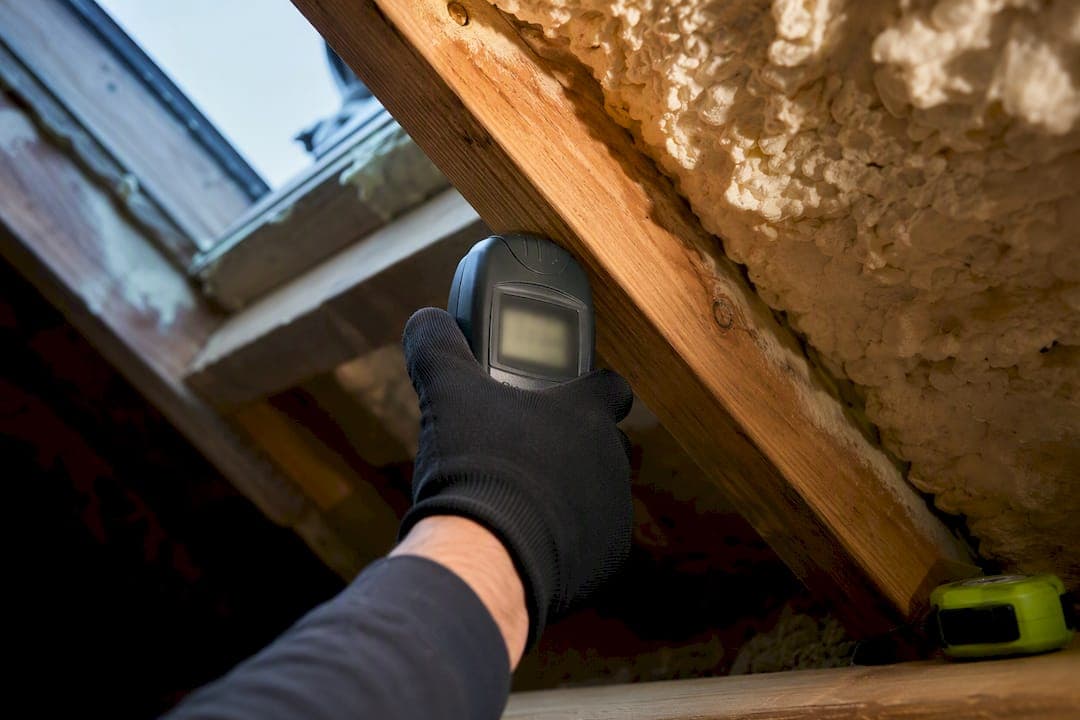
Spray foam is not automatically the cause of damp in a property, but certain installations trap moisture, hide existing defects, or block the ventilation that a roof needs to stay dry. The Building Safety Regulator's 2024 modelling confirms risk depends on how the foam was installed, not the material alone. Before anyone talks about removal, get an independent, RICS-aware survey.
TL;DR:
- The risk of moisture problems with spray foam depends on installation details, not the foam type alone, with higher risks when applied directly onto tiles or high-resistance underlays without ventilation.
- Open-cell foam allows some moisture escape, while closed-cell foam traps moisture, increasing condensation risk if combined with high-resistance underlays and no vapor control layer.
- Proper assessment with an independent, RICS-compliant survey is essential before considering removal, as many issues can be resolved through ventilation or minor remediation rather than expensive full removal.
- Installation documentation, including product certificates and installer paperwork, is crucial for lenders and surveyors to evaluate moisture risk and mortgage eligibility.
- Full removal costs range from £1,000 to £7,000 and should only be pursued if survey evidence confirms a genuine problem; most cases can be addressed without removal through targeted repairs.
Table of Contents
- How spray foam can create or conceal moisture problems
- Open cell vs closed cell: why the material matters
- Installation scenarios with the highest moisture risk
- What surveyors and lenders actually check
- Diagnosing the problem and deciding what to do next
- Our take: assessment first, intervention only where evidence demands it
- Book a survey or arrange certified removal
- Sources
- FAQ
How spray foam can create or conceal moisture problems
Roofs behave differently once foam goes in. A traditional loft is a "cold roof": the insulation sits at ceiling level, and the roof void above stays cold and ventilated. Spray foam applied at rafter level turns that into a "warm roof", where the timber and tiles suddenly sit inside the heated envelope. That single change alters how moisture moves through the whole structure, as Energy Saving Trust explains.
Airtightness is the other half of the problem. Foam seals gaps brilliantly, which is exactly why it's popular. But everyday moisture from cooking, bathing, and simply breathing has to go somewhere. Seal a roof without matching ventilation and that vapour finds the coldest surface it can, condenses there, and sits against timber for months.
Foam also has a habit of hiding what was already wrong. A slow slate leak or early timber rot can vanish under a layer of foam, only for a surveyor to find it later with no idea when it started.
- Warm roof conversions need ventilation and vapour checks that a cold roof never required
- Airtightness without matched ventilation raises interstitial condensation risk
- Foam can mask rain ingress or timber decay that predates the installation
- Risk in modelled scenarios tracks installation detail, not foam type on its own
Open cell vs closed cell: why the material matters
Open-cell and closed-cell spray foam behave very differently once moisture is involved. Open-cell foam is softer and more vapour-permeable, so trapped moisture has some route to escape. Closed-cell foam is denser and effectively vapour-impermeable, which means any moisture caught between the foam and the timber has nowhere to go, according to Energy Saving Trust.
That's where underlays and the AVCL (air and vapour control layer) come in. A high-resistance underlay under closed-cell foam, with no AVCL or ventilated gap, is a recipe for condensation, and it's a scenario BS 5250:2021 guidance treats with particular caution.
Before you accept any installation as sound, ask for:
- The product datasheet confirming open-cell or closed-cell type
- A valid BBA or Kiwa certificate for that specific product
- Full installer paperwork showing underlay type and any AVCL fitted
Installation scenarios with the highest moisture risk
Some set-ups carry far more risk than others, and the Building Safety Regulator's modelling is specific about which ones.
- Foam sprayed directly onto tiles or slates. This is the highest-risk scenario tested. Tiles cool rapidly overnight, and moisture condenses right against the timber with nowhere to disperse.
- High-resistance underlays with no AVCL or ventilated void. Even a small ventilated gap can materially change the moisture profile, but skip it and risk climbs sharply.
- Existing ceiling insulation left in place at rafter level. Doubling up insulation layers without reassessing ventilation confuses the moisture path the roof was designed around.
- Poor application quality. Gaps, shrinkage, and inconsistent thickness create cold spots, and missing paperwork means nobody can verify what was actually installed.
Pro Tip: If your loft has spray foam and you don't know whether it sits on tiles, a high-resistance underlay, or a ventilated felt, that's the first thing your surveyor should establish. It changes everything else about the assessment.
What surveyors and lenders actually check
Not every mortgage application with spray foam ends in a demand for removal. RICS recommends surveyors follow the Joint Position Statement inspection process, which asks for proportionate, evidence-based conclusions rather than blanket refusals.

Government correspondence on the Building Safety Regulator's next steps makes the same point: the presence of foam shouldn't automatically block lending if it can be assessed against BS 5250 and JPS protocols.
Documentation that regularly resolves lender concerns:
- The original installation contract naming the product and underlay
- Manufacturer or BBA certification for the foam used
- A hygrothermal or moisture check where the roof construction warrants one
The Regulator's own 2024 conclusion is reassuring for well-installed roofs: compliant open-cell installations following BS 5250 carry a low timber degradation risk. It's the undocumented, badly detailed jobs that cause problems, not foam itself. Trading Standards separately warns homeowners to be wary of cold callers pushing urgent removal quotes before any proper survey has taken place.
Diagnosing the problem and deciding what to do next
Start with an independent, RICS-compliant survey before anyone mentions removal costs. A Level 3 spray foam report written to mortgage standards carries far more weight with a lender than a verbal opinion from whoever happens to be selling removal that week.
Surveyors typically combine several diagnostics rather than relying on one:
- Moisture meters and thermal imaging to map damp patterns across the roof
- Drone or roof-access inspection where tiles can't be lifted safely
- Timber probes to check for decay beneath the foam itself
Remediation isn't always full removal. Sometimes adding ventilation or an AVCL retrofit solves the problem. Partial removal targets only the affected section. Full removal is the last resort, reserved for cases where survey evidence actually justifies it. Understanding the spray foam removal process before booking anything helps you judge whether a quote is proportionate. If you're dealing with non-standard construction and mortgage complications, correct reporting can be the difference between a declined application and an approved one.
Pro Tip: Any contractor who refuses to walk you through their PCA certification or insurance-backed warranty before quoting for removal is a red flag worth acting on.
Our take: assessment first, intervention only where evidence demands it
We see too many homeowners jump straight to removal quotes before anyone has actually confirmed there's a problem. That's backwards. An independent survey, read against BS 5250 and the JPS process, tells you whether you're looking at a genuine risk or a well-installed roof that simply needs its paperwork found.
Removal is expensive and sometimes entirely unnecessary. Insist on RICS-aware reporting first, and keep every scrap of installation paperwork you can find. It's often the fastest route back to a mortgage offer, cheaper than any removal quote.
— jessica
Book a survey or arrange certified removal
If your spray foam survey has come back flagged, or you simply want mortgage-ready paperwork before a sale falls through, Sprayfoamremovalhelp gives you a direct line to certified technicians, not a call centre passing your details to whoever bids highest. There's no third party between you and the person doing the work, pricing is fixed upfront with no hidden extras, and every job carries a 10-year insurance-backed warranty.

Whether you need a Basic Visual Survey, Full Roof Report, or Drone Survey to satisfy a lender, or you've already had confirmation that removal is genuinely necessary, the team handles open cell and closed cell spray foam removal with the same PCA-certified process across London and the Southeast. Get a fixed quote or book a survey directly, and you'll be speaking to the technician who does the work, not a salesperson.
Sources
- Moisture risk of spray foam insulation applied to timber sloped roofs in dwellings
- Spray foam insulation (RICS consumer guide)
- Spray foam insulation advice (Trading Standards)
- Spray foam insulation (Energy Saving Trust)
FAQ
Will expanding foam stop damp?
No. Expanding foam and spray foam insulation seal air gaps, but they aren't a damp-proofing product and won't stop rising or penetrating damp on their own. If moisture is already getting in, foam can trap it against timber and make the problem worse rather than solving it.
Is spray foam insulation illegal in the UK?
No, spray foam insulation is not illegal. Concerns come from poor installation and undocumented work rather than the product itself, and the Building Safety Regulator's 2024 findings show compliant open-cell installations carry low risk.
Does spray foam work as a moisture barrier?
Closed-cell spray foam is largely vapour-impermeable and can act as a barrier, while open-cell foam is more permeable and allows some moisture movement, per Energy Saving Trust. Neither type replaces proper ventilation or an AVCL where the roof construction needs one.
Where should you not use spray foam?
Avoid spraying foam directly onto roof tiles or slates, or onto high-resistance underlays with no AVCL or ventilated gap, since these are the scenarios the Building Safety Regulator's modelling flags as highest risk. If you're unsure which category your roof falls into, an independent survey will confirm it before any remedial work is agreed.
Do I need to remove spray foam to sell my house or get a mortgage?
Not always. RICS guidance and the JPS inspection process mean many lender concerns are resolved with proper documentation and a compliant survey report rather than removal. When removal genuinely is required, Sprayfoamremovalhelp's pricing runs from £1,000 to £7,000 depending on whether it's open or closed cell foam.