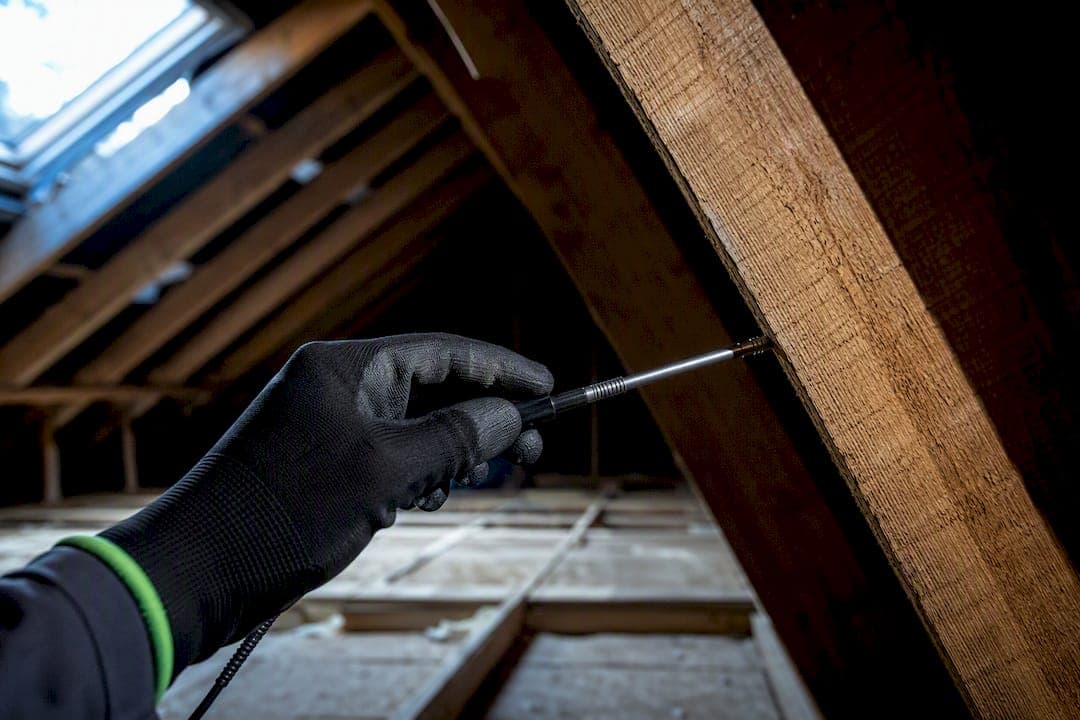
Yes, you must re-test moisture after removal or drying before any reinstatement work begins. The correct approach is staged: non-invasive screening first, comparison against a control baseline, then targeted quantitative testing if the readings are unclear. This follows the framework set out by the Property Care Association and the RICS Joint Position Statement, and skipping it is how properties get reinstated over hidden damp.
TL;DR:
- Moisture must be re-tested after removal or drying using staged, varied methods tailored to different materials, not with a single surface reading.
- Control readings should be taken from unaffected parts of the building at similar environmental conditions to establish true baseline moisture levels.
- Quantitative testing with gravimetric or calcium carbide methods is essential when screening results are inconsistent or suspicious.
- A repeatable sampling protocol including proper logging, location marking, and environmental documentation ensures the survey's defensibility.
- Salts and cavities can cause misleading readings, making chemical testing and cavity inspection critical before confirming the property is truly dry.
Table of Contents
- What needs testing after removal and what "dry" actually means
- Which testing tools work and where each one fits
- Building a repeatable, defensible sampling protocol
- Reading the numbers: baselines beat magic thresholds
- When to strip out, dry further, or sign off as reinstated
- Why some readings mislead you: salts, cavities, and surface checks
- Recording your findings so the report actually holds up
- Practitioner perspective: managing uncertainty honestly
- How Sprayfoamremovalhelp verifies a property is genuinely dry
- Standards and guidance worth keeping on file
- Sources
- FAQ
What needs testing after removal and what "dry" actually means
Different materials hold and release moisture at very different rates, so a single walk-through with a meter tells you almost nothing about the whole structure. After spray foam or insulation removal, or after any flood or leak drying programme, you need to check several distinct elements separately.
- Timber — joists, floorboards, and structural members trapped behind foam or insulation for years
- Plaster and masonry — walls and reveals that may have been sealed against ventilation
- Screeds and concrete slabs — slow to dry and easy to misjudge from the surface
- Insulation cavities — voids that can hold moisture long after visible surfaces look fine
Timescales vary hugely by material and by how saturated the fabric was to begin with. Masonry walls can take weeks to months to reach equilibrium; screeds often need far longer. There's no universal percentage that means "dry" across all of these, which is exactly why the Property Care Association's code of practice insists on a staged diagnostic approach rather than a single pass/fail number. A control reading from an unaffected part of the same building matters more than any textbook figure.
Which testing tools work and where each one fits
No single device answers every question, which is why professionals carry several. Non-invasive screening tools are for mapping the extent of a problem, not for confirming it's solved.
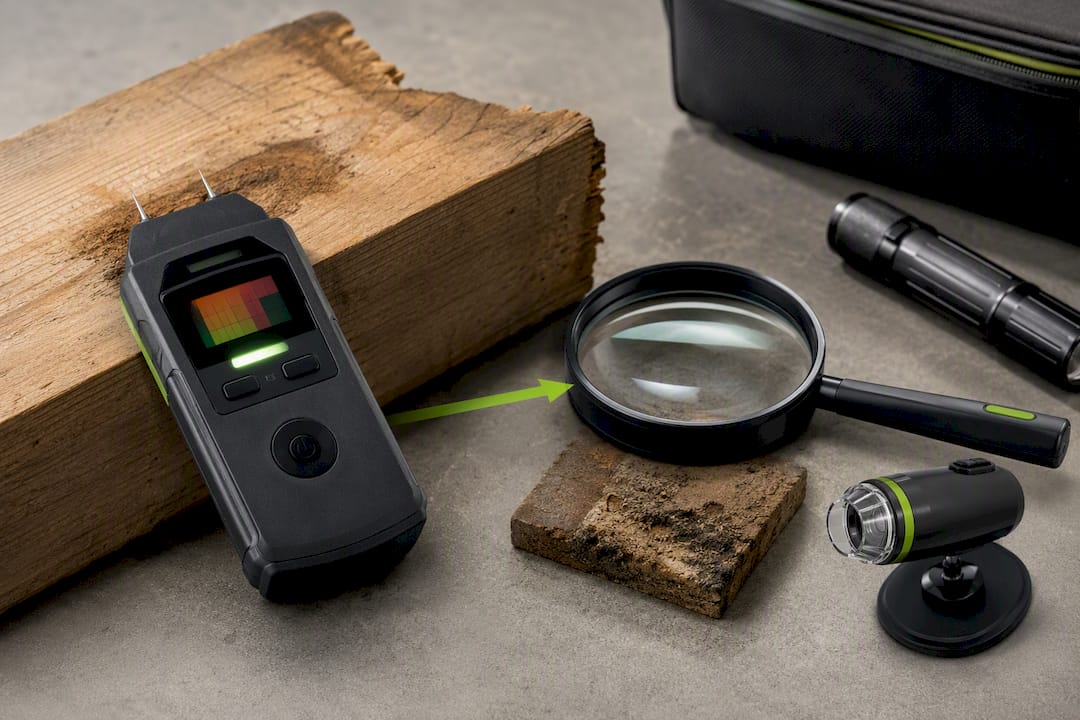
- Resistance and capacitance meters — quick surface screening, useful for spotting patterns across a wall
- Radio frequency meters — read slightly deeper without breaking the surface
- Thermal imaging — flags temperature anomalies that often correlate with damp, though it doesn't measure moisture directly
Once screening flags a concern, quantitative methods take over. Gravimetric (oven-dry) testing and calcium carbide testing are the recognised methods for establishing true moisture content and separating genuine dampness from salt contamination, according to the PCA's flood-recovery code of practice. For screeds and slabs, borehole relative humidity sleeves or a sealed hygrometer tent left to reach equilibrium give a far more reliable picture than a surface probe ever will.
Statistic to note: electronic moisture meters are explicitly classed as screening tools, not quantitative instruments, in the BDMA moisture measurement guide — meaning a "high" reading on its own is a prompt to investigate further, not a diagnosis.
Building a repeatable, defensible sampling protocol
A single reading proves nothing on its own. Repeatability and comparison are what make a moisture survey stand up to scrutiny from a lender, insurer, or buyer's surveyor later.
- Take control readings first. Measure an unaffected area of the same building and record temperature and relative humidity at the time of testing — this baseline is what every affected reading gets compared against.
- Set a sampling pattern. Decide how many locations you need, spread them across the affected zone rather than clustering near one wall, and note probe depth for each.
- Mark and log every location. Use a consistent location ID system (room, wall, height) so readings can be repeated by someone else and matched to the same spot weeks later.
- Escalate when readings conflict. If screening results are inconsistent or higher than expected, take a physical sample for gravimetric or calcium carbide analysis rather than guessing.
- Preserve chain of custody. Bag, label, and date any sample sent to a laboratory, and keep a note of who took it and when.
Pro Tip: Take your control reading in the loft or an internal partition wall that was never near the foam or flood water. Without that comparison point, you have no way of knowing whether a "damp" reading is actually unusual for that building.
Reading the numbers: baselines beat magic thresholds
A meter reading only becomes useful once it's set against something. Compare every affected reading to your control baseline and to what's normal for that specific material, not to a number pulled from a general chart.
- Timber has published moisture content guidance bands, but even these shift depending on species and location within the structure.
- Masonry and breathable lime plaster behave very differently from modern cement-based systems, and can read "high" on a meter while being perfectly stable for that material.
- Record ambient temperature and humidity alongside every reading — a damp reading taken on a cold, humid morning means something different from the same number on a dry afternoon.
This is the core reason the PCA's code of practice rejects a single universal percentage: identify the moisture source, allow proper drying time, then use monitored, comparative testing to confirm equilibrium. Documenting the environmental conditions with each reading is also what makes a report defensible if an insurer or mortgage lender later questions the findings.
When to strip out, dry further, or sign off as reinstated
Every reading needs a decision attached to it, and that decision should follow a consistent rule rather than a gut feeling.
- Replace, don't dry, when there's a trend. If repeat monitoring shows readings rising or plateauing above the control baseline over successive checks, further drying probably won't help.
- Salt contamination changes the answer. Hygroscopic salts left behind after a flood or long-term damp exposure can keep drawing moisture from the air indefinitely, so affected plaster typically needs removing and specialist replastering rather than further drying.
- Escalate on listed buildings or unclear sources. Where the building has historic fabric, or where raised readings persist despite an apparently resolved source, bring in a RICS or PCA-accredited surveyor rather than guessing.
Pro Tip: If a wall keeps reading damp after the obvious source has been fixed, test for salts before ordering another round of drying equipment — you could be paying for weeks of drying that will never bring the reading down.
Why some readings mislead you: salts, cavities, and surface checks
False readings cost more money than honest ones, because they lead to reinstatement over a problem that hasn't actually gone away.
- Hygroscopic salts skew meters both ways. Salts left behind by flooding or historic rising damp can push electrical readings artificially high even in genuinely dry masonry, which is why the PCA warns that chemical or gravimetric testing is needed to confirm true water content once salts are suspected.
- Surface meters can't see cavities. Moisture trapped in a wall cavity or behind insulation can sit there for months after the visible surface reads dry, especially in spaces that once held spray foam.
- Infrared shows temperature, not water. Thermal imaging is a useful pointer but it flags temperature differences, which can have nothing to do with moisture at all.
Statistic to note: according to PCA guidance, moisture meters give only qualitative or comparative data for masonry and plaster, meaning quantitative confirmation almost always needs a destructive or semi-destructive test alongside them. The practical fix is simple: take control readings, open up a discreet section if the surface looks fine but the numbers don't add up, and send a sample for lab testing when in doubt.
Recording your findings so the report actually holds up
A test result that lives only in someone's memory is worthless to a lender, insurer, or future buyer. A proper record needs enough detail that another surveyor could repeat the test and get a comparable answer.
- Log the device and its settings — make, model, serial number, and calibration date.
- Record probe depth and location ID for every reading, tied to a simple room/wall reference system.
- Note ambient conditions — temperature and relative humidity at the moment of testing.
- Capture control readings alongside every affected reading, not as a separate afterthought.
- Photograph each test point and keep lab sample IDs cross-referenced to the same location codes.
Comparing each row against the control column, rather than against a fixed target number, is what turns this table from raw data into a decision anyone can follow later.
Practitioner perspective: managing uncertainty honestly
The temptation on any drying job is to give a client a clean "it's dry" the moment a meter stops beeping. That's how disputes start months later. A staged approach, with a documented baseline and photographic evidence at every stage, protects everyone involved because it shows the reasoning, not just the conclusion. When readings sit in a grey zone, recommending a RICS or PCA-accredited surveyor isn't an admission of failure. It's the difference between a report that survives a mortgage valuation and one that doesn't.
— jessica
How Sprayfoamremovalhelp verifies a property is genuinely dry
A specialist spray foam removal service can provide both the strip-out and post-removal moisture verification, delivering a single, consistent report instead of separate reports from different contractors. Technicians carry out the removal of closed and open cell foam, followed by staged testing as described in this article, from screening through to targeted quantitative checks where needed.

Jobs are typically backed by insurance-backed warranties, and direct communication with technicians helps ensure clear and transparent findings for lenders or insurers. If you're weighing up whether removal is even necessary, our spray foam removal guide walks through the process, and if you've already had foam removed elsewhere, a free inspection can confirm whether the underlying timber and masonry have genuinely reached equilibrium. Book a free inspection or a certification appointment to get a mortgage-compliant report you can hand straight to your lender.
Standards and guidance worth keeping on file
For the full methodology behind this article, consult the PCA code of practice on dampness control, the RICS Joint Position Statement 2022, and BRE guidance on gravimetric methods. For confined spaces like garages, equilibrium RH testing under a sealed enclosure is a useful complementary technique.
Sources
- Moisture measurement guide (BDMA/industry guidance)
- Investigation of moisture and its effects on traditional buildings: Principles and competencies (RICS JPS 2022)
FAQ
Does mould go away once moisture is removed?
Mould growth stops once the moisture source is gone and the material dries to equilibrium, but existing mould and staining don't disappear on their own and usually need cleaning or removal once drying is confirmed.
Is a damp reading of 25 high?
It depends entirely on the material, the meter's scale, and the control reading from an unaffected part of the same building. There is no universal number that counts as "high" across timber, masonry, and plaster, which is why staged comparative testing matters more than any single figure.
What is the procedure for moisture testing?
The standard procedure is non-invasive screening to map the affected area, a control reading from an unaffected part of the building, then targeted quantitative testing such as gravimetric or calcium carbide analysis if the screening results are unclear.
What draws moisture out of walls?
Ventilation, controlled dehumidification, and time are what actually remove moisture from walls; there's no shortcut chemical or device that instantly extracts it. Salt-contaminated plaster is the exception, since it may need removing entirely rather than simply drying out.