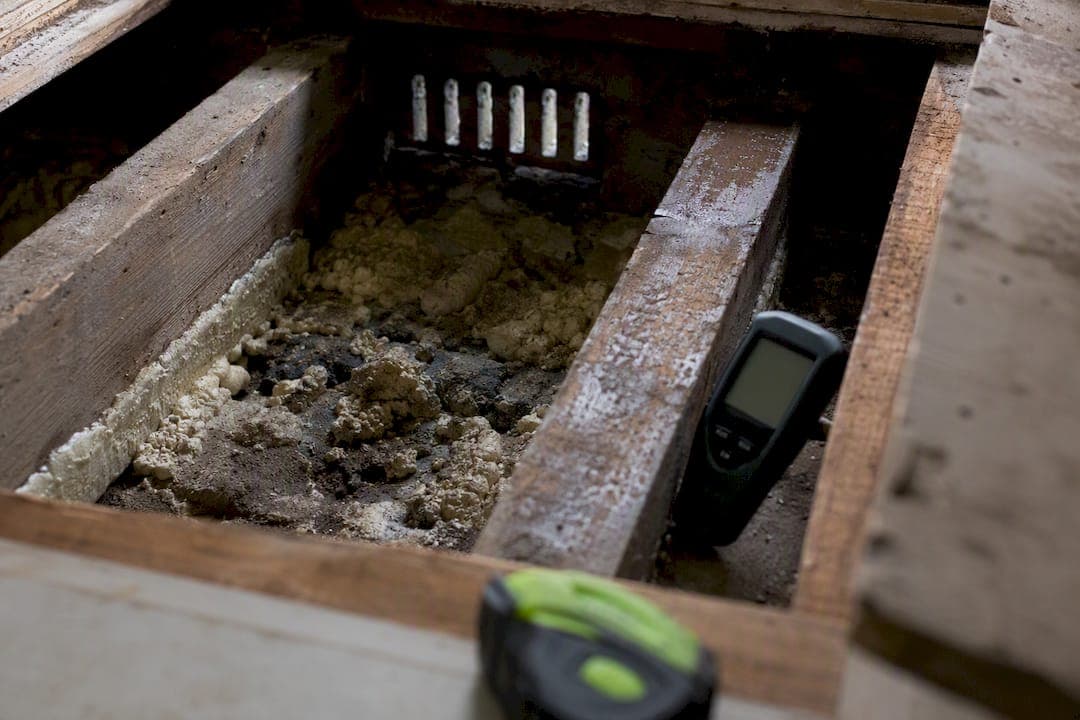
If your underfloor void has spray foam and it wasn't installed with proper ventilation and moisture checks, hidden damp and timber rot are a real possibility, and it can complicate a sale or remortgage. The first move is an independent moisture check and survey, before you speak to estate agents or lenders. Get this evidence together now:
- The original product certificate and installer details
- Dated photos from the installation (or ask the previous owner or installer for them)
- Any existing survey report that mentions the foam
Many major UK mortgage lenders will decline to lend on properties with spray foam in the roof, according to BBC reporting. Underfloor installations face similar scrutiny once a valuer spots them, even though the mechanism of damage is different.
Key Takeaways
Underfloor spray foam problems are driven by trapped moisture and lost timber visibility, not the foam material degrading on its own.
| Point | Details |
|---|---|
| Get an independent survey first | Commission a RICS or PCA-accredited moisture check before listing or applying for a mortgage. |
| Keep every document | Product certificates, installer photos, and warranty paperwork all reduce lender friction. |
| Know your foam type | Closed-cell foam bonds tighter and is harder to inspect and remove than open-cell foam. |
| Ventilation is the real fix | Restoring airflow and treating timber often resolves issues without full removal. |
| Use certified removal when needed | Sprayfoamremovalhelp provides PCA-certified removal with a 10-year insurance-backed warranty across London and the South East. |
Table of Contents
- How spray foam causes underfloor spray foam problems
- Underfloor risks versus loft and roof installations
- Mortgage, valuation and resale complications
- Commissioning the right survey and moisture checks
- Remediation: ventilation fixes, partial repair, or full removal
- Steps to take before selling or remortgaging
- Does spray foam degrade over time?
- Health and safety concerns during application and after
- What underfloor foam problems mean for indoor air quality
- Warranties, guarantees and insurance implications
- What removal teams see again and again
- Getting certified, mortgage-ready removal done properly
- Sources
- FAQ
How spray foam causes underfloor spray foam problems
Spray foam doesn't just add insulation. It changes how air and moisture move through a building. A suspended timber floor is normally designed as a ventilated cold void: air flows through airbricks, keeps timber dry, and lets any incidental moisture escape. Bond foam to the joists and sub-floor and you turn that ventilated space into a sealed, warmer cavity with an entirely different moisture balance.
That's where the trouble starts. Water vapour that once passed through can now get trapped against timber, and because the foam is bonded directly to the wood, you cannot simply lift a corner to check what's happening underneath. Rot can progress for months, or years, while the surface of the foam looks completely fine. The Energy Saving Trust notes that this loss of visibility is one of the most common problems reported, because timber decay in a suspended floor typically shows no external symptoms until structural movement or a smell of damp gives it away.
The foam type matters here:
- Open-cell foam is softer, more vapour-permeable, and generally easier to inspect around or remove, but it still blocks direct visual checks of timber.
- Closed-cell foam forms a rigid, largely vapour-closed barrier that bonds tightly to structural timber, making both moisture escape and later removal considerably harder.
Poor installation, not the material itself, tends to be the real driver of failure. Guidance from RICS repeatedly points to blocked ventilation paths and foam sprayed over timber that was already damp as the two most frequent root causes.
Underfloor risks versus loft and roof installations
Underfloor spray foam problems don't mirror roof problems exactly, and treating them as identical is a mistake. A few things make ground-level floors their own risk category:
- Ventilation runs differently. A loft relies on ridge and eaves vents; a suspended floor relies on airbricks around the perimeter. Foam applied without maintaining airbrick clearance chokes the same airflow the floor was designed around.
- Ground contact adds moisture load. Joists sitting close to damp earth, or over a poorly tanked void, face a constant moisture source that a sealed foam layer can trap against the wood rather than let evaporate.
- Services get buried. Pipework and cabling routed under floors often get sprayed over during installation, meaning a plumber or electrician later has to cut through bonded foam just to reach a stopcock or junction box.
A forum thread on MoneySavingExpert captures this well: several homeowners describe lenders querying underfloor foam specifically because surveyors couldn't confirm airbricks were still functioning.
Mortgage, valuation and resale complications
Lenders don't ban spray foam outright, but they treat it as a red flag that needs resolving before they'll commit. The core issue, according to RICS, is that valuers can no longer see the timber to judge its condition, and lenders won't lend against an unknown.
What this looks like in practice:
- Some lenders decline outright once foam is flagged on a valuation report, regardless of its apparent condition.
- Others will lend, but only after receiving a specialist report confirming timber moisture levels and structural soundness.
- A smaller number treat each case individually, valuer by valuer, which means the outcome can depend heavily on who happens to inspect the property.
The BBC's investigation found this inconsistency is widespread, and it's exactly why sellers get caught out. You might sail through one lender's process and get rejected outright by the next.
Pro Tip: Ask your broker which lenders on their panel have an established position on spray foam before you apply. A five-minute phone call can save weeks of a stalled chain.
The documentation that reduces friction is fairly consistent across lenders: the original product certificate, a PCA-accredited inspection report, and, where removal has happened, an insurance-backed installer or removal warranty. Without these, expect delays even on properties where the foam itself is in good condition.
Commissioning the right survey and moisture checks
A standard homebuyer's survey often isn't enough on its own; you need someone briefed specifically on spray foam. Here's what to ask for:
- Moisture meter readings taken directly on exposed timber, not just surface estimates on the foam itself.
- Targeted openings cut where practical, so the surveyor can physically inspect a sample of joists rather than relying on inference.
- A written report formatted for lenders, addressing timber condition, ventilation adequacy, and whether the installation appears reversible.
PCA guidance for professionals is explicit that a lender-facing report needs to cover moisture content and visible decay directly, not just a general opinion on the insulation's performance. Ask for a RICS or PCA-accredited surveyor by name; a generic damp survey often won't satisfy an underwriter.
Pro Tip: Keep every report, invoice, and photo in one folder from day one. Lenders and buyers' solicitors will ask for the same evidence more than once, and re-commissioning surveys because paperwork went missing is a common, avoidable cost.
Remediation: ventilation fixes, partial repair, or full removal
Not every underfloor installation needs stripping out. Where timber tests dry and ventilation can be restored, reopening blocked airbricks and adding mechanical extract ventilation is sometimes sufficient to bring the void back within safe moisture limits.
Where timber shows decay, or the foam is closed-cell and bonded extensively, remediation usually means:
- Removing foam in sections to assess timber condition as you go
- Treating or replacing decayed joists and boards
- Reinstating ventilation before any new insulation goes back in
- Issuing a certificate confirming the work for future lenders or buyers
Removal itself is genuinely difficult. Industry explainers describe it as largely irreversible in the sense that foam bonds tightly to timber and roofing materials, requiring mechanical cutting and scraping that almost always leaves some residue behind.
Cost drivers vary property to property, but the main variables are consistent: whether the foam is open or closed cell, the total area covered, how much timber needs treating or replacing, and how accessible the void is. A crawl space with 30cm of clearance costs considerably more to work in than a floor with a full-height cellar beneath it.
Steps to take before selling or remortgaging
Work through this before you list the property or submit a mortgage application:
- Commission an independent PCA or RICS survey as early as possible, ideally months before you plan to sell.
- Gather every piece of installer paperwork, including the original certificate, product data sheet, and any warranty documentation.
- Tell your broker or lender proactively, rather than letting it surface mid-application. Ask exactly what report format they need.
- Get quotes from PCA-aligned contractors who provide certification and an insurance-backed warranty on completion, not just a verbal assurance the job's done.
Sellers who front-load this work tend to keep their sale on schedule. Those who wait for a buyer's surveyor to flag the foam usually lose weeks, sometimes the whole transaction, to a stalled chain.
Does spray foam degrade over time?
Spray foam itself is chemically fairly stable and doesn't typically break down the way some insulation materials do. The real long-term risk isn't the foam degrading; it's what happens to everything around it while it stays intact.
Closed-cell foam holds its shape and vapour resistance for decades in most cases, which sounds reassuring until you consider that this same durability is what keeps a moisture problem sealed in place rather than allowing it to dry out. If timber was damp at the point of installation, or ventilation was compromised from day one, the foam's stability works against the building rather than for it: the trapped moisture has nowhere to go and nothing to accelerate its escape.
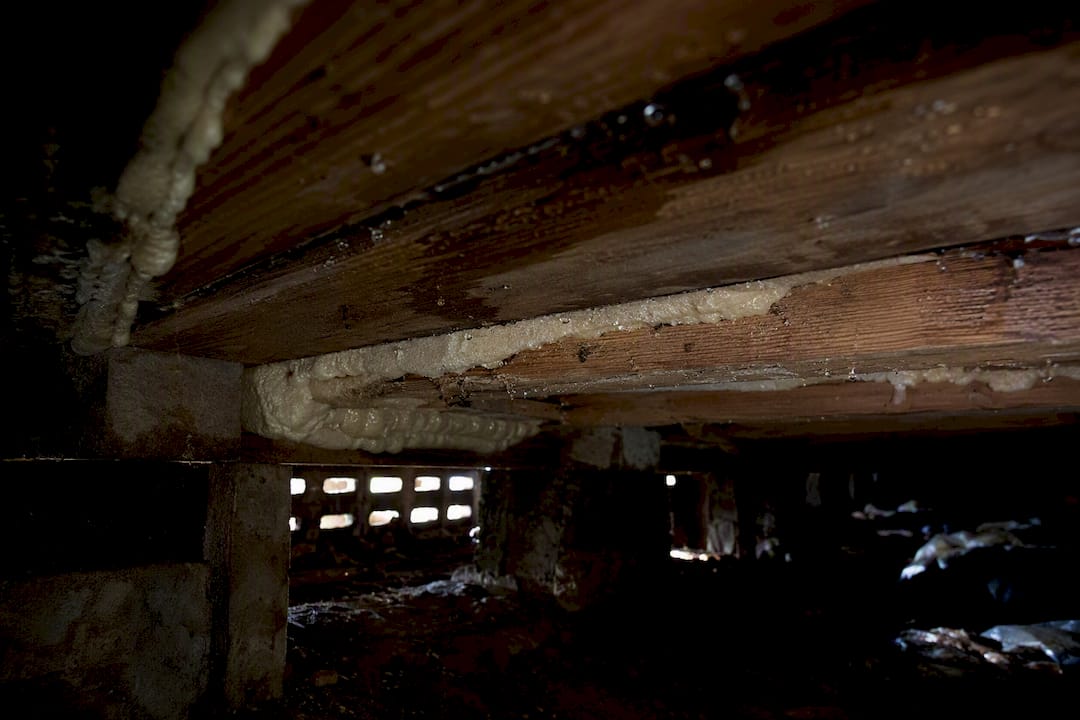
Adhesion is a separate issue. Some installations lose bond with the substrate over years, particularly where the sub-floor was not fully cured or dried before spraying. This creates gaps where condensation can collect, effectively recreating the same moisture trap the foam was meant to prevent, but now with less structural support underneath it. Surveyors report this kind of delaminated foam is often harder to assess than a fresh, well-bonded application, because moisture can pool in the gaps and skew moisture meter readings taken at the surface.
None of this means every underfloor installation is a ticking clock. A correctly installed system, on dry timber, with ventilation maintained, tends to perform reliably for its expected lifespan. The distinction lenders and surveyors care about is whether that correct installation actually happened.
Health and safety concerns during application and after
Spray foam is applied as a two-component chemical reaction, typically involving isocyanates, that expands and cures within seconds. During application, off-gassing produces fumes that installers must manage with proper respiratory protection, extraction, and curing time before anyone re-enters the space.
Problems arise when curing time is cut short, or when ventilation during application is inadequate. Isocyanate exposure is a recognised occupational health risk, which is precisely why competent installers follow manufacturer-specified re-entry times and use appropriate PPE rather than treating it as an optional step. Homeowners in adjoining rooms during a job, or those who move back into a treated space too early, can experience respiratory irritation, headaches, or throat discomfort if curing wasn't complete.
Once fully cured, spray foam is generally considered chemically stable and doesn't continue off-gassing at meaningful levels under normal conditions. The concern for existing installations tends to be less about ongoing chemical emission and more about what the trapped moisture behind the foam does over time, damp timber and mould growth carry their own separate health implications, particularly for anyone with respiratory sensitivities.
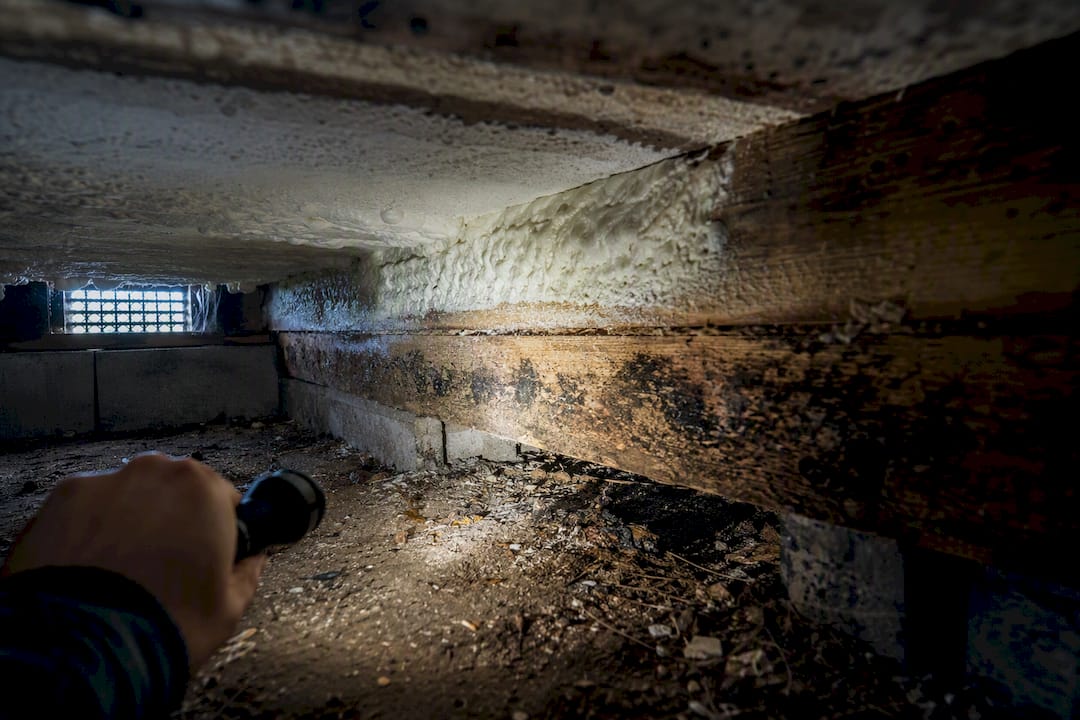
This is one more reason DIY removal is a poor idea. Disturbing old foam, especially where mould has developed behind it, without dust and fume control can expose you to material a professional team would normally contain and dispose of safely.
What underfloor foam problems mean for indoor air quality
A well-installed, correctly ventilated underfloor system has little ongoing impact on the air quality inside your home, since the void sits below the living space and any residual emissions from fully cured foam are minimal.
The picture changes once moisture gets trapped. Damp timber behind sealed foam creates ideal conditions for mould, and airborne mould spores can migrate upward through gaps in flooring, service penetrations, or poorly sealed skirting, particularly in older properties where the floor structure isn't fully airtight from the room above. Musty odours reported by homeowners with underfloor spray foam problems are frequently a symptom of exactly this: hidden mould growth in a void they can no longer inspect visually.
Reduced ventilation elsewhere compounds the issue. If airbricks were blocked or removed during installation, the underfloor void loses its ability to flush out humidity, which raises the moisture load transferring into the room above over time. Combined with modern homes' generally tighter building envelopes, this can contribute to a broader indoor humidity problem that shows up as condensation on windows or a persistently damp feel in ground-floor rooms.
The fix isn't complicated in principle: restore ventilation, address any moisture source, and remove or treat mould-affected material. It simply requires knowing the problem exists, which is exactly what a proper survey is designed to reveal before it becomes an air quality complaint rather than a structural one.
Warranties, guarantees and insurance implications
Most reputable spray foam installations come with a product warranty and an installer guarantee, typically covering material defects and workmanship for a set number of years. The trouble homeowners run into is that these warranties rarely cover consequential damage, meaning if the foam traps moisture and causes timber rot, the warranty may not pay out for the resulting structural repair, only for a fault in the foam itself.
Check the small print carefully if you're relying on an existing warranty:
- Does it cover consequential damp or timber damage, or only material failure?
- Is it insurance-backed, meaning it survives if the original installer goes out of business?
- Does it specify required ventilation maintenance as a condition of cover?
Buildings insurance adds another layer of complexity. Some insurers ask directly about spray foam insulation at renewal or new policy stage, and non-disclosure can jeopardise a future claim for unrelated damp or timber issues. If you're arranging remediation work, insist on a completion certificate and an insurance-backed guarantee from the contractor. This is precisely the documentation a future buyer's solicitor, or your own insurer, will ask to see, and its absence is one of the most common reasons a sale stalls at a late stage.
What removal teams see again and again
The same mistakes show up on almost every problem job we assess: no moisture check before spraying, airbricks left blocked, and installers who never returned to verify the work. None of it is complicated to prevent.
Independent surveys and a complete paperwork trail decide whether a lender says yes or no, not the foam's appearance. Full removal only becomes unavoidable once timber has decayed; where boards test dry, restoring ventilation and staged repairs are usually enough.
— jessica
Getting certified, mortgage-ready removal done properly
Sprayfoamremovalhelp exists for exactly the situation this article has walked through: foam that's now standing between you and a mortgage offer or a completed sale. Where other routes leave you juggling a surveyor, a separate installer, and a certification body, you deal directly with the PCA-certified technicians who actually carry out the work, no subcontracted middlemen relaying information back and forth.

Every job comes with a fixed, transparent quote before work starts, so there are no surprise charges once the foam is opened up and the true extent of the job becomes clear. Coverage runs across London and the South East, and completed work is backed by a 10-year insurance-backed warranty, the kind of documentation that satisfies a lender asking for proof the problem has actually been resolved, not just patched over.
Before instructing anyone, ask three questions: are they PCA-certified, do they control dust and debris during cutting, and will they issue a certificate a lender or buyer's solicitor will actually accept? If you're not yet sure whether removal is necessary, book a free inspection and get a straight answer before committing to anything, or read the full spray foam removal guide to see what the process actually involves.
Sources
- RICS: Spray foam insulation (consumer guide)
- Major lenders reject homes with spray foam insulation — BBC
- Spray foam insulation explained — Energy Saving Trust
This article is general information, not a substitute for advice from a qualified financial advisor. Consult a qualified financial professional about your own circumstances before acting on anything here.
FAQ
Is spray foam insulation banned in the UK?
No, spray foam isn't banned, but RICS advises it must not be used in listed buildings without consent, and many lenders won't finance properties where it's present in the roof without a specialist report.
What can go wrong with spray foam insulation?
The main issues are trapped moisture, hidden timber rot, blocked ventilation, and reduced ability for surveyors to inspect the timber underneath, problems that often stay invisible until they're advanced.
Why are people removing spray foam?
Most removals happen because a lender or buyer's surveyor flagged the foam during a sale or remortgage, or because a moisture check revealed rot or damp that needed addressing before it spread further.
Can you sell a house with spray foam?
Yes, but expect delays unless you have a PCA or RICS-accredited survey report and installer documentation ready; Sprayfoamremovalhelp can arrange certified removal and lender-ready certification if remediation is needed.