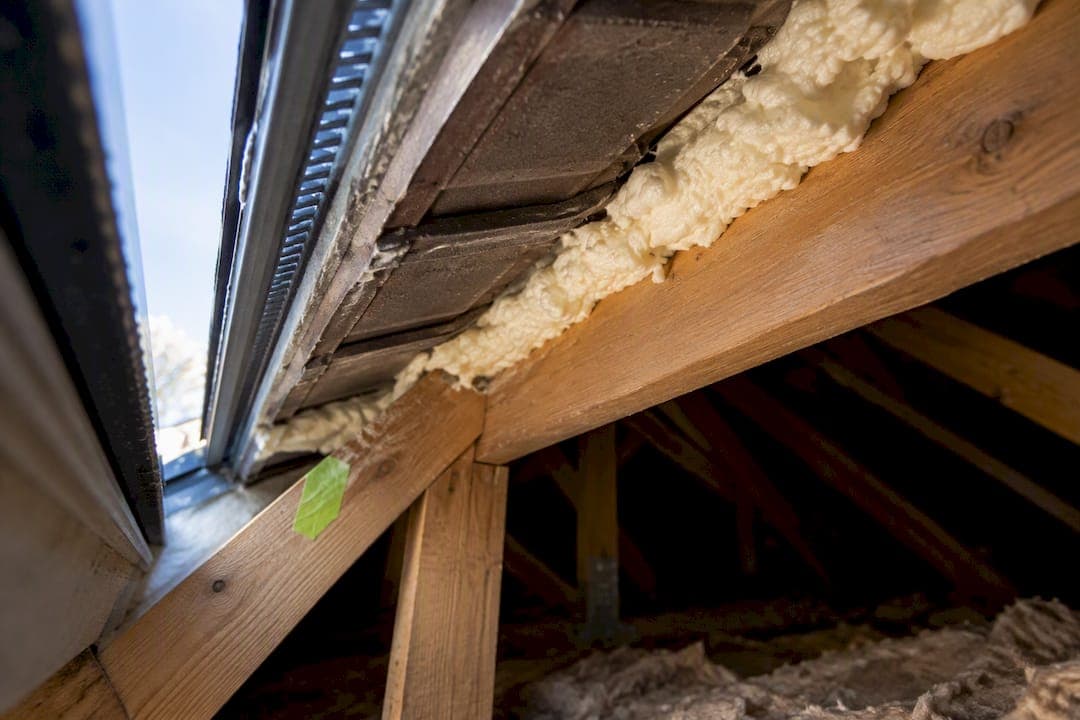
Spray foam on a bungalow roof can be safe when correctly specified and documented, but improperly applied spray foam often causes moisture and mortgage problems. If your bungalow has spray foam in the roof, the single best move is to commission an independent survey from someone familiar with the PCA and RICS inspection protocol before you sell, remortgage or panic.
TL;DR:
- Properly specified and documented spray foam on a bungalow roof can be safe, but improper installation often leads to moisture buildup and structural issues.
- Closed-cell foam sprayed directly onto roof tiles increases the risk of condensation, timber rot, and insurance complications, especially without adequate ventilation.
- An independent survey following PCA and RICS protocols is essential before selling or remortgaging a property with spray foam insulation to verify installation and condition.
- Repair options vary from monitoring and improving ventilation to full removal, which can cost between £1,000 and £7,000 depending on foam type and roof complexity.
- Documentation such as manufacturer certification, hygrothermal assessments, and detailed installation records significantly influence lender approval chances.
Table of Contents
- What spray foam on a bungalow roof actually is
- How spray foam can cause condensation, rot and insurance problems
- How surveyors and lenders view spray foam roof insulation
- How to check your bungalow roof and gather the right evidence
- Monitoring, remedial work or full removal: weighing your options
- What good practice looks like from a specialist
- A homeowner's view: what actually resolves a stalled sale
- If you need certified removal or a mortgage-compliant report
- Key authoritative documents to bring to a surveyor or lender
- Sources
- FAQ
What spray foam on a bungalow roof actually is
Spray polyurethane foam is applied as a liquid that expands and sets against the underside of your roof, sealing gaps and converting a ventilated loft into what surveyors call a "warm roof". Once the foam is in place, the roof space stops behaving like the cold, breathable void it was designed to be, and that single change is behind most of the problems homeowners later run into.
There are two types, and the difference matters more than most installers admit.
- Open-cell foam is softer, more vapour-permeable, and lets some moisture pass through rather than trapping it against the timber.
- Closed-cell foam is denser and far less permeable, so any moisture that gets behind it has nowhere to go.
The RICS consumer guide on spray foam insulation explains that converting a cold, ventilated loft into a sealed warm roof changes how condensation forms and where it collects. In a traditional bungalow loft, airflow carries moisture away before it can settle on the rafters. Seal that airflow with foam, particularly closed-cell foam sprayed directly onto the back of roof tiles, and any dampness that does get in has no route out.
For many bungalows, especially older ones with shallow roof pitches or limited ventilation paths, ceiling-level or loft-floor insulation remains the safer and cheaper option. It keeps the roof space cold and ventilated as originally designed, avoids the warm-roof conversion altogether, and sidesteps most of the issues covered in the rest of this guide. A closer look at how the two foam types compare for UK homes is worth reading before you commit either way.
How spray foam can cause condensation, rot and insurance problems
The damage spray foam causes is rarely instant. It builds quietly, behind a layer you cannot see, which is exactly what makes it dangerous.
Moisture that used to escape through a ventilated loft gets trapped once foam seals the roof. Warm, humid air from the rooms below rises into the loft space, meets the cooler foam or roof covering, and condenses. With open-cell foam and a properly fitted air and vapour control layer, that moisture has some chance of dispersing. With closed-cell foam sprayed straight onto tile battens, it does not.
Gov found low timber-risk only where open-cell foam was installed to BS 5250:2021 with the correct underlay and vapour control layer in place, and markedly higher risk where foam was sprayed directly onto the roof covering. That single finding explains why so many bungalow roof problems trace back not to spray foam itself, but to how and where it was applied.
Left unchecked, trapped moisture works through a fairly predictable sequence:
- Condensation forms on the cold side of the timber, invisible from inside the loft.
- Persistent damp allows mould to colonise the rafters and battens.
- Timber begins to soften and rot, weakening its structural strength.
- Metal fixings, nails and brackets corrode faster in the damp microclimate.
- Roof tiles can shift or slip as the timber they are fixed to degrades.
Watch for musty smells in the loft, dark staining on rafters, tiles that seem loose from below, or a noticeable increase in condensation on loft-hatch surfaces. None of these are conclusive on their own, but together they are reason enough to bring in a surveyor.
Fire safety and insurance are the other side of this. Spray foam is a combustible product, and separate GOV.UK guidance on fire safety and spray foam roof insulation sets out the compliance points that installers and homeowners should check. Some insurers ask directly about spray foam at renewal, and an undocumented installation can complicate that conversation as much as it complicates a mortgage application.
Risk is not evenly spread across every bungalow. Roofs with low pitches, limited cross-ventilation, or bathrooms and kitchens venting moist air directly into the loft space tend to show problems sooner. A bungalow in a damp, low-lying area carries more risk than the same roof in a drier, more exposed location, simply because there is more moisture available to condense in the first place.
How surveyors and lenders view spray foam roof insulation
A RICS surveyor walking into a loft with spray foam faces an immediate problem: without records of what was installed, when and how, they often cannot confirm the condition of the timber underneath. The Property Care Association's joint stakeholder statement makes this explicit, warning that surveyors cannot reliably assess concealed timber where installation records are missing, and that closed-cell foam applied directly to tiles frequently leads to a recommendation for roof renewal rather than a straightforward pass.
That caution then flows through to lenders. A parliamentary research briefing on spray foam insulation and mortgages notes that incorrectly installed spray foam can cause condensation affecting the roof structure, and that lender policy on this varies considerably: some decline to lend outright against properties with spray foam in the roof, while many others assess each case individually once they see appropriate paperwork. There is no single industry-wide rule, which is precisely why documentation carries so much weight.
The paperwork that reduces friction with a lender or a buyer's surveyor tends to fall into a short, consistent list; for a general context on contractual inspection periods and buyer remedies, see this Inspection Period on a Real Estate Contract: Florida Guide.
- Manufacturer accreditation or third-party certification for the specific foam product used.
- A hygrothermal assessment showing the roof construction was modelled for moisture risk before installation.
- Installer credentials, including proof of training on the specific foam system fitted.
- Confirmation that the installation followed BS 5250:2021 guidance on condensation risk in buildings.
- Photographic or written evidence of the roof build-up, including underlay, battens and any vapour control layer.
Industry correspondence on this issue, including a letter on spray foam research and BS 5250 alignment, makes the same point from the other direction: correctly installed open-cell foam with a documented hygrothermal assessment is unlikely to block lending on its own. The problem, consistently, is poor installation combined with missing paperwork rather than spray foam as a category.
If you are preparing for a sale or remortgage, it helps to know the specific wording a surveyor's report needs to avoid triggering an automatic lender query. Our guide to RICS survey wording for spray foam sets out the phrasing that tends to keep applications moving rather than stalling them.
How to check your bungalow roof and gather the right evidence
Before you call anyone, a careful look from the loft hatch tells you a surprising amount. Take a torch, avoid stepping directly on foam or joists you are unsure about, and photograph anything that looks like it deserves a second opinion.
- Look for staining, discolouration or a musty smell around the rafters and eaves.
- Check for sagging, soft or spongy timber where you can safely reach it.
- Note whether the foam covers the whole roof slope or only patches.
- Photograph the foam's colour, texture and thickness for a surveyor to reference later.
- Check loft hatches and vents for visible mould or condensation build-up.
Once you have a general picture, bring in someone qualified. Look for a surveyor with RICS or RPSA credentials who is explicitly familiar with PCA inspection guidance for spray foam, and ask them in writing to identify the foam type, assess ventilation, and comment on whether the installation aligns with BS 5250. A generic homebuyer's report that skips these specifics is not much use to a lender who has already seen problem cases.
Pro Tip: Ask your surveyor to state clearly in the report whether they were able to identify open-cell or closed-cell foam, since an ambiguous report is often what triggers further lender queries rather than the foam itself.
Ask any installer or previous owner for the original hand-over pack, including BBA or Kiwa certification for the product used and any hygrothermal assessment carried out before the work. If none of that exists, say so plainly rather than guessing, since a surveyor would rather work from a documented gap than an assumption. For higher-value sales or complicated roofs, a drone survey can capture tile condition without anyone going onto a potentially fragile roof, and a full RICS Level 3 report gives the most thorough written basis for negotiating with a buyer or lender. Our breakdown of what a RICS Level 3 spray foam report should include is a useful reference to bring to that conversation.

Monitoring, remedial work or full removal: weighing your options
Not every bungalow with spray foam needs the foam taken out. The right path depends on what the foam is, how it was installed, and what a survey actually finds, not on worst-case headlines.
- Leave it and monitor. If open-cell foam was correctly installed with adequate ventilation and a hygrothermal assessment exists, ongoing annual loft checks may be all that is needed.
- Remedial work. Adding ventilation, fitting an air and vapour control layer, or repairing isolated timber damage can resolve risk without touching most of the foam.
- Full removal. Reserved for cases where closed-cell foam was sprayed directly onto tiles, where timber damage is already extensive, or where a lender will not proceed without it.
Removal is the most expensive and most disruptive route, and it is not a guaranteed fix for mortgageability on its own. Trading Standards guidance on spray foam insulation points out that a poor removal, carried out without an agreed method statement, can damage tiles and timbers just as badly as the foam itself, and that surveyors or lenders will often want a post-removal inspection before they treat the property as resolved. In some cases roof renewal is still needed afterwards if the structure was disturbed during the work.
Costs vary with roof size, access and how deeply the foam has bonded to the timber. Removal work for a typical roof generally sits within a £1,000 to £7,000 one-off range, with open-cell removal usually at the lower end and closed-cell, which bonds more aggressively, pushing costs toward the top of that range. Treat any quote that seems unusually low with caution, and be wary of firms that cold-call after a survey or push removal without a written scope of works. The Warwickshire County Council warning on high-pressure spray foam sales specifically flags aggressive tactics used by both installers and removers targeting anxious homeowners.
Get at least two written quotes, ask each firm to specify their method statement in advance, and confirm what documentation they will provide afterwards for a lender's benefit. Our step-by-step guide to the spray foam removal process covers what a properly documented job looks like from start to finish.
What good practice looks like from a specialist
A reputable spray foam specialist follows a workflow that mirrors what surveyors and lenders actually want to see, not just what is quickest to sell. It typically starts with a basic visual survey, moves to a full inspection where a RICS Level 3 report is warranted, then proceeds to a bespoke removal method suited to the roof construction, and finishes with a verification report the homeowner can hand to a buyer or lender.
- Confirm the surveyor or technician has PCA-aware training and can reference BS 5250 in their reporting.
- Insist on professional indemnity insurance and an insurance-backed warranty covering the completed work.
- Ask for a written method statement before any removal begins, not after.
- Check that the final report documents timber condition, ventilation changes and any repairs carried out.
Homeowners consistently report that mortgage refusals, sale delays and worry about long-term timber damage are the main reasons they seek spray foam removal in the first place, not the foam itself failing outright.
Warwickshire County Council
Treat cold calls, pressure to sign on the day, or a refusal to put the scope of work in writing as immediate red flags, whichever side of the removal decision you are on.
A homeowner's view: what actually resolves a stalled sale
Most people first hear the words "spray foam" from a surveyor's report, usually days before a sale is meant to complete. The reaction is nearly always the same: frustration, then worry about whether the sale will collapse entirely.
What consistently moves things forward is not panic, it is sequence. An independent survey identifies exactly what foam is present and how it was installed. From there, either documented remedial work or certified removal addresses the specific issue the surveyor flagged, rather than the foam in general. Once that work is done and written up properly, the lender reassesses the case with actual evidence in front of them instead of a vague loft-hatch photo.
None of this needs to be adversarial. Trade-body-aware advice, taken early, usually resolves the situation well before it threatens the sale itself.
— jessica
If you need certified removal or a mortgage-compliant report
If a survey has flagged spray foam on your bungalow roof, you do not need to navigate manufacturer certificates and BS 5250 wording alone. Revive Maintenance's technicians work with homeowners, estate agents and landlords directly, with no call centre or lead-selling middleman between you and the person doing the work.

Our services cover the full range this situation calls for:
- Basic Visual Survey and Full Roof Report with photos, for an initial assessment.
- Drone Survey and Report, or a Full Drone plus Detailed Report, for roofs that are hard or risky to access.
- Open Cell Spray Foam Removal and Closed Cell Spray Foam Removal, carried out by PCA-certified technicians.
- Superfoil SF40 and SF60 installation, where replacement insulation is needed once foam is out.
The company offers a range of services including surveys and spray foam removal, with pricing details available on their website. If you are preparing for a sale, remortgage or simply want a professional answer about what is in your loft, start with a survey or removal quote and get a fixed price before any work begins.
Key authoritative documents to bring to a surveyor or lender
A handful of official documents carry real weight with surveyors and lenders, and it helps to have them ready before any conversation.
- The Gov sets out the modelling behind why installation method matters more than the foam type alone.
- The RICS consumer guide explains warm-roof conversion in plain terms, useful for framing the conversation with a surveyor.
- The PCA inspection protocol lists exactly what a building professional needs to assess an installation properly.
- The parliamentary briefing on mortgages summarises how lender policy on spray foam currently varies.
Reference these directly when a surveyor or lender raises a query, rather than relying on secondhand summaries.
Sources
- Moisture risk of spray foam insulation applied to timber sloped roofs
- RICS consumer guide: spray foam insulation
- Summary of stakeholder group investigation and conclusions – Autumn 2021
- Beware high-pressure spray foam insulation installers and removers
FAQ
Can spray foam be applied to a roof?
Yes, spray foam can be applied to a bungalow or house roof, either between rafters or, less advisably, directly onto the underside of the roof covering. Whether it performs safely depends heavily on foam type, ventilation and whether the installation followed BS 5250:2021 guidance.
How much does it cost to install spray foam insulation in a loft?
Published pricing for installation varies by supplier and is not listed by every provider, so it is worth requesting a written quote for your specific roof. If you are instead facing removal costs, open cell removal typically runs from £1,000 to £5,000 and closed cell removal from £1,500 to £7,000, both one-off prices.
How much does spray foam roofing removal cost?
Removal costs generally sit within a £1,000 to £7,000 one-off range, with the type of foam being the main driver. Open cell removal tends toward the lower end of that range, while closed cell, which bonds more firmly to timber, tends to cost more.
Why are people removing spray foam insulation?
Most homeowners remove spray foam because of mortgage refusals, difficulty selling the property or worry about long-term timber damage, rather than because the foam has visibly failed. The Warwickshire County Council advisory also warns that some removals are driven by high-pressure sales tactics rather than a genuine structural need.
Does removing spray foam guarantee a mortgage will be approved?
No, removal alone does not guarantee lending, since surveyors and lenders often want a post-removal inspection to confirm the roof structure was not damaged during the work. A documented, professionally certified removal with a verification report gives a lender far more confidence than removal on its own.