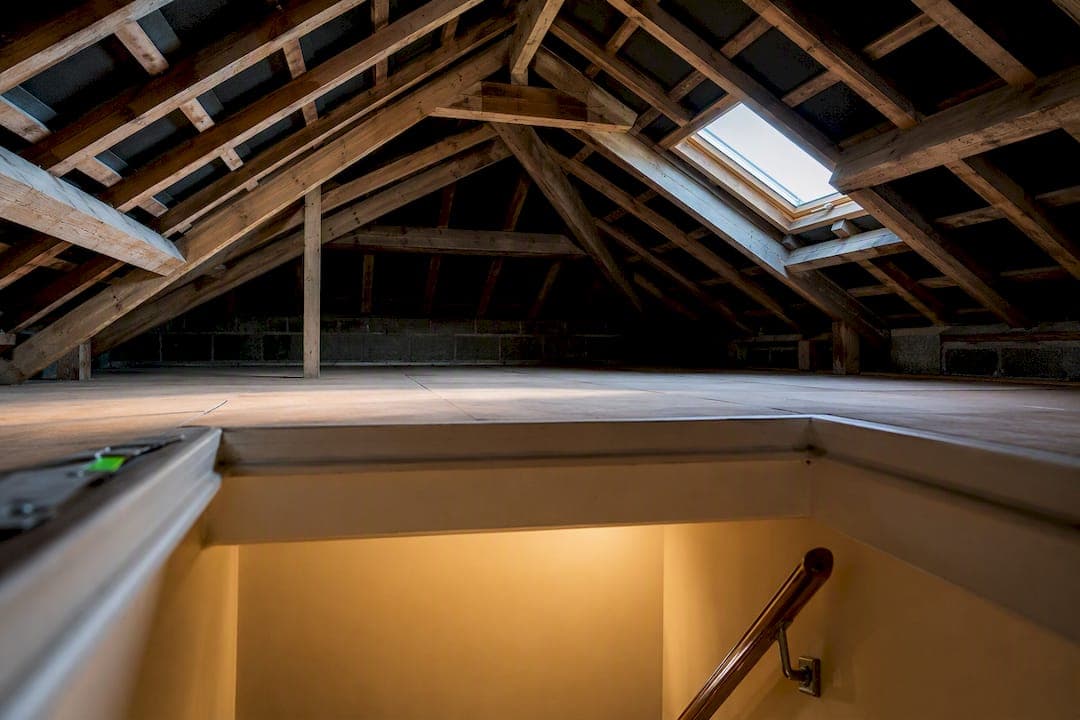
Yes, most homeowners can get a mainstream mortgage after professional spray foam removal, provided you commission an independent post-remediation survey to prove the timbers are dry and sound. Lenders want a lender-ready evidence pack, not just an empty loft. Expect to budget for removal itself, and know that a minority of lenders still apply their own stricter criteria regardless of the paperwork you bring.
TL;DR:
- Lenders’ main concern is the hidden timber, which can hide rot, moisture damage, or woodworm, making remote inspection impossible and increasing valuation uncertainty.
- A lender-ready evidence pack should include a removal certificate, an independent survey, moisture readings, photographs, and installer warranties to prove the roof’s condition.
- Removing spray foam is typically faster and less expensive with open-cell foam but may still require several weeks from removal to mortgage approval, depending on drying times and survey scheduling.
- For quick mortgage access or short-term stays, using a specialist lender without removal may be an option, but it often comes with higher interest rates that could outweigh removal costs over time.
Table of Contents
- Why do lenders refuse mortgages with spray foam insulation?
- What documents do lenders want after spray foam removal?
- Should you pay for removal or use a specialist lender?
- How long does the process take from removal to mortgage completion?
- How do you avoid rogue spray foam removers?
- What's the order of actions for compiling your evidence pack?
- What are the insurance implications of spray foam removal?
- Does removing spray foam increase your property's value?
- Can refinancing be harder after spray foam removal?
- What experienced removal teams see that homeowners often miss
- Get mortgage-ready removal without the guesswork
- Sources
- FAQ
Why do lenders refuse mortgages with spray foam insulation?
Roughly a quarter of major UK mortgage providers apply restrictive policies and simply decline to lend against a home with retrofitted spray foam, according to reporting on lenders rejecting homes with spray foam insulation. The rest tend to assess each case individually, usually referring the file to a specialist valuation panel rather than issuing a blanket refusal.
The caution isn't really about the foam. It's about what the foam hides. Once closed-cell or open-cell foam is sprayed directly onto rafters, surveyors can no longer see the timber underneath, and that creates three specific worries for a lender:
- Inaccessible timbers make it impossible to check for rot, woodworm, or historic damage during a standard survey.
- Trapped moisture can degrade structural timber over years without any visible sign from inside the loft.
- Valuation uncertainty pushes some surveyors to apply a "retention" (holding back part of the loan) or a straight decline rather than guess.
Insurers factor in the same blind spots, which is why underwriting decisions and buildings insurance terms often move together. Our guide to lenders and spray foam breaks down how individual underwriting teams reach these calls in practice.
What documents do lenders want after spray foam removal?
Removal alone rarely satisfies an underwriter. What convinces them is a paper trail proving the roof structure is dry, inspected, and sound. RICS has been consistent on this point: the real sticking point for lenders is usually a lack of transparency, not the material itself, according to its consumer guide on spray foam insulation.
Build your evidence pack around these five items, roughly in this order:
- A signed removal certificate from the specialist who carried out the work, stating what was removed and when.
- An independent RICS-style survey confirming the timbers are dry and structurally sound, following the standards set out in guidance on spray foam surveys and post-remediation reporting.
- Before-and-after photographs with visible timestamps, covering the full loft, not just a handful of rafters.
- Calibrated moisture meter readings for the timbers, with the instrument and date noted alongside each reading.
- Original installation paperwork if you still have it, including any BBA or Kiwa certificates and installer warranties.
Pro Tip: Ask your surveyor for a short executive summary addressed directly to the underwriter, listing every attachment. A pack that reads clearly to a valuation panel in five minutes moves faster than a folder of loose photos.
Our post-removal certification guide shows what a lender-ready report actually looks like once it's assembled.
Should you pay for removal or use a specialist lender?
This is the real fork in the road, and the right answer depends on how long you plan to stay put. Removal cost varies by foam type: open-cell is generally quicker and cheaper to strip out than closed-cell, which bonds more tightly to the timber and takes longer to remove safely, per industry guidance on whether spray foam makes a property unmortgageable.
Roughly a quarter of the UK's major lenders won't touch a property with retrofitted spray foam at all, which is precisely why an independent removal certificate and survey carry so much weight with the other three-quarters.
Specialist lenders will consider a spray-foam property without removal, but almost always at a higher interest rate. Run the numbers before deciding:
- Removal is typically a one-off cost, paid once and finished.
- A specialist mortgage rate premium compounds every single year you hold that product.
- Over a five-year fixed term, the extra interest from a specialist rate can easily exceed what removal would have cost upfront.
If you intend to stay in the property or plan to sell within a few years, removal is usually the stronger financial move. If you're cash-constrained right now and need a mortgage decision quickly, a specialist lender can be a pragmatic stopgap while you plan removal later.
How long does the process take from removal to mortgage completion?
Plan on a five to seven week window from booking the work to mortgage completion, and build in slack rather than cutting it fine.
- Professional removal itself typically takes two to five days, depending on loft access and how much foam needs stripping.
- Drying and monitoring follows immediately, since surveyors need timber moisture content back within safe thresholds before they'll sign off, as noted in guidance on timing and moisture thresholds.
- The independent survey and report usually takes one to two weeks once timbers are confirmed dry.
- Lender valuation and decision runs another two to four weeks after your broker submits the evidence pack.
- Conveyancing and completion adds a further two to three weeks on top.
Pro Tip: Appoint your mortgage broker and your removal specialist in the same week. Don't re-insulate or board over the loft until the surveyor has physically signed off. Doing so before their visit is one of the most common causes of a second, delayed inspection.
How do you avoid rogue spray foam removers?
Cold callers offering same-day loft "fixes" are the single biggest red flag in this industry, and lenders know it too. Watch for these warning signs before booking anyone:
- Unsolicited phone calls or doorstep visits pushing immediate removal.
- Pressure to sign and pay before you've seen a written quote or method statement.
- No signed removal certificate offered as standard once the job is finished.
- No insurance-backed warranty covering the work.
Before booking, ask for proof of Property Care Association membership or an equivalent register listing, a sample of the lender-ready report they'll produce, and evidence of an insurance-backed warranty, all points reinforced in PCA guidance on sprayed foam inspections. If you suspect work already carried out was substandard, stop any further work immediately, commission an independent RICS survey, and raise it with Trading Standards or Citizens Advice. Our PCA certification guide explains exactly what to check before you sign anything.
What's the order of actions for compiling your evidence pack?
Get the sequencing wrong and you'll end up paying for a second survey. Follow this order:
- Before any work starts: photograph the loft and roof as it currently stands, note the installation date, and dig out any original paperwork from the installer.
- During remediation: insist on a signed removal certificate, moisture readings with the instrument and date recorded, and dated invoices for the work and any structural repairs.
- After remediation: commission an independent RICS-style survey, assemble everything into one pack, and hand it to your mortgage broker before you submit any application.
| Stage | What to collect | Who provides it |
|---|---|---|
| Before removal | Photos, dates, original paperwork | You, the original installer |
| During removal | Removal certificate, moisture readings, invoices | Removal specialist |
| After removal | Independent survey, executive summary | RICS-qualified surveyor |
Our remortgaging with spray foam guide walks through how brokers use this exact pack when submitting to lenders.
What are the insurance implications of spray foam removal?
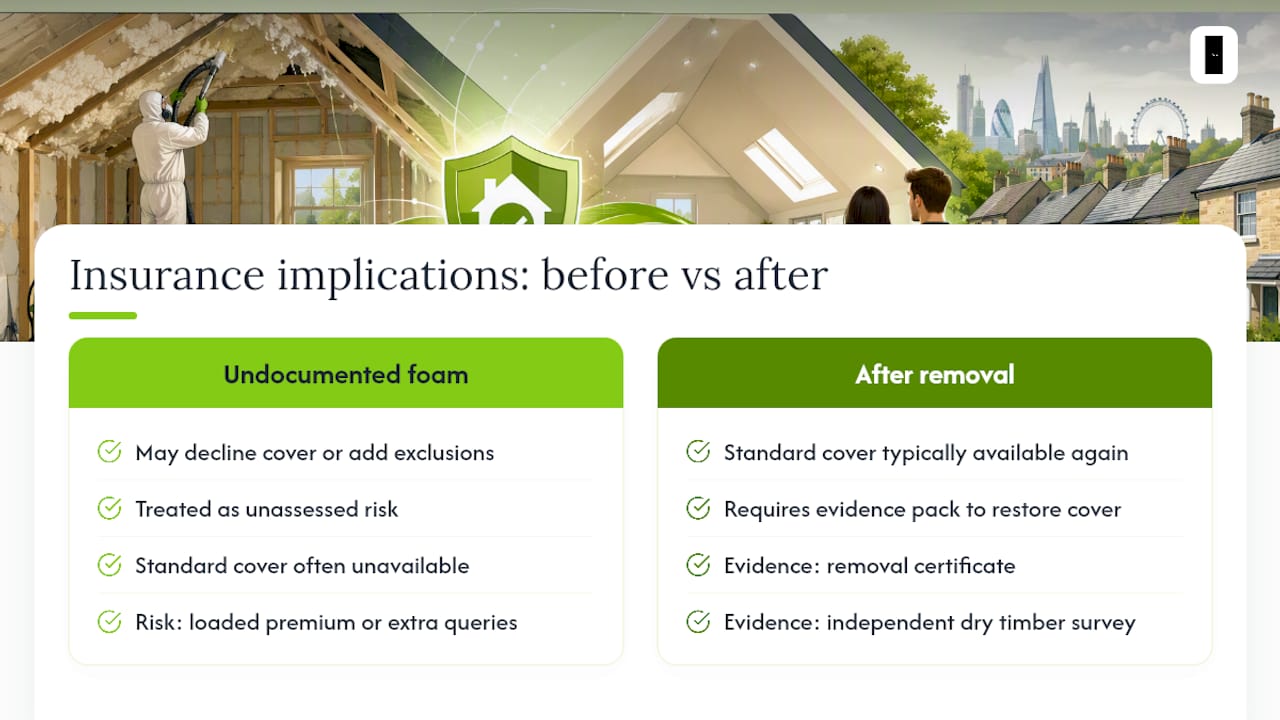
Buildings insurers ask many of the same questions as mortgage underwriters, because both are worried about hidden timber damage. Some insurers have declined cover or added exclusions on properties with undocumented spray foam, treating the lack of visibility into the roof structure as an unassessed risk rather than a defect in itself.
Once removal is complete, most insurers will want the same evidence pack a lender asks for: the removal certificate, the independent survey confirming dry, sound timbers, and photographic proof. Present this alongside your renewal or a new application, and standard cover typically becomes available again on ordinary terms. Skip the paperwork, and you risk a loaded premium or an insurer asking further questions at the worst possible moment, mid-remortgage.
If the original installation caused damage the installer should be liable for, check whether their installer warranty or an insurance-backed guarantee covers remediation costs before you pay out of pocket. Government guidance notes there's no central fund for this: homeowners are generally expected to pursue installers or their guarantees directly rather than relying on state support, according to the House of Commons Library briefing on spray foam insulation and mortgages. Our guide on recovering spray foam removal costs covers the practical claim routes available.
Does removing spray foam increase your property's value?
Removal tends to restore value rather than add it, because the foam itself was suppressing what the property was worth to begin with. A home with undocumented or unremoved spray foam often sits at a discount, since buyers' surveyors flag the same inaccessible-timber concerns that make lenders nervous, and some buyers walk away entirely rather than deal with the uncertainty.
Once removal is complete and backed by a signed certificate and an independent survey, most valuers can assess the roof structure on its actual condition again, rather than pricing in a worst-case unknown. If the timbers come back dry and structurally sound, a normal valuation usually follows, according to the House of Commons Library briefing.
The gap between "unmortgageable with foam" and "back to normal valuation" is almost entirely the documentation gap, not a physical one. A property that had spray foam removed and properly certified two years ago should value the same as one that never had it, all else being equal. One that still has undocumented foam, or was "removed" without a certificate, will likely still carry a valuation hit. Our piece on restoring property value after spray foam sets out how sellers typically position this to buyers and agents.
Can refinancing be harder after spray foam removal?
Remortgaging after removal is usually more straightforward than a fresh purchase application, but it isn't automatic. Your current lender may already have flagged the property internally when the foam was first installed, and some will want the full evidence pack resubmitted even if you've been paying your mortgage without issue for years.
The most common sticking point is timing: if you apply to remortgage before the timbers have fully dried and been re-surveyed, you risk a retention, a declined application, or a forced switch to your lender's standard variable rate while the case gets reviewed. Switching lenders entirely can also mean starting the underwriting conversation from scratch with someone who has no history with your property.
The fix is the same evidence pack discussed throughout this guide, submitted proactively rather than in response to a lender's query. Brokers who deal with spray foam cases regularly will often approach lenders informally with the pack before a full application, which can flag likely refusals early rather than after a hard credit search. If you're weighing whether to remortgage now or wait, our guide on remortgaging with spray foam covers how brokers sequence these conversations.
What experienced removal teams see that homeowners often miss
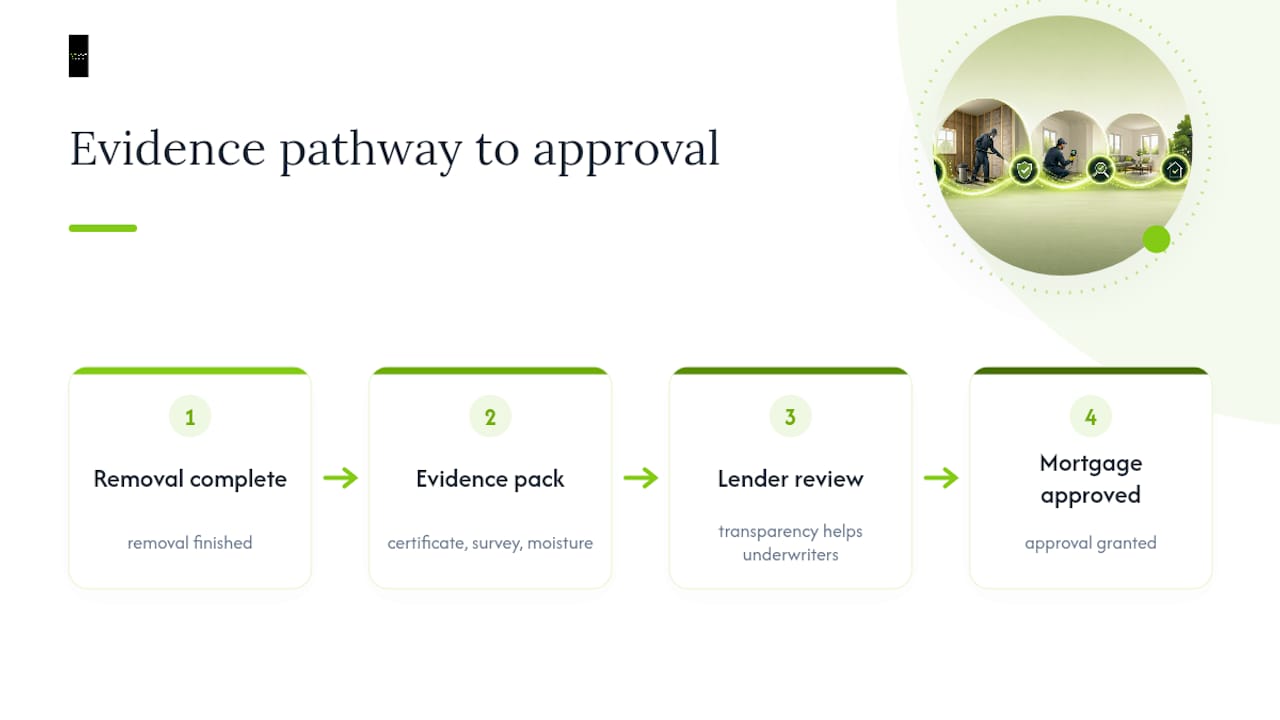
Homeowners tend to treat spray foam removal as the finish line. It isn't. The certificate, the survey, and the moisture readings are what actually move a mortgage application from "referred to underwriting" to "approved," and too many people pay for removal, then stall for months because nobody told them what paperwork a lender would actually ask for.
There's also a persistent myth that removal always requires stripping the entire loft back to bare timber. RICS and PCA guidance both suggest that in lower-risk cases, a qualified assessment can sometimes conclude the installation is safe without full removal, which can save homeowners a significant, unnecessary cost. The trouble is that "lower-risk" is a judgement call best made by a certified surveyor, not by a cold caller with a quote for full removal on day one.
The pattern worth trusting more than any single lender's policy is this: transparency wins arguments with underwriters far more often than the type of foam does. A well-documented removal with a thin file of certificates beats an undocumented "it's fine, trust us" every time, regardless of what was actually sprayed onto the rafters two decades ago.
— jessica
Get mortgage-ready removal without the guesswork
Specialist technicians handle both closed and open cell removal with mortgage-compliant certification built into every job. Clients communicate directly with the team doing the physical work, with transparent pricing agreed upfront and no hidden fees.

Before booking anyone for removal, ask to see a sample lender-ready report, proof of PCA certification, and the insurance documents backing the work. Every job comes with a 10-year insurance-backed warranty, which matters just as much to your lender as it does to you. Check indicative pricing and book an assessment through the spray foam removal cost guide, or browse survey and reporting options on the services page if you need documentation before you commit to full removal.
Sources
- Lenders reject homes with spray foam insulation
- RICS consumer guide: spray foam insulation
- Spray foam surveys and post‑remediation reporting
FAQ
Can you get a mortgage on a house with spray foam insulation?
Yes, though roughly a quarter of major lenders apply restrictive policies and decline outright, according to reporting on lenders rejecting spray foam properties. Most others will assess the case individually, usually after reviewing an independent survey confirming the timbers are sound.
Is spray foam insulation illegal in the UK?
No, spray foam insulation is not illegal in the UK. The issue for lenders and insurers is transparency and the accessibility of timbers underneath, not the legality of the product itself.
Can I sell my house if I have spray foam insulation?
Yes, but expect some buyers' surveyors and lenders to ask questions before completion. Selling tends to go more smoothly once you have a removal certificate and an independent survey ready to show, rather than trying to assemble that evidence mid-sale.
Should I buy a house with spray foam insulation?
Proceed carefully and get an independent survey before making an offer, since your own mortgage application will face the same lender scrutiny the current owner has faced. If the seller hasn't already had it professionally assessed or removed, budget time and cost into your offer for that step.