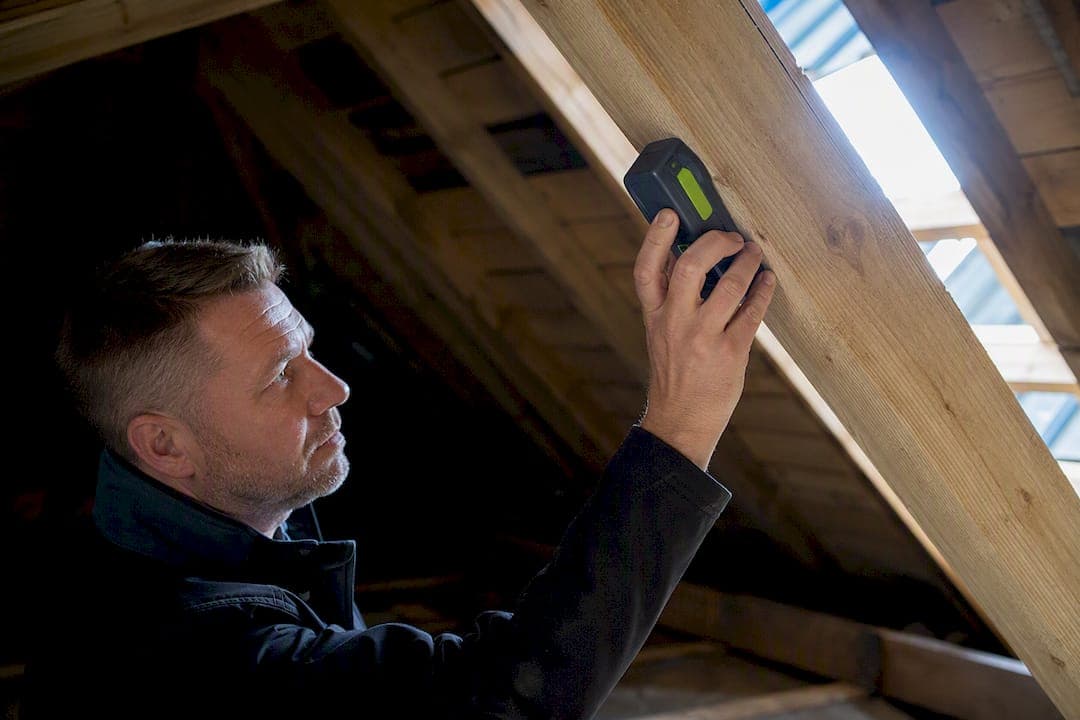
The evidence that makes a property mortgage-ready after spray foam removal comes down to four things: independent moisture content readings of exposed timbers, a dated photographic record covering before, during and after removal, an RICS-style inspection report signed by an assessor, and full disposal documentation. Definitive timber readings should wait until the property has had 4 to 6 weeks to settle. Independent, third-party sign-off is what gives lenders confidence.
TL;DR:
- Moisture readings should be taken precisely 4 to 6 weeks after foam removal to avoid false positives caused by surface moisture or recent water ingress.
- Independent, certified assessors with RICS membership and PCA protocol knowledge produce the necessary detailed reports, not contractor self-assessments.
- Proper documentation includes signed inspection reports, date-stamped photos, moisture measurements with device details, and disposal certificates to satisfy lender requirements.
- Persistent moisture or timber decay requires additional treatment, repair invoices, or extended monitoring to meet mortgage approval standards.
- Using a certified technician who handles removal, monitoring, and paperwork creates a reliable paper trail that prevents delays in mortgage approvals.
Table of Contents
- What is post-removal moisture monitoring?
- When should you test after removal?
- What measurements do lenders expect to see?
- Who should carry out the monitoring?
- What goes in the certification package?
- A step-by-step checklist from removal day to submission
- When is removal alone not enough?
- A practitioner's view on where this usually goes wrong
- How Sprayfoamremovalhelp gets you to a mortgage-ready property
- Sources
- FAQ
What is post-removal moisture monitoring?
Post-removal moisture monitoring is the process of checking walls, cavities and structural timbers for residual damp once spray foam insulation has been taken out. It matters because lenders don't reject a property automatically just because it once had foam. According to four mortgage lenders interviewed by Homebuilding & Renovating, decisions are made case by case, and a specialist surveyor's report demonstrating acceptable moisture levels is usually what unlocks the mortgage offer or the sale.
That means the job isn't just removing the foam. It's proving, on paper, that the timber underneath is dry, sound, and safe. A Parliamentary briefing on spray foam and mortgages confirms lenders generally want surveyor evidence rather than blanket refusals, which puts the burden squarely on the quality of the monitoring and the paperwork that follows it.
When should you test after removal?
Testing too early is one of the most common reasons homeowners get an inconclusive or misleading reading. Professionals typically recommend waiting 4 to 6 weeks after removal before taking definitive moisture readings, giving timber time to acclimatise and any surface moisture time to dissipate, according to PropertyInspect's guidance on spray foam. Test on day one and you'll likely pick up transient dampness that has nothing to do with the timber's actual condition, which can trigger a false positive and an unnecessary panic.
Several factors can stretch that window further:
- Recent roof leaks or water ingress before removal
- Cold, damp weather during the drying period
- Dense closed cell foam, which tends to trap more moisture against timber than open cell types
- Poor ventilation in the roof void or cavity
While you wait, keep the property watertight, open up safe ventilation paths (our guide on spray foam roof ventilation covers this in more depth), and resist the urge to blast the heating. Forcing warm air through damp timber can push moisture deeper rather than drawing it out.
What measurements do lenders expect to see?
Lenders don't want a vague "looks dry" verdict. They want numbers, instruments and dates. The Property Care Association's information paper on sprayed foam is explicit that moisture content measurement, photographic evidence and a check on ventilation and roof coverings should all form part of any proper inspection.
Three measurement types tend to come up:
- Timber moisture meters. Pin meters push two small electrodes into the wood and measure resistance between them; pinless meters use electromagnetic sensing across the surface without marking the timber. Both are useful, but pin meters give a more localised, depth-specific reading, which matters when checking whether decay is starting below the surface.
- Relative humidity readings. Ambient RH affects how a moisture reading should be interpreted, so a competent assessor records the RH and temperature at the time of testing alongside the device used.
- Thermal imaging. A thermal camera helps confirm foam has been fully removed and can flag cold, wet patches in the timber or masonry that a spot reading might miss.
Softwood roof timbers are generally considered safe below roughly 20% moisture content, though this is a guideline rather than a hard cut-off and context (species, location, recent weather) always matters. Every reading should note the exact measurement point, the device model, and the date it was taken, because an unlabelled number on a page carries almost no weight with a lender.
Who should carry out the monitoring?
A removal contractor grading their own work is a conflict of interest that most lenders will spot immediately. Independent verification, ideally from a chartered surveyor working to RICS standards or a specialist familiar with PCA guidance on sprayed foam insulation, carries far more weight because it removes any suggestion of self-marking.
Before booking anyone, check for:
- RICS membership or chartered status, verifiable through the RICS register.
- Familiarity with PCA protocols for inspecting properties that have had sprayed foam.
- Professional Indemnity insurance, so their report is backed by cover if something is missed.
- Evidence of calibrated equipment, not just an assurance that "the meter's fine".
- Sample reports, so you can see the level of detail before you commit.
Pro Tip: Ask any prospective assessor to email you a redacted sample report before you book. If they hesitate or can't produce one, that's a red flag worth taking seriously.
Walk away from anyone who can't answer these plainly, especially if they have no PI insurance or no professional body membership to point to.
What goes in the certification package?
Lenders and conveyancers are looking for a coherent paper trail, not a single certificate. Revive Maintenance's guidance on spray foam removal certification lists photo evidence, moisture readings, disposal certificates and an RICS-compatible sign-off as the core components, and that matches what RICS's own consumer guidance recommends: photographic evidence, moisture readings, and clear documentation of ventilation and installation history.
A complete pack should include:
- An RICS-style or independent timber inspection report, with the assessor's name, credentials and signature
- Date-stamped photographs from before, during and after removal
- A table of moisture readings by location, showing the device used and the date
- Waste transfer notes and hazardous waste disposal records
- Invoices for any remedial timber treatment or repair work
Building a table like this from your own assessor's readings gives a lender something concrete to review rather than a written assurance they simply have to trust.
A step-by-step checklist from removal day to submission
Getting the sequence right saves weeks of back-and-forth with underwriters later.
- On removal day, photograph the entire work area before, during and after, note down the technicians' names, and keep every waste transfer note issued on site.
- Weeks 1 to 3, make sure the property is fully watertight and ventilation is safely restored; book your independent moisture test for week 4 to 6.
- Weeks 4 to 8, have the independent timber inspection carried out and request an RICS-style report with the assessor's sign-off.
- At submission, assemble the full certification pack (our RICS spray foam guidance walks through what most lenders and estate agents expect to see) and send it exactly as the lender or agent requests, rather than assuming one generic format will do.
Rushing any of these steps, particularly booking the moisture test too early, is the single most common reason homeowners end up resubmitting paperwork.
When is removal alone not enough?
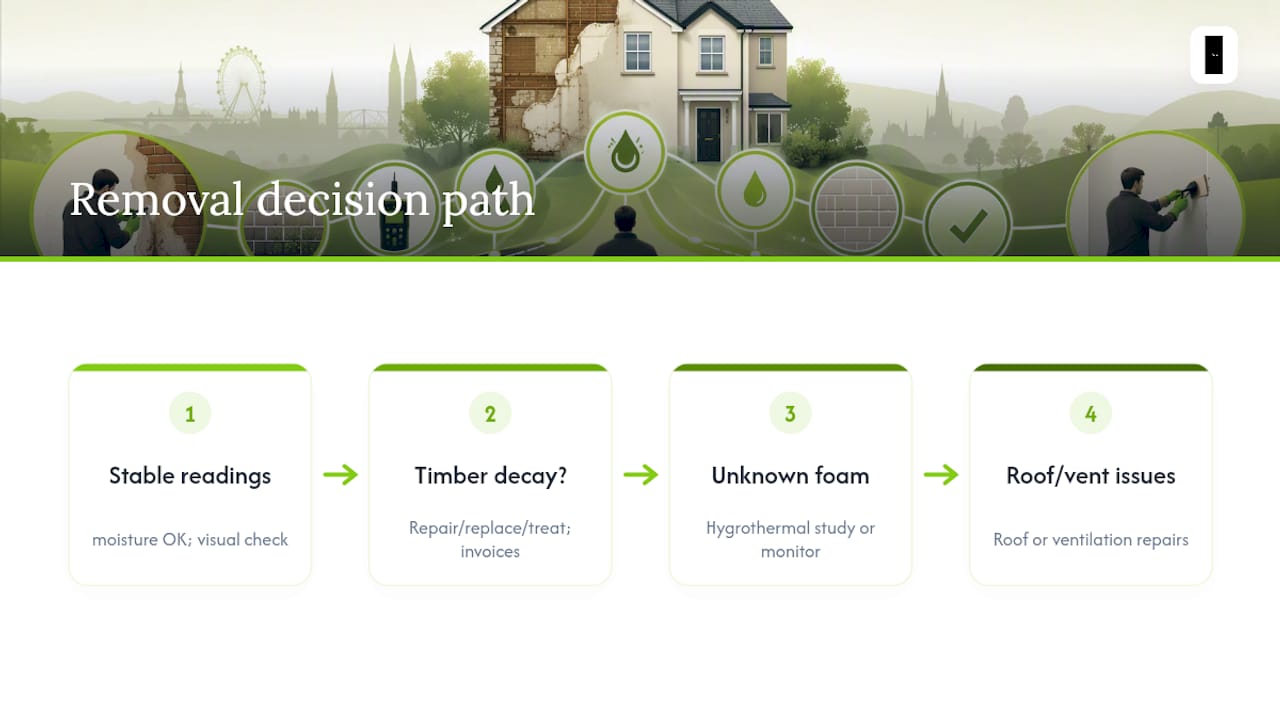
Sometimes the readings come back fine but the story isn't over. If a moisture reading or visual inspection reveals actual decay in the timber, expect the lender to want evidence of repair, replacement, or chemical treatment, backed by invoices, not just a note saying it's been "sorted."
Where there's genuine uncertainty about which foam type was originally installed, or no clear record of the timber's condition beforehand, a fuller hygrothermal investigation or an extended monitoring period may be requested. PCA guidance notes that concealed long-term decay often needs remedial work in addition to stable moisture readings, since foam can mask problems that predate the installation entirely. Roof covering defects and poor ventilation can also weigh on a lender's decision, and in some cases will need separate roof repairs before the mortgage-readiness picture is complete.
A practitioner's view on where this usually goes wrong
Most delays come down to the same handful of errors: someone tests the timber a week after removal instead of waiting, photographs get taken on a phone and never labelled with dates, or the assessor turns out to have no PI insurance when the lender's solicitor asks for proof. None of that is complicated to avoid, but it takes discipline most people don't expect a "removal job" to require.
Independent testing and complete paperwork aren't box-ticking exercises. They're what actually gets a mortgage offer through without a second round of underwriting questions. Every job completed by PCA-certified technicians comes with a full completion report and photographic record precisely because that documentation is what protects the homeowner months later, not just the technician on the day.
— jessica
How Sprayfoamremovalhelp gets you to a mortgage-ready property
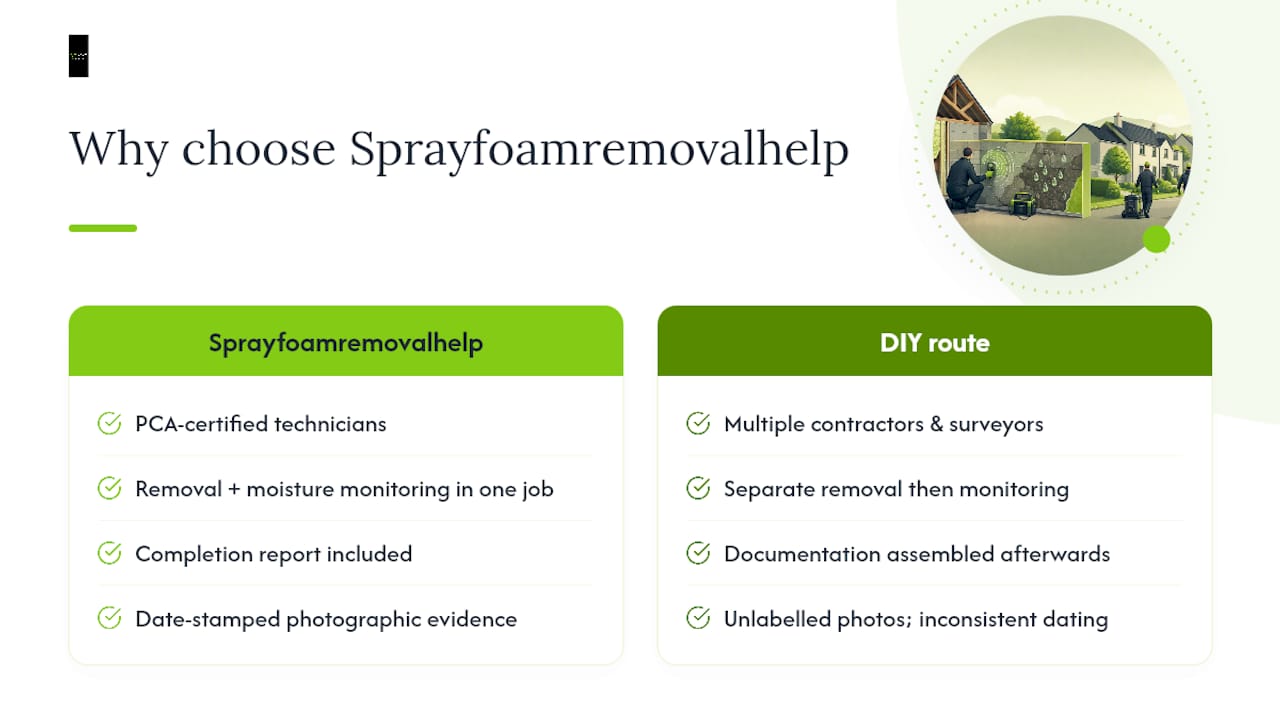
Sprayfoamremovalhelp is the direct alternative to piecing this together yourself through a removal firm, a separate surveyor and a stack of unlabelled photos. Its PCA-certified technicians handle the removal and the moisture monitoring under one job, so the documentation is built as the work happens rather than reconstructed afterwards from memory.

Every job comes with a completion report, date-stamped photographic evidence and insurance-backed warranty, giving lenders and conveyancers the kind of paper trail they're used to seeing accepted without a fight. There's no middleman between you and the technicians actually doing the work, so pricing stays transparent and questions about your specific property get answered by someone who was actually there.
If you've had spray foam removed and need the moisture checks and certification pack sorted properly, start with the spray foam removal guide to see how the process works, or go straight to booking an inspection and certification if you already know you need lender-ready sign-off.
Sources
The advice above draws on published inspection guidance rather than opinion. Worth keeping bookmarked:
- Does spray foam insulation really prevent you getting a mortgage? We asked four mortgage lenders
- Sprayed foam insulation information paper (PCA)
- RICS consumer guide: spray foam insulation
- Spray Foam Removal Certification & RICS Compliance (Revive Maintenance)
- Spray foam insulation and mortgages (Parliamentary briefing)
FAQ
How long should you wait before testing moisture after removal?
Most professionals recommend waiting 4 to 6 weeks so timber can acclimatise and surface moisture dissipates, which avoids the false positives that come with testing too soon.
What documents do lenders need to accept a property after spray foam removal?
Lenders typically want a RICS-style inspection report, date-stamped photographic evidence, moisture content readings by location, and waste disposal records, according to Homebuilding & Renovating's lender research.
Who is qualified to carry out post-removal moisture checks?
An independent assessor with RICS membership or chartered status, familiarity with PCA protocols, and current Professional Indemnity insurance is the standard lenders and conveyancers look for.
Does Sprayfoamremovalhelp provide moisture monitoring and certification?
Yes. Sprayfoamremovalhelp's PCA-certified technicians carry out removal alongside moisture monitoring and issue a completion report backed by an insurance-backed warranty.
What happens if moisture readings are still too high after 6 weeks?
Persistently high readings usually mean extended monitoring, further ventilation improvements, or in some cases timber repair or treatment, with invoices kept as evidence for the lender.