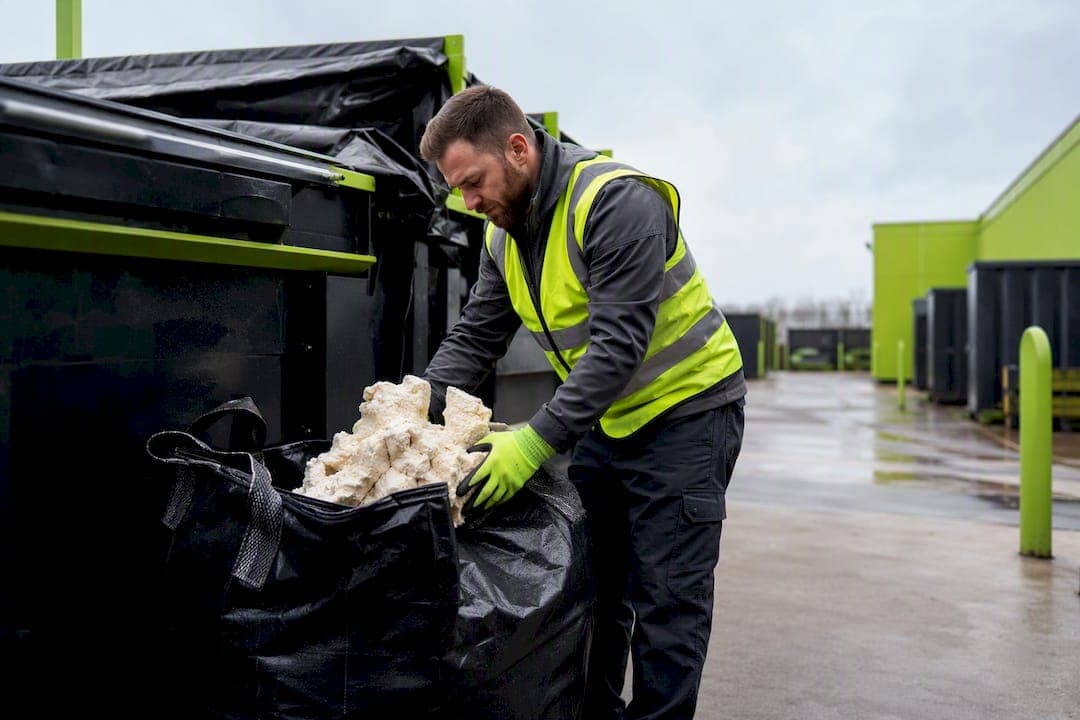
You cannot put removed spray foam in your household bin. Cured foam and any leftover chemical residue count as construction waste, and in some cases hazardous waste, so it must go to a licensed transfer station, a council hazardous waste service, or be collected by a licensed waste carrier who issues a waste transfer note. If you're removing foam ahead of a sale or remortgage, you'll also need independent certification to prove the job was done properly.
TL;DR:
- Spray foam waste must be classified correctly and disposed of at licensed facilities, with waste transfer notes retained for at least two years.
- Most removals involve a licensed transfer station, a skip via a registered carrier, or a specialist firm's disposal arrangement, with paperwork secured beforehand.
- Professional removal follows a strict process including site survey, containment, mechanical removal, licensed disposal, and independent certification.
- Removal costs depend on foam type, access difficulty, and potential timber repairs, with closed cell foam typically being more expensive to remove.
- Homeowners should avoid DIY removal and instead ensure contractors provide proper paperwork and independent certification for mortgage or legal compliance.
Table of Contents
- What are your legal duties when you dispose of spray foam insulation?
- Where can you legally take spray foam waste?
- How do professionals remove and dispose of spray foam safely?
- What does spray foam removal and disposal cost?
- How to organise lawful removal: a homeowner's checklist
- Why Sprayfoamremovalhelp recommends professional removal over DIY
- Book a survey and get compliant removal sorted
- Sources
- FAQ
What are your legal duties when you dispose of spray foam insulation?
Anyone who produces or arranges the disposal of waste in England and Wales has a legal duty of care. That means you're responsible for what happens to the foam once it leaves your loft, not just for getting it out.
Under the UK's waste classification guidance, waste must be classified before it's moved, and only authorised carriers and facilities can take it. This matters more with spray foam than most people realise, because the chemicals used to apply it, and sometimes the drums they arrive in, can fall under hazardous waste rules even after the foam itself has cured.
Your practical obligations break down like this:
- Classify the waste correctly before it leaves site (cured foam offcuts versus uncured chemical residue are treated differently).
- Use a carrier registered to transport waste, not an unregistered "man with a van".
- Keep waste transfer notes or consignment notes as proof of lawful disposal.
- Retain records for at least two years, longer if a mortgage lender or buyer might ask for them.
Skip these steps and you risk more than an awkward conversation. Waste sites can refuse improperly classified loads outright, and the Special Waste Regulations carry enforcement powers and fines for anyone who dumps or mishandles hazardous material, including the person who arranged the job, not just the contractor who did it.
Where can you legally take spray foam waste?
Start with Gov, which tells you by postcode whether your council runs a household hazardous waste service and what it accepts. Coverage varies a lot between local authorities, so this is worth checking before you assume your council will take it.
For most jobs, though, the realistic route is one of these:
- A licensed waste transfer station, where you or your contractor drop off bagged foam directly.
- A skip booked through a licensed waste carrier, who handles onward transfer and paperwork for you.
- A specialist removal firm's own disposal arrangement, bundled into the job price.
Whichever route you choose, ask for the paperwork before the job starts, not after. You want a waste transfer note or consignment note naming the carrier's registration number, the waste description, and the destination facility. Keep this alongside your removal invoice. If you're selling or remortgaging, a surveyor or lender will want to see it as proof the foam left the property lawfully, not just that it left the loft.
How do professionals remove and dispose of spray foam safely?
A compliant removal follows a set sequence, and it's worth knowing what it looks like so you can spot a corner-cutting contractor before you sign anything.
- Survey and method statement. A technician identifies whether the foam is open or closed cell, checks for existing timber damage, and writes a method statement covering containment, extraction and disposal.
- Containment and dust control. Access points are sealed and HEPA extraction runs throughout, because cutting cured foam generates fine dust that's unpleasant to breathe and awkward to clear from a loft space. Our guide to dust-controlled removal covers this in more depth.
- Mechanical removal and bagging. Foam is cut away from rafters and boarding, then bagged as it comes down rather than left loose, which is what keeps the waste stream traceable.
- Transport and waste transfer notes. Bagged foam goes to a licensed facility, with a waste transfer note issued at that point, not weeks later.
- Independent certification. A qualified inspector confirms the loft is clear and the timber is sound, producing a certificate lenders and surveyors will actually accept.
The IMA code of practice draws a clear line here: small amounts of uncured chemical can sometimes be managed differently, but once foam has cured into offcuts, it's bulky construction waste and needs authorised disposal like any other. Mechanical removal with containment and HEPA extraction is the accepted UK approach, and it's also what most mortgage lenders expect to see evidence of.
Pro Tip: Ask any contractor for their waste carrier registration number before booking. A genuine registration is checkable on the Environment Agency's public register in seconds, and a firm that hesitates to give it is telling you something.
What does spray foam removal and disposal cost?
Removal costs vary depending on foam type, loft access, how much foam there is, and whether timber repairs are needed once the foam comes off. Closed cell foam generally costs more to remove than open cell, because it bonds tightly to rafters and boarding and takes longer to cut away cleanly.
Homeowner accounts suggest the waste volume from a typical loft is often bigger than people expect, sometimes running to dozens of builders' bags once foam is stripped from every rafter bay, which is a large part of why disposal fees aren't trivial. For a fuller cost breakdown by property type, see our removal costs guide.
A few things typically push a quote up:
- Full closed cell removal versus a partial open cell strip.
- Difficult access (low headroom, boarded lofts, limited parking for skips).
- Timber repairs or re-roofing if rafters have been damaged by trapped moisture.
- Independent post-removal certification, usually a separate line item.
Most standard house jobs take a few days on site; anything needing structural repair or re-roofing extends that considerably.
How to organise lawful removal: a homeowner's checklist
If you've spotted spray foam and you're planning a sale, remortgage, or just want it gone, work through this in order.
- Stop any DIY removal immediately. Cutting cured foam without extraction is a health risk, and disturbing it without a plan can damage roof timbers further. Removal guidance on DIY spray foam removal sets out the risks in detail.
- Photograph everything. Wide shots of the loft, close-ups of the foam against timber, and any visible damp or discolouration. This helps a surveyor scope the job accurately.
- Book an independent pre-removal survey. This confirms foam type and condition before anyone quotes you, rather than guessing from photos alone.
- Ask contractors direct questions: Are they a registered waste carrier? Will you get a written method statement? Will they provide a waste transfer note and an independent post-removal certificate?
- Keep every document. Waste transfer notes, invoices, and certificates should sit together in one file, ideally scanned, ready to hand to a solicitor or lender on request.
If a contractor refuses or stalls on paperwork, treat that as a warning sign rather than a formality to chase up later. You can also check a carrier's registration yourself on the Environment Agency's public waste carrier register before committing.
Why Sprayfoamremovalhelp recommends professional removal over DIY
Homeowners come to us at every stage, some mid-sale with a surveyor's report flagging foam, others just wanting a loft they can trust again. Our PCA-certified technicians follow the same sequence every time: survey, contained removal, HEPA extraction, then a mortgage-compliant certificate you can actually hand to a lender.
We handle the waste chain ourselves, from bagging through to licensed transfer and the paperwork that proves it, backed by a 10-year insurance-backed warranty. If you're staring at a loft full of cured foam and wondering whether to hire a skip yourself, that's usually the point where a certified specialist saves you far more than they cost, particularly once timber repairs or lender deadlines enter the picture.
— jessica
Book a survey and get compliant removal sorted
There are other routes to clearing spray foam yourself, a skip and a weekend, or a general builder willing to have a go, but neither gives you the one thing a lender or buyer actually asks for: independent, mortgage-compliant certification backed by proper waste paperwork.
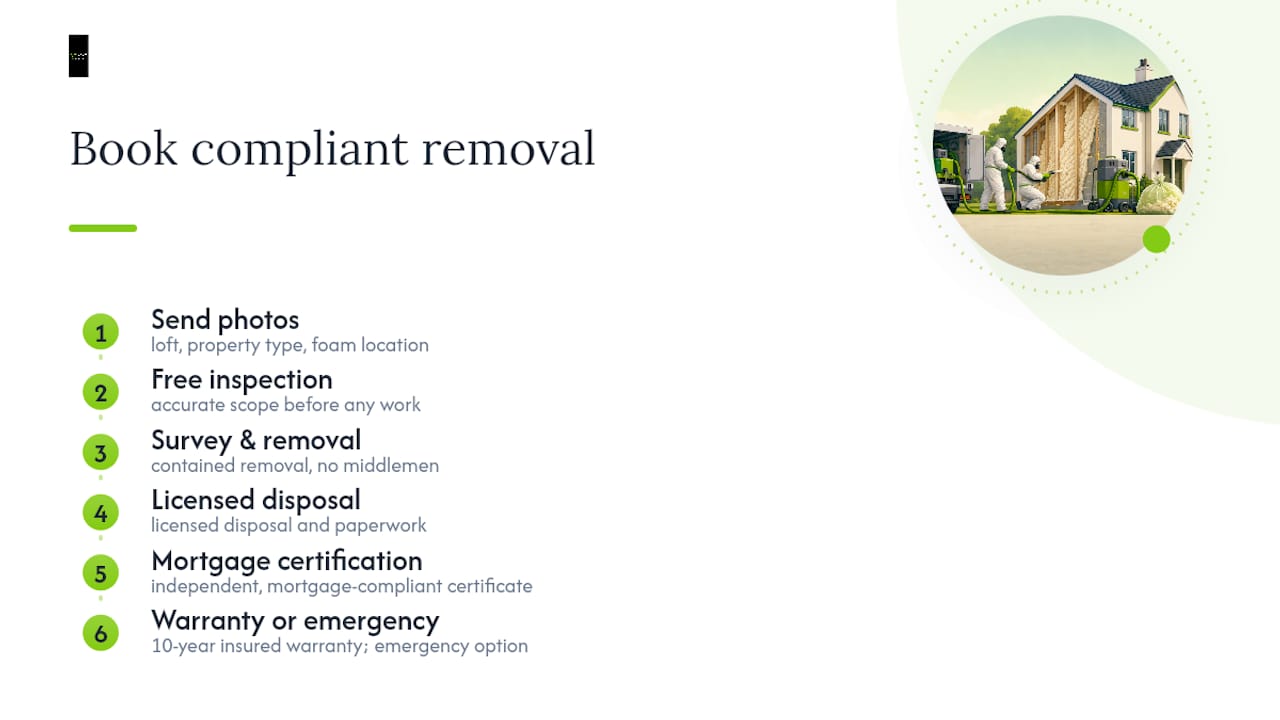
Sprayfoamremovalhelp handles the whole chain directly, survey, contained removal, licensed disposal, and certification, with no subcontracted middlemen and no hidden costs on the invoice. We serve London and the South East, and every job comes with a 10-year insurance-backed warranty behind it.
To get a quote, send us photos of the loft, your property type, and where the foam sits (rafters, boarding, or both). Start with our free inspection to get an accurate scope before any work begins, or read through our full removal guide if you're still weighing up options. If the foam is causing damp or structural concerns right now, our emergency removal service can get a technician out fast.
If you also need loft insulation removed more generally, Pest Control 24 London's residential removal service covers the wider London area.
Sources
- Find a local hazardous waste disposal service
- Waste classification: technical guidance (CD6.5)
- The Special Waste Regulations 1996
- Removing spray foam insulation: UK homeowner guide 2026
FAQ
Is spray foam insulation illegal in the UK?
No, spray foam insulation itself is not illegal. Problems arise from poor installation or unsuitable applications, not from the material being banned.
How do you get rid of old spray foam?
Old or removed spray foam must go to a licensed waste transfer station, a council hazardous waste service where available, or be collected by a registered waste carrier who issues a waste transfer note.
What bin does foam go in in the UK?
Spray foam should not go in any household bin. It's classed as construction waste, and any leftover chemical drums or residue may be hazardous waste requiring specialist disposal.
How much does it cost to remove spray foam insulation in the UK?
Costs vary by foam type, access, and waste volume, with closed cell removal generally costing more than open cell due to how firmly it bonds to timber and boarding. Get a survey-based quote rather than relying on a fixed figure, since timber repairs can add significantly to the total.