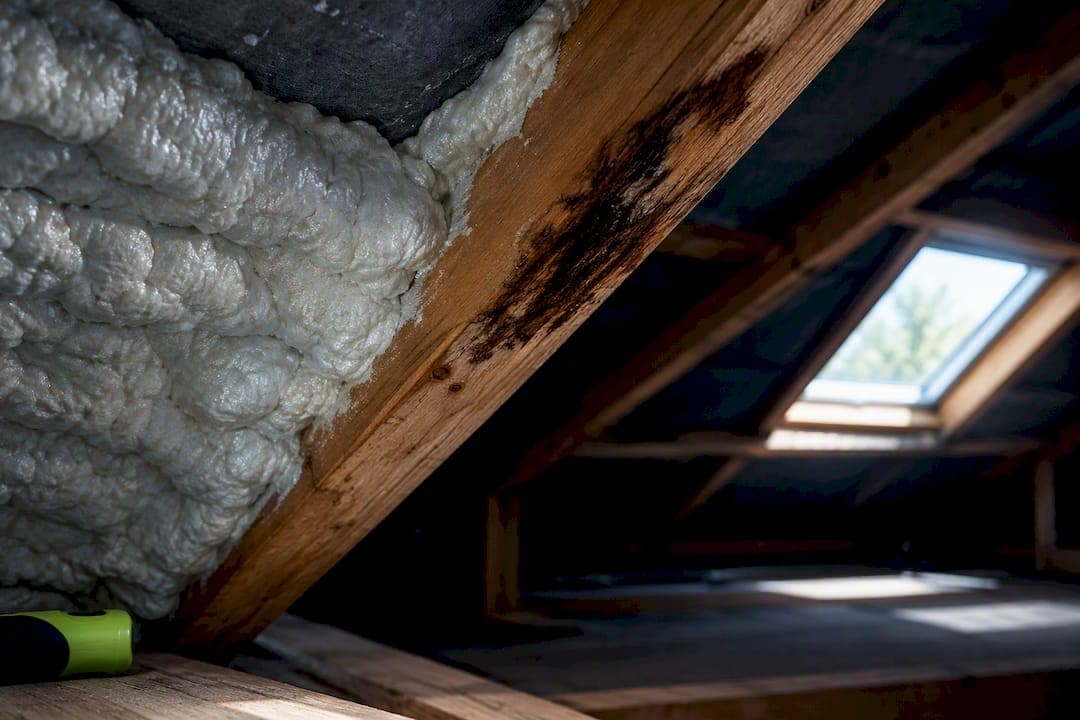
Spray foam is not automatically defective, but poorly installed or undocumented foam causes real mortgage, sale and structural problems for landlords. Surveyors flag it, lenders investigate or refuse, and hidden timber can rot unseen for years. If you're facing this now, the first move is an independent RICS or PCA-style inspection and pulling together every scrap of installation paperwork before anyone touches the loft.
TL;DR:
- Proper documentation, including manufacturer certification and moisture readings, is essential before attempting foam removal or remediation to support mortgage and insurance claims.
- Inspections must include detailed photographs and moisture tests to identify hidden timber rot or structural damage that visual assessments cannot reveal.
- Full foam removal costs between £5,000 and £15,000, but partial removal or remedial ventilation upgrades can sometimes satisfy lenders if properly documented.
- Lenders and buyers prioritize verified evidence such as PCA or RICS reports, product certification, and insurance-backed warranties over simple visual or verbal assurances.
- Immediate safety concerns, like active water ingress or structural risks, warrant urgent repairs before legal or remedial actions are pursued.
Table of Contents
- What landlord spray foam problems actually look like in UK lofts
- How spray foam affects remortgaging, buy-to-let lending and sales
- Structural, moisture and tenant safety risks to watch for
- Legal remedies and evidence landlords need to pursue a claim
- A step-by-step checklist for landlords facing a spray foam problem
- What removal actually costs and which option fits your situation
- Why lender-accepted evidence matters more than the removal itself
- Balancing urgent repairs against protecting your evidence
- Get a lender-ready survey before you commit to removal
- Sources
- FAQ
What landlord spray foam problems actually look like in UK lofts
Most landlord spray foam problems trace back to one issue: the foam changes how a roof breathes. A traditional cold roof relies on a ventilated air gap above the insulation to let moisture escape. Spray foam sprayed directly onto the underside of roofing felt or membrane can close that gap off, trapping damp air against timber that was never designed to stay wet.
That matters because you can no longer see the rafters once foam covers them. A surveyor doing a routine valuation cannot check for rot, insect damage, or old leaks hidden under a solid layer of expanding polyurethane. RICS advises that spray foam alters roof performance and makes visual inspection far harder, which is precisely why so many valuation reports come back with a caution flag attached rather than a clean pass.
Fire behaviour adds another layer of concern. BRE testing on retrospective sprayed foam in roof systems found that fire performance depends heavily on how the product was installed and whether it meets current roof classification standards, not on a blanket rule that all foam is unsafe. That nuance rarely survives being repeated by a nervous mortgage valuer.
In practice, the risk splits fairly cleanly:
- Lower risk: foam installed following a proper assessment, using a certified product, with manufacturer documentation and ventilation accounted for.
- Higher risk: foam sold through a cold call, sprayed without a survey, with no certificate, no product data sheet and no thought given to airflow.
The Property Care Association has inspected a notable share of properties with spray foam and found defects common enough to justify caution around retrofit installations generally, particularly where the work was done quickly and cheaply.
How spray foam affects remortgaging, buy-to-let lending and sales
Some mortgage lenders will not lend against a property with spray foam in the roof at all, and others will lend but only after further reports. The House of Commons Library briefing confirms this is genuinely case-by-case: policy varies lender to lender, and a refusal from one bank does not mean every lender will say no.

Surveyors are the pivot point in almost every one of these cases. A valuer who cannot inspect timber will typically qualify the report, recommend a specialist survey, or in some cases decline to value the property until further information is available. The wording a surveyor chooses matters enormously. A report that says "foam present, recommend specialist inspection" tends to move a lender toward conditional approval far more often than one that simply flags "cannot verify roof condition."
You have more routes to mortgageability than a full rip-out:
- Commission a RICS or PCA-protocol inspection report with photographs, moisture readings and a clear conclusion on structural condition.
- Provide manufacturer certification, such as BBA or Kiwa approval, showing the product installed was tested and compliant.
- Carry out targeted remedial work (ventilation upgrades, partial removal around problem areas) rather than stripping the whole roof.
- Get the survey wording checked in advance so it uses language lenders are used to seeing on acceptable applications, something a detailed RICS wording guide can help you prepare for before instructing a surveyor.
If you're heading toward a sale or remortgage, the most efficient use of your money is usually a proper inspection report first, not a demolition crew. Lenders and buyers alike respond better to documented evidence than to an empty loft with no history behind it, a point covered in more depth in guidance on how lenders treat spray foam at remortgage and sale stage.
Structural, moisture and tenant safety risks to watch for
The mechanism behind most spray foam damage is straightforward: moisture that would once have evaporated through a ventilated roof space instead condenses against timber, felt and insulation. Over months and years, that trapped moisture feeds rot in rafters and battens, and it can happen without any obvious sign at ceiling level until the damage is well advanced.
Watch for these warning signs in any property you manage:
- Musty smells in the loft or top-floor bedrooms, even when there's no visible damp.
- Damp patches or staining on ceilings directly below the roof void.
- Discoloured or soft-feeling timber where foam has been cut back or disturbed.
- Tenant reports of a persistent smell, condensation on windows, or mould returning after cleaning.
As a landlord, you carry a legal duty to keep the property free from damp and structural defects that affect habitability, and tenant reports of smell or staining are not something to file away; for advice on managing alterations in rental properties, see Acoustic wall panels in rented London homes. If a tenant flags a musty smell or visible mould growth, treat it as an early warning rather than a nuisance complaint. Left unaddressed, hidden timber decay becomes a far more expensive structural repair, and a much harder conversation with a tenant who has grounds to complain about disrepair.
Where there's active water ingress, visible structural sagging or a strong ongoing smell, prioritise safety first and get a specialist out quickly rather than waiting on the paperwork trail described below.
Legal remedies and evidence landlords need to pursue a claim
Regretting the decision to install spray foam is not, on its own, grounds for compensation. MJV Solicitors are clear that a successful claim needs evidence of an actual legal wrong: negligent installation, misrepresentation about the product or its suitability, or breach of the original contract terms.
That means the case usually rests on proving one of three things: the installer failed to carry out a proper assessment before spraying, the salesperson made false claims (commonly, that foam would "add value" or "definitely won't affect a mortgage"), or the work itself fell below a reasonable standard. Photographs, the original sales pitch in writing, and any assessment paperwork (or lack of it) all become central evidence.
If you paid for the installation on a credit card or through a finance agreement, Section 75 of the Consumer Credit Act may give you a claim against the credit provider, not just the installer, particularly useful where the original company has since gone out of business.
Before you commission removal, gather:
- The original contract, quote and any sales literature or verbal promises made in writing.
- Invoices and proof of payment method, including whether finance or a credit card was used.
- Any product certificates, warranties or manufacturer data sheets provided at the time.
- Dated photographs of the loft before any remedial work begins.
Removing the foam before you've built this evidence file can seriously weaken a claim. Solicitors handling these cases routinely see clients who stripped the roof out of urgency, only to find they've destroyed the physical evidence a court or insurer would have wanted to see. If you're weighing up an insurance claim alongside a legal one, it's worth reading how homeowners have recovered removal costs through the right combination of documentation and timing.
A step-by-step checklist for landlords facing a spray foam problem
Work through this in order rather than jumping straight to removal quotes:
- Commission an independent inspection. Ask specifically for a RICS or PCA-protocol survey that includes moisture readings, photographs and a written condition assessment, not just a verbal opinion.
- Gather every piece of paperwork. Contracts, invoices, payment records, warranties and any product certification need to be in one file before you go further.
- Contact your lender and insurer. Tell them what you've found and ask directly what evidence or reports they will need to keep the mortgage or policy in good standing.
- Get at least two removal or remediation quotes. Ask each contractor to explain their approach and, critically, whether they can provide a report wording lenders will accept.
- Brief your letting agent and tenant clearly. Explain what's happening, what's being checked, and roughly what timeline they should expect, particularly if any works will require access.
Pro Tip: Ask any surveyor upfront whether their report is written in language your specific lender has accepted before, not just generic "cannot verify" phrasing. A quick call to your mortgage adviser before the inspection can save weeks of back-and-forth later.
A spray foam assessment done properly at this stage often determines whether you're looking at a straightforward remediation or a genuinely complex removal job.
What removal actually costs and which option fits your situation
Professional removal typically runs from £5,000 to £15,000, with the final figure driven by roof access, how much of the loft is covered, and whether damaged timber needs replacing once the foam is out. A small loft with easy access and no rot sits at the lower end; a large roof with foam sprayed over every rafter and evidence of decay pushes toward the top.
| Approach | What it involves | Typical outcome for lenders |
|---|---|---|
| Full mechanical removal | Foam stripped back to bare timber, damaged sections replaced | Usually satisfies lenders fully once re-inspected |
| Partial removal | Foam removed from problem areas only, rest left in place | May satisfy lenders if paired with a clear condition report |
| Documentation and remedial work | Ventilation improved, certificates gathered, no foam removed | Sometimes enough for lenders if product is certified and timber is sound |
Lenders don't universally demand full removal. Where the foam is a certified product, timber is confirmed sound, and ventilation has been addressed, some will accept a strong inspection report instead of insisting on a rip-out. Where timber decay is already present or the product can't be identified, removal usually becomes unavoidable. Either way, get quotes early and ask contractors how they'll document the work, since how the removal is carried out affects how easily you can later show a lender or buyer that the job was done properly.
Why lender-accepted evidence matters more than the removal itself
Lenders and buyers respond to specific proof, not general reassurance. That means RICS inspections, PCA protocol reports, BBA or Kiwa product certification, and reference to BRE fire testing standards where relevant. A compliant service should offer more than just a removal quote:
- A proper inspection or drone survey before any work is agreed.
- PCA-certified technicians carrying out the physical removal.
- Written, lender-facing documentation once the job is complete.
- An insurance-backed warranty covering the work, not just a verbal guarantee.
Technicians carrying out spray foam removal should be PCA-certified and the removal work ideally comes with an insurance-backed warranty to provide documentation a lender or buyer's solicitor will want to see on file.
Balancing urgent repairs against protecting your evidence
If there's active water ingress or a genuine structural risk, fix it. Tenant safety comes before any claim strategy, and no legal case is worth a ceiling collapse. But where the problem is really about mortgageability, with no clear structural damage yet, slow down. Get the inspection, talk to your lender, and only then decide whether removal is even necessary.
— jessica
Get a lender-ready survey before you commit to removal
Some companies offer a direct service model, allowing clients to deal straight with PCA-certified technicians doing the actual survey or removal, with transparent fixed pricing and no hidden fees added once work starts.

Whether you need a Basic Visual Survey to satisfy a nervous lender or full Closed Cell Spray Foam Removal after confirming timber decay, every job comes with a 10-year insurance-backed warranty and documentation written to be lender-acceptable, not just technically accurate. Landlords managing multiple properties can start with the full range of survey and removal services, including drone surveys where access is difficult. Book a quick inspection now and get a written report you can hand straight to your mortgage lender or letting agent.
Sources
- Spray foam insulation and mortgages (House of Commons Library)
- Spray foam insulation (RICS)
- Spray foam insulation scandal (MJV Solicitors)
- Gov
FAQ
Is spray foam insulation banned in the UK?
No, spray foam is not banned in the UK, but it must be installed to current building and fire safety standards. Concerns raised in BRE fire testing have led to tighter scrutiny of retrospective roof applications rather than an outright ban.
Can I sue over spray foam insulation problems?
You can pursue a claim, but only where you can show negligent installation, misrepresentation, or breach of contract rather than simple dissatisfaction with the outcome. MJV Solicitors confirm that gathering evidence, contracts, photographs, and payment records before any removal work is essential to a successful claim.
What is the spray foam insulation scandal?
It refers to widespread cases of foam being mis-sold or poorly installed without proper surveys, often through cold calling, leaving homeowners and landlords with mortgage refusals and expensive remedial bills. The House of Commons Library documents lender caution as the central practical consequence.
Can you sell a house with spray foam insulation?
Yes, but expect a surveyor to flag it and possibly delay the sale until further reports are provided. Getting an independent RICS-style inspection before marketing the property, alongside services like Sprayfoamremovalhelp's survey packages, often prevents the issue derailing a sale at the last minute.
What does spray foam removal cost for a landlord?
Removal typically costs £1,000 to £7,000 depending on the type of foam, roof size and access, with closed cell foam generally at the higher end due to the extra labour involved in stripping it out. Getting a written quote and inspection first avoids surprises once work begins.