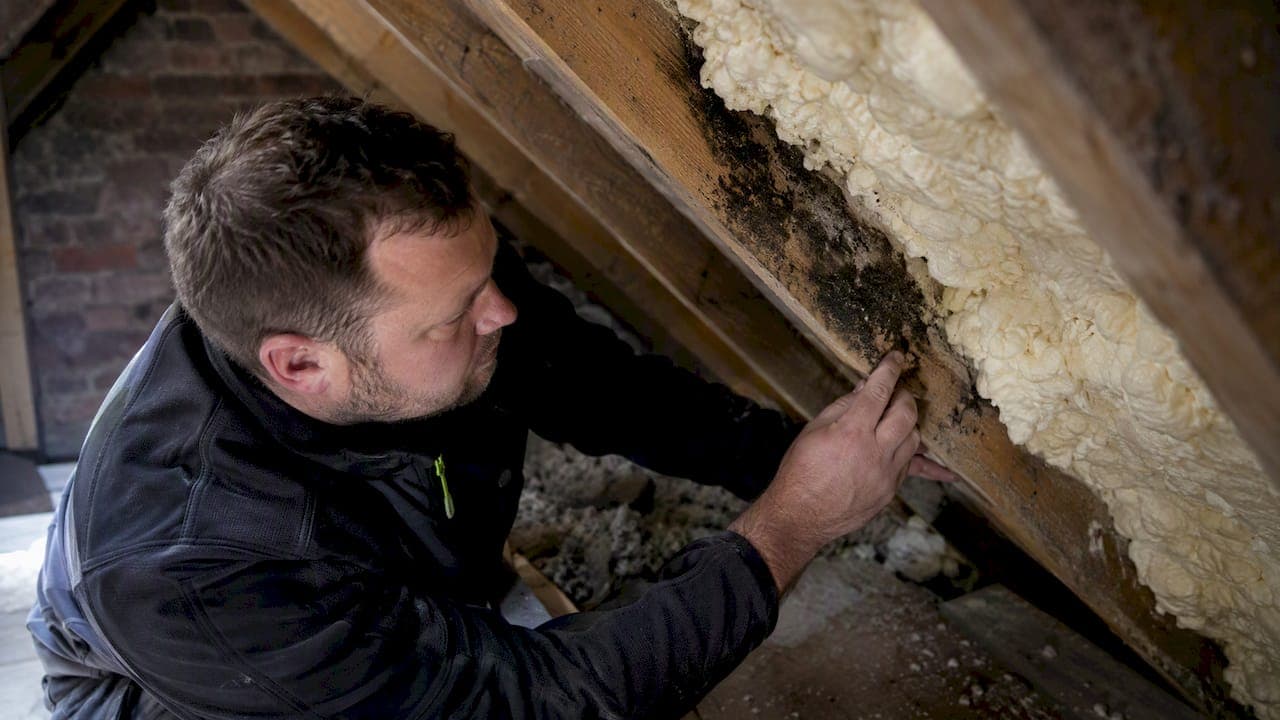
Poorly specified or badly applied foam can trap moisture and create conditions where mould forms on surfaces and timbers. Gov and the ventilation guidance in BS 5250:2021 both point to moisture management as the real issue. If you can see mould, arrange a professional inspection first.
TL;DR:
- GOV.UK modelling rated London roofs with open cell foam, high resistance underlay, and no AVCL as high risk; an AVCL or closed cell foam reduced risk.
- Removal is not automatic; triggers include timber decay, inaccessible timbers, or a lender’s demand after an independent survey, while properly installed, documented foam usually stays.
- Surface cleaning will not solve mould; fix leaks, limit loft access, and ask a PCA assessor or RICS chartered surveyor to measure moisture.
- Published removal prices range from £1,000 to £5,000 for open cell foam and £1,500 to £7,000 for closed cell foam, which takes longer to strip.
Table of Contents
- Why does mould appear after spray foam goes on the roof?
- Does open-cell or closed-cell foam make mould more likely?
- How do I spot mould and judge how serious it is?
- What should I do first if I find mould?
- When is removal actually necessary?
- What does the evidence say about the risk to your health and home?
- How do I keep the loft healthy after the foam is removed?
- How long does it take from spotting mould to a clear result?
- Why an evidence-led decision beats a rushed one
- When specialist removal or a mortgage-compliant report makes sense
- FAQ
- Sources
Why does mould appear after spray foam goes on the roof?
Spray foam changes how a roof breathes. Before the foam, warm damp air could drift into a ventilated loft and leave through the eaves. After it, the roof is often sealed, and any moisture trapped in the timbers has nowhere to go. Mould follows moisture, not foam.
The key detail is the air and vapour control layer (AVCL), a membrane on the warm side of the insulation that stops household vapour reaching cold surfaces. Without one, vapour from cooking, bathing and breathing can reach the cold roof structure and condense. Several other factors shape the risk:
- No AVCL: vapour moves into the foam and the cold timbers behind it.
- Airtight warm roof: timbers lose their usual route for drying out, so damp lingers.
- Foam on tiles or high-resistance underlay: the covering cannot let moisture escape, and condensation settles on the cold surface.
- Existing leaks or damp timber: foam can hide these and slow the drying that would otherwise happen.
The Centre for Sustainable Energy explains that foam can conceal and worsen existing moisture problems.
The highest modelled risk occurs when foam is applied directly to the roof covering, and in London, open-cell foam on high-resistance underlay without an AVCL was rated high risk. Adding an AVCL, or using closed-cell foam, brought those risks down to low or medium. If you have felt underlay, our post on felt roofs and spray foam risks explains why it matters.
Does open-cell or closed-cell foam make mould more likely?
Knowing which type you have helps a surveyor judge the risk.
- Open-cell foam is vapour permeable, so moisture can pass through it. It usually traps less water behind it, but the GOV.UK modelling still found a high risk when it sat on high-resistance underlay without an AVCL.
- Closed-cell foam is largely vapour impermeable. It is more likely to cause condensation on cold surfaces, according to the Centre for Sustainable Energy, but it can also act as its own vapour barrier, which is why the same modelling rated it lower risk in some assemblies.
Neither type is automatically safe or unsafe. Gaps in the foam, the way it bonds to tile battens and the type of underlay all change the picture. Closed-cell foam bonds hard to tiles and battens, and it tends to cost more to remove than open-cell, so it pays to find out which you have before deciding anything.
How do I spot mould and judge how serious it is?
Start with what you can see, then let a surveyor measure what you cannot.
- Look for visual cues on the foam and nearby timbers: black staining, white or grey fuzzy growth, and a persistent damp smell.
- Check the loft in different weather. Condensation tends to show after cold, humid spells, and mould can develop wherever surfaces stay damp.
- Note any stains or drips on ceilings below, which can point to a roof leak rather than condensation.
- Gather your paperwork: the installer's certificate, any condensation risk analysis, the product data sheet and receipts.
- Book a surveyor who will take moisture meter readings, judge humidity against mould-risk thresholds and photograph the findings.
Surface mould on foam is not the same as timber decay. A surveyor tells them apart with readings, and that distinction decides whether you need light remedial work or something bigger.
Pro Tip: Photograph the loft before anyone touches it, with the date visible. Lenders and insurers value a clear record of how it looked at the start.
Documentation matters because the right paperwork can prevent unnecessary removal. Our guide to PCA and RICS reports shows what lenders and insurers expect to see.
What should I do first if I find mould?
Act on two fronts: keep the situation stable, then get the right evidence.
- Improve ventilation where it is safe. Opening windows after showers and running extractor fans helps, and our partners explain how to prevent window condensation in practical steps.
- Limit loft access so you do not disturb mould or damage the foam.
- Avoid surface-only treatments. Wiping or spraying mould does not address vapour or leaks, and the growth returns.
- Fix obvious water ingress such as slipped tiles or failed flashing first.
- Hire the right inspector: a PCA-registered assessor or a RICS chartered surveyor. Ask for moisture readings, an AVCL check and photographs you can pass to a lender.
The RICS consumer guide says correct specification, documentation and site-specific inspection are the decisive factors.
Surveys differ in depth. A basic visual survey checks what can be seen from the hatch. A full roof report adds photographs and a closer look at timbers, and a drone or intrusive inspection reaches areas you cannot. An independent clearance report afterwards is what makes a property easier to mortgage.
Pro Tip: Ask the surveyor in advance whether the report will be accepted by your lender, and request that it states clearly whether timbers could be inspected.
When is removal actually necessary?
Removal is a response to specific findings, not a default. Industry guidance says foam installed to manufacturer instructions, with proper documentation, should not normally need removing. The usual triggers are:
- Active timber decay found by a survey.
- Timbers that cannot be inspected because foam covers them.
- A lender or valuer insisting on removal after an independent survey.
Removal usually means safely stripping the foam from the rafters, inspecting and treating the timbers, repairing any damage and re-insulating. Closed-cell foam takes longer because of how firmly it bonds. At Sprayfoamremovalhelp, our published prices run from £1,000 to £5,000 for open-cell removal and from £1,500 to £7,000 for closed-cell. Afterwards you need an independent clearance report, which is the document lenders ask for.
Properly installed spray foam is usually low risk, and poor installations cause most reported problems. That is why the survey comes before any removal decision.

What does the evidence say about the risk to your health and home?
The GOV.UK modelling found risk was highest on foam applied directly to tiles or to high-resistance underlay without an AVCL, and that risks could be reduced with a suitable AVCL. RICS and PCA guidance emphasises proper specification, documentation and site-specific inspection.
Health matters too. Damp and mould affect around one in three homes in England, and exposure can worsen respiratory conditions, with children and people with existing conditions most vulnerable.
Removing visible mould without fixing the moisture source is ineffective, and the health risks persist.
Cleaning the growth is only the start. The moisture has to be dealt with, or the problem simply returns.
How do I keep the loft healthy after the foam is removed?
Once the foam is gone, your roof depends on ventilation and good habits again.
- Keep the loft ventilated. Do not block eaves vents with new insulation, and leave a clear air path above the insulation.
- Control moisture indoors. Use extractor fans in kitchens and bathrooms, dry washing outside or in a vented room, and keep trickle vents open.
- Check the roof after storms, looking for slipped tiles, damaged flashing and stains on the ceilings below.
- Inspect the loft twice a year, ideally once in autumn and once in late winter, using a torch to check timbers.
- Choose replacement insulation carefully. A breathable mineral wool layer at ceiling level, or a reflective system installed to specification, keeps the roof structure cold and ventilated. Our team can fit Superfoil SF40 and other options once the roof is cleared.
- Keep every report and certificate in one folder. They will be needed again at sale or remortgage.
Plan ahead if you intend to add equipment later. Our advice on coordinating ventilation, surveys and solar work explains why a survey should come first.
How long does it take from spotting mould to a clear result?
Timescales vary with how much needs doing, but the sequence is predictable.
- Detection to survey: often a few days to a couple of weeks, depending on availability. Emergency same-day slots exist for urgent cases.
- Survey to report: a basic visual survey is usually quick, while a full roof or drone report takes longer to compile.
- Decision and quotation: once the survey says whether removal is needed, you can compare quotes and agree a date.
- Remedial work or removal: a modest repair can take a day or two, while whole-roof removal of closed-cell foam can run longer.
- Drying and re-checking: timbers need time to dry, and the surveyor needs to confirm moisture readings have settled.
- Clearance report: the final independent document, which lenders can then rely on.
Lead times shift with weather, access and the size of the roof, so treat any quoted timescale as a guide and confirm it in writing. Keeping your paperwork ready is the easiest way to speed things up.
Why an evidence-led decision beats a rushed one
Mould in a loft is alarming, and that is exactly when people make costly choices. My view is plain: get an independent survey before agreeing to anything expensive. Be wary of doorstep offers and high-pressure claims, and gather whatever installation paperwork exists. Many well-documented installations are low risk and need only targeted remedial work, not full removal.
— jessica
When specialist removal or a mortgage-compliant report makes sense
If your independent survey or your lender calls for removal, we can help. Our team removes open and closed cell foam, inspects the timbers, photographs the work and offers replacement insulation at transparent prices. We always suggest asking any contractor for PCA-registered assessors and written removal certificates, and independent clearance to support a remortgage or sale. Specialist help is an option when evidence calls for it, not an automatic first step.

Ready to talk it through? Book a home visit quote and we will assess your roof directly.
This article is general information, not a substitute for advice from a qualified doctor. Consult a qualified healthcare professional about your own circumstances before acting on anything here.

FAQ
Can you get mould on spray foam?
Mould can grow on spray foam or on timbers behind it when moisture is trapped. Condensation, roof leaks and missing AVCLs are the usual culprits.
How long does it take for mould to grow on insulation?
It depends on how damp and warm the surface stays. In persistently damp conditions, mould can grow, so early inspection matters.
What is the best thing to spray on mould to get rid of it?
Surface sprays only treat what you can see and do not cure the cause. GOV.UK guidance stresses that the moisture source must be fixed, so start with a survey.
How do you get rid of mould in foam?
Mould growing on foam surfaces is normally treated alongside fixing the moisture source, with a surveyor advising on cleaning. If the foam is saturated or covering decayed timber, removal and re-insulation may be needed.
Sources
- Gov
- Spray foam insulation - Centre for Sustainable Energy
- Spray Foam Insulation
- A guide to spray and injected foam insulation