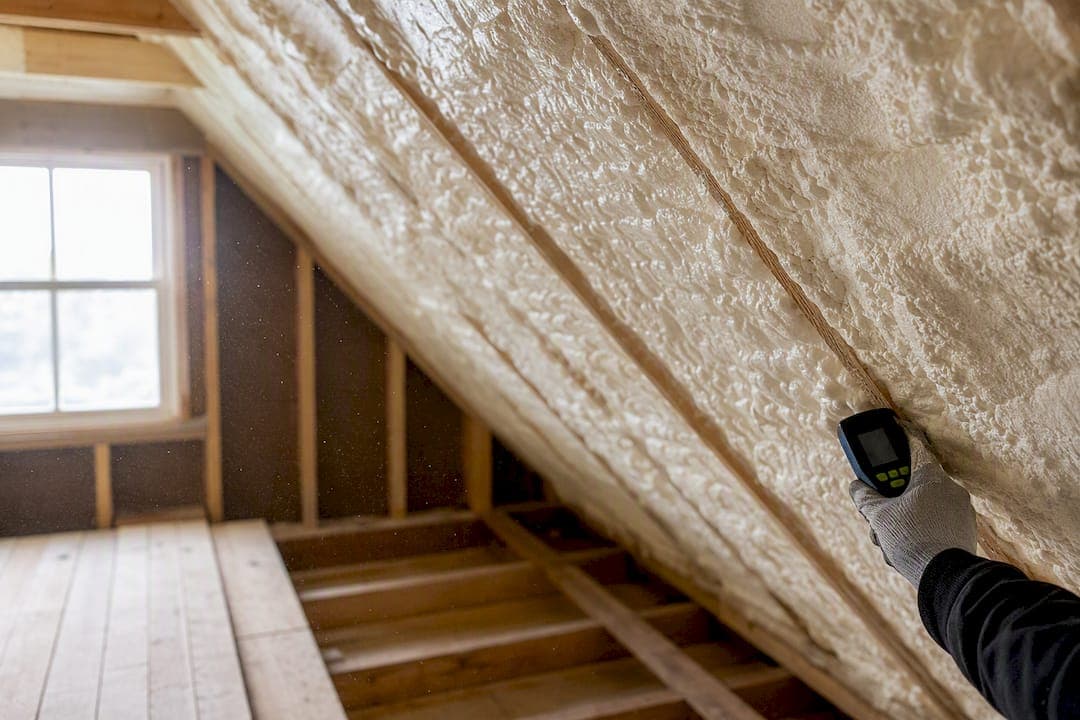
Spray foam insulation is combustible, not fire-proof, and typically carries a Class E or F rating under BS EN 13501-1 — meaning it resists a small flame for only a few seconds. The Building Safety Regulator's own testing confirms it can increase fire spread potential in roofs, even where a whole assembly still passes penetration tests. If you have spray foam installed, check your paperwork, speak to your lender or insurer, and book a professional assessment before treating it as safe.
TL;DR:
- Spray foam insulation is combustible and generally rated Class E or F, which means it can ignite quickly and increase fire spread risks in roofs.
- Fire performance can vary depending on roof configuration, installation details, and whether protective linings or cavity barriers are properly used.
- Certification confirms the foam itself is combustible, but actual safety depends heavily on correct installation following specific standards and building regulations.
- Homeowners should request specific product certificates, reaction-to-fire ratings, and installation documentation before proceeding with any modifications or removals.
- Removing spray foam should be done by specialists to prevent structural or electrical damage, with documented post-removal checks to satisfy lenders and insurers.
Table of Contents
- What the spray foam fire risk actually means for your home
- What UK regulator testing and standards actually found
- Why installation details change fire behaviour
- Installation rules that actually protect you
- Your checklist before you do anything else
- What safe spray foam removal actually involves
- Why I think this issue gets misunderstood so often
- Sources
- FAQ
What the spray foam fire risk actually means for your home
A Class E or F rating sounds technical, but it tells you something simple: this material burns. It is not a fireproof barrier, and it should never be marketed or understood as one. RICS is blunt about this in its own consumer guidance, stating plainly that polyurethane spray foam is a combustible material.
What does that mean in practice? The Building Safety Regulator's research found that adding combustible foam to a roof can raise the risk of fire spreading, though some roof configurations still met required penetration standards in the specific scenarios tested. That is not a blanket pass mark for every installation you might find in a British loft.
Three things to do immediately:
- Locate your installation paperwork and check the fire classification and installer details.
- Be wary of any installer who turns up unsolicited or pressures a same-day decision.
- Arrange an independent assessment before assuming your roof is compliant or your mortgage is unaffected.
What UK regulator testing and standards actually found
The Building Safety Regulator's testing programme, published in December 2025, looked specifically at how spray foam behaves within a full roof system rather than in isolation. The headline finding: combustible foam can increase the potential for fire to spread through a roof structure, but certain roof covering configurations still met the required external penetration criteria in the scenarios examined.
The regulator's own communications stress that this research is finite and scenario-specific. It is not a substitute for a proper standards-based assessment, and it should never be read as DIY guidance for judging your own roof.
Key findings worth holding onto:
- RICS confirms polyurethane spray foam is combustible and commonly rated Class E or F under BS EN 13501-1.
- The Building Safety Regulator's roof research found that whole-roof system behaviour, not the insulant alone, determines final performance.
- Separate hygrothermal modelling found moisture and timber-decay risk drops sharply when installers follow BS 5250:2021 guidance on vapour control layers and ventilation gaps, and rises where foam goes straight onto tiles without one.
That last point matters more than it first appears. Moisture-damaged timber does not just rot quietly. It changes how a roof structure behaves under fire load, which is why fire risk and damp risk in spray foam roofs are rarely separate conversations.
Why installation details change fire behaviour
Two separate tests are doing different jobs here, and conflating them causes most of the confusion homeowners run into. Reaction-to-fire classification under BS EN 13501-1 tells you how the foam itself burns: how fast, how hot, how much smoke. External fire exposure testing, covered under BS EN 13501-5 (commonly referred to as Test 4 in roofing circles), examines how an entire roof assembly performs when fire attacks it from outside, penetrating tiles, underlay, and battens.
A product can be Class E or F on its own and still sit within a roof system that meets penetration standards, because tiles, underlays, and protective linings all contribute to the final result. That is precisely why a BDA Agrément certificate for a product like Insulthane always ties its fire performance to specific roof coverings and construction details, not the foam alone.
Open-cell and closed-cell foams behave differently too. Closed-cell foam is denser and more rigid, and it tends to trap moisture against timber if a vapour control layer is missing. Open-cell foam is more permeable but generally offers less structural rigidity. Neither variant changes the underlying combustibility classification, but each interacts differently with:
- Roof underlay and tile coverings
- Cavity barriers and compartment walls
- Proximity to heat sources such as recessed lighting or flues
Get any of these wrong, and you are not just risking condensation. You are changing how the roof performs if a fire starts.
Installation rules that actually protect you
Manufacturer Agrément documentation is not paperwork for paperwork's sake. It sets out precise, enforceable constraints that a competent installer should already know by heart.
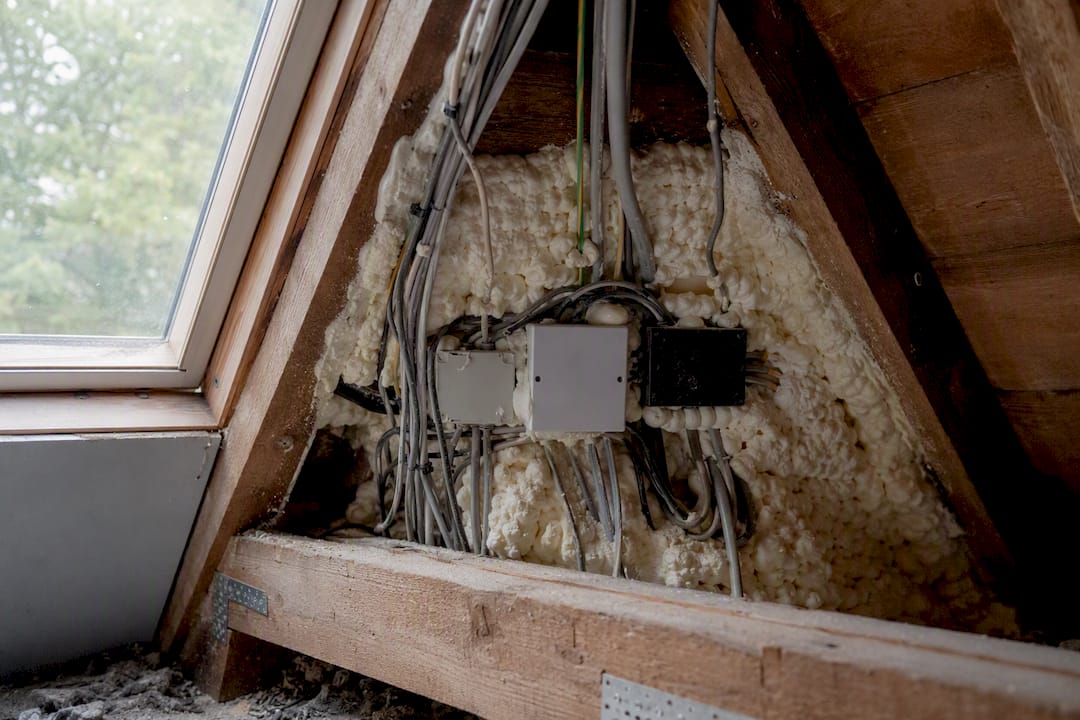
- Keep foam clear of electrics. Product certificates such as those for HEATLOK HFO PRO specify a minimum clearance, typically a safe distance away from recessed lighting fittings and a ban on spraying inside electrical junction boxes.
- Fit cavity barriers where required. These stop fire and smoke travelling laterally through a roof void, and skipping them undermines the whole system rating.
- Use fire-resistant linings. Plasterboard is commonly specified to achieve a recognized fire-resistant rating over exposed foam where the certificate calls for it.
- Demand a documented method statement. A competent installer works to the certificate, not to guesswork, and should be able to show you exactly which standard they followed.
Pro Tip: Ask any installer to show you the specific Agrément certificate for the product they plan to use, not a generic brochure. If they can't produce it on the spot, that is your answer.
Anyone applying foam near existing wiring should also understand the electrical risks that come with spray foam on cables, which compound the fire safety picture rather than sitting apart from it.
Your checklist before you do anything else
Before you panic or pay for anything, gather the facts. You need documentation, not guesswork, and you need it from the right people in the right order.
Documents worth requesting straight away:
- The BDA Agrément certificate for the exact product installed
- The reaction-to-fire rating (Class E, F, or otherwise) stated on the datasheet
- An installation report confirming which standard and method statement were followed
- Any building control sign-off or completion certificate
Who to speak to, in order:
- Your mortgage lender, since spray foam can directly affect valuation and lending decisions, as covered in our guide to lenders and spray foam
- Your insurance provider, to confirm cover isn't compromised
- A RICS-qualified surveyor or PCA-certified specialist for an independent condition assessment
- A fire risk assessment professional if you manage a rented or multi-occupancy property, since the assessment process differs from a standard homebuyer survey
Once you have documentation and a professional opinion, you're choosing between three paths: monitoring with no action, mitigation through added linings or barriers, or full removal. That decision should follow the evidence, not fear, but the evidence in a lot of older retrofits does point towards removal being the safer route. For a fuller picture of the condensation risks that often travel alongside fire concerns, our piece on spray foam condensation is worth reading before you decide.
What safe spray foam removal actually involves
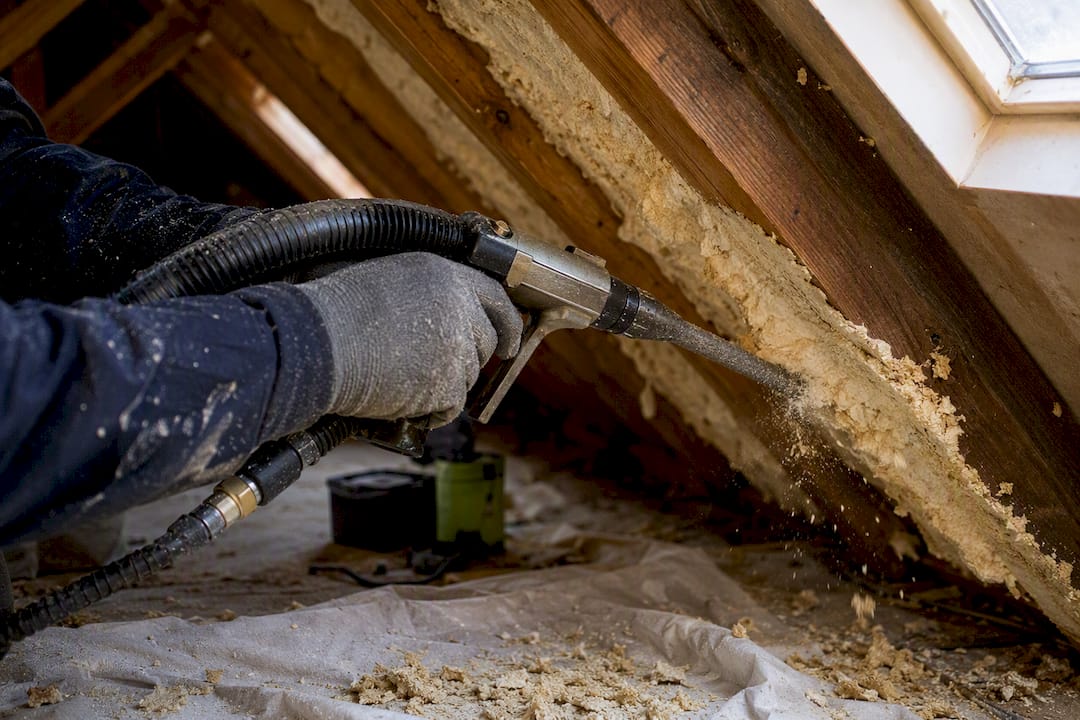
Removal is not a weekend DIY job, and treating it as one is how people damage timber, disturb wiring, or breathe in material they shouldn't. A specialist removal team works in containment, strips foam without tearing into structural timber, and checks wiring runs as they go, since foam is routinely sprayed directly over cables.
Three common outcomes follow a professional removal:
- Full removal and replacement with a compliant alternative insulation system
- Removal plus protective fire-rated linings if some foam must remain in an inaccessible void
- Installation of a reflective alternative such as Superfoil, which avoids the combustibility questions entirely
Whichever route you take, insist on a written report, dated photographs of the completed work, and confirmation you can hand to your lender or insurer. Our spray foam removal guide walks through what that process should look like from first inspection to final sign-off.
Why I think this issue gets misunderstood so often
Most articles on this subject either scaremonger or wave the risk away entirely, and neither serves homeowners well. The regulator's own research is careful, scenario-specific, and deliberately avoids blanket verdicts. That nuance gets lost the moment it reaches a forum thread or a pushy salesperson's pitch.
What I'd flag as the most overlooked point: certification does not mean universal safety. A product can hold a valid Agrément certificate and still fail in your specific roof if the installer skipped the protective linings or cavity barriers the certificate demanded. At Sprayfoamremovalhelp, our PCA-certified technicians have worked through this exact gap with over 1,000 homeowners, which is why mortgage-compliant documentation matters as much as the removal itself, backed by a 10-year insurance-backed warranty. If you call a remediation firm, ask them one direct question first: can they show you the specific certificate for what's in your roof, and what standard governed the original install?
— jessica
If you've read this far because something feels wrong with your loft, don't sit on it. Book a free inspection and get a straight answer on whether your spray foam meets the standard your lender and insurer expect.
Sources
- RICS consumer guide: spray foam insulation
- Fire safety: Spray foam roof insulation (Building Safety Regulator)
- Moisture risk of spray foam insulation applied to timber sloped roofs in dwellings (modelling report)
FAQ
Does spray foam catch fire easily?
Spray foam is combustible and typically rated Class E or F under BS EN 13501-1, meaning it resists a small flame for only a few seconds before igniting, according to RICS.
Is spray foam insulation illegal in the UK?
Spray foam insulation is not illegal in the UK, but it must meet building regulations and product certification requirements, and many mortgage lenders will decline or downvalue properties where it was installed without proper documentation.
Is it safe to be in the house during spray foam installation?
Installers typically require the area to be vacated during application and for a period afterwards due to off-gassing, and a competent installer will give you exact re-entry timings based on the product's own safety data sheet.
Why are people removing spray foam insulation?
Homeowners commonly remove spray foam because it complicates mortgage lending and insurance, traps moisture against timber when installed without a vapour control layer, and in some cases fails to meet the fire safety standards their lender or surveyor expects.