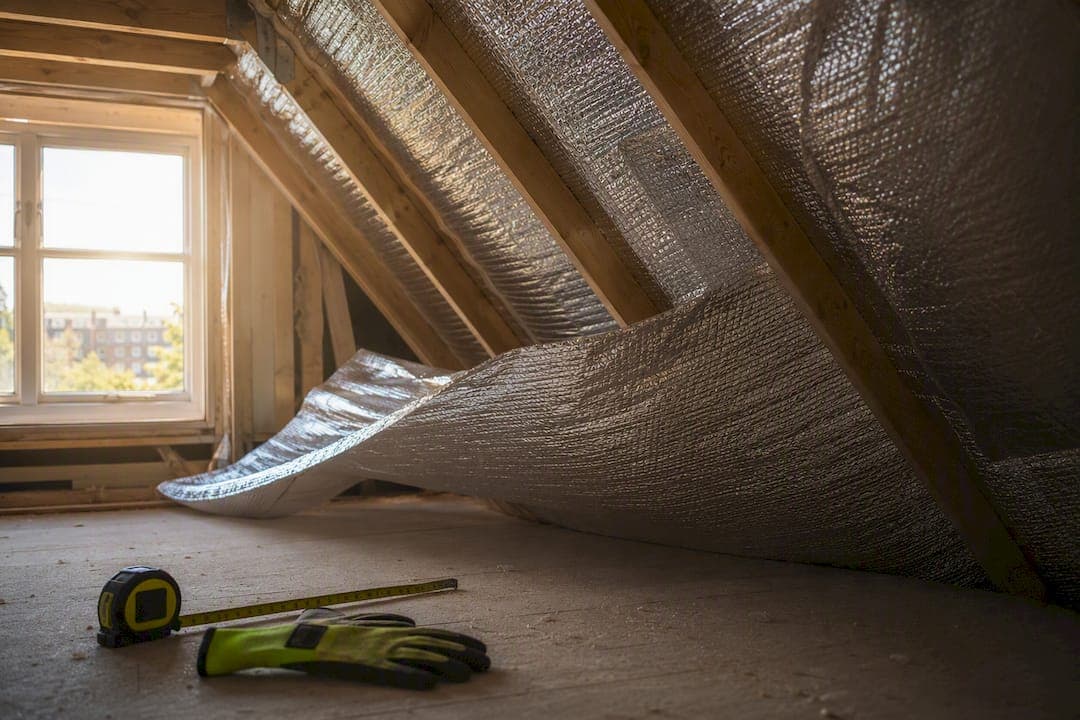
Superfoil loft insulation suits lofts and loft conversions where depth is tight, provided the product carries BBA certification and goes in with the exact air gaps its build-up specifies. Get those two things wrong and even the best multifoil underperforms badly. Before you order anything or book an installer, confirm three things:
- BBA certification on the specific product you're buying, not just the brand.
- The correct product type for your application (roof, wall, floor, vapour-closed vs breathable).
- The certified air-gap dimensions either side of the foil, written down.
If you can tick all three, request a manufacturer sample pack or a site survey next. If you can't, that's your first job before spending a penny.
Key Takeaways
Superfoil loft insulation performs to its certified U-value only when the exact air gaps, layer order, and product type specified on its BBA certificate are followed precisely.
| Point | Details |
|---|---|
| Check BBA certification first | Confirm the specific product, not just the brand, carries a valid BBA certificate before buying. |
| Match product type to application | Use vapour-closed multifoil internally and breathable multifoil over rafters to avoid condensation risk. |
| Air gaps decide performance | Both certified air gaps must be maintained exactly, or the stated U-value is voided. |
| Counter-battens aren't optional | They guarantee the room-side air gap and are the most commonly skipped step on rushed jobs. |
| Survey before you insulate | Sprayfoamremovalhelp's PCA-certified technicians can check for existing damp, old insulation, or structural issues before any SuperFOIL build-up goes in. |
Table of Contents
- What is superfoil loft insulation and how does it cut heat loss?
- Where superfoil wins and where it loses
- Which SuperFOIL product should you actually buy?
- What air gaps and counter-battens actually do
- What does superfoil loft insulation cost in the UK?
- Should you DIY or hire a certified installer?
- Why a professional survey protects your loft project
- A step-by-step guide to fitting multifoil correctly
- How long does superfoil loft insulation last?
- Does superfoil perform the same across the UK's climate?
- Editorial take: what actually determines whether SuperFOIL works
- Get your loft assessed properly before you insulate
- Sources
- FAQ
What is superfoil loft insulation and how does it cut heat loss?
SuperFOIL is a multi-layer reflective insulation built from metallised foil, wadding, and trapped air layers sandwiched together in a roll only a few millimetres thick. Instead of relying purely on trapping air to resist heat flow, the way mineral wool or PIR boards do, it uses reflective foil surfaces to bounce radiant heat back the way it came.
That distinction matters more in a pitched roof than almost anywhere else in the house. A significant share of heat loss through a roof happens by radiation, not just conduction, because the underside of roofing felt and battens gets genuinely cold in winter and radiates that cold straight into the loft space. SuperFOIL's own product literature argues this reflective action is what makes multifoil especially effective under rafters, where a thick reflective barrier close to the roofline intercepts radiant losses that bulk insulation alone tends to let through.
The practical upshot: you get a thin product doing a job that would otherwise need far more depth of mineral wool, which is precisely why multifoil turns up so often in loft conversions where headroom is already scarce.
Where superfoil wins and where it loses
Multifoil earns its keep on space. A thin multifoil layer can replace a much greater depth of mineral wool in a room-in-roof conversion, which matters enormously when you're already fighting building regulations over head height on a staircase or under a dormer. It's also clean to handle, lightweight to carry into a loft alone, and many products act as their own vapour control layer when taped correctly, saving a separate membrane step.
It has real limits too:
- Acoustic performance tends to trail behind dense mineral wool, so it's a weaker pick if noise reduction between floors is a priority.
- Fire ratings vary by product and build-up, so check the certificate rather than assuming.
- Standalone use isn't always enough. Independent comparisons note that certified build-ups often pair multifoil with rigid PIR boards to hit certain U-values, particularly on boundary conditions where extra conduction resistance is unavoidable.
If depth is your constraint, multifoil usually wins. If you've got the depth and acoustic performance matters more, mineral wool often makes more sense.
Which SuperFOIL product should you actually buy?
Not every multifoil is interchangeable, and picking the wrong type for the wrong side of an assembly causes real problems. Vapour-closed multifoils belong on the warm, internal side of a build-up, where they double as the vapour control layer. Breathable multifoils go over the rafters, allowing moisture vapour to escape outward rather than getting trapped inside the roof structure. Mixing these up, according to Actis's guidance on hybrid multifoil systems, risks interstitial condensation and rot inside a roof you can't easily inspect once it's closed up.
Within the SuperFOIL range, the grades scale with layer count and intended role:
- SF6 is a lighter product often used for sheds, outbuildings, and lower-spec applications rather than habitable loft conversions.
- SF19+ is a common mid-range choice for pitched roofs, balancing thickness against performance.
- SF40 adds more layers for higher thermal performance where depth allows a bit more build-up.
- SF60 sits at the top of the domestic range, aimed at projects chasing the highest U-value improvement from a multifoil-led system.
Before buying, pull up the manufacturer's certified build-up chart for the exact product and read the BBA certificate itself. It states the required air-gap sizes, the order layers must go in, and the U-value that build-up achieves. That combination is the whole ballgame.
What air gaps and counter-battens actually do
Multifoil only performs at its stated U-value when the air gaps either side of it match the certified build-up exactly. Deviate on cavity thickness, and you don't get a slightly worse result. You often void the claimed performance figure entirely, because the reflective effect depends on that trapped air layer doing its job undisturbed.
Practical installer experience repeatedly flags the same failure: undersized or missing air gaps, and product that's been squashed flat by careless fixing, as the single biggest cause of multifoil underperforming in the real world. Counter-battens exist specifically to solve this. They create a fixed, consistent cavity that can't be compressed by plasterboard or a careless staple gun, and skipping them is the shortcut some installers take when they're rushing a job.
Checklist for anyone installing or supervising the work:
- Confirm both the required air gaps (rafter-side and room-side) match the certificate, not a rough estimate.
- Fit counter-battens rather than fixing plasterboard straight through the foil.
- Seal every lap and every penetration (pipes, cables, loft hatches) with the manufacturer's own foil tape, not general-purpose tape.
- Maintain roof ventilation paths so trapped moisture has somewhere to go, particularly with breathable systems over rafters.
- Space fixings as the installation guide specifies, since too few leaves the foil sagging out of its designed air gap.
Pro Tip: Ask for the air-gap measurements in writing before work starts, then check them with a tape measure once the counter-battens are up. It takes five minutes and it's the single easiest way to catch a build-up that's drifted from the certified spec.
Building control inspectors checking a loft conversion will usually want to see this build-up matched to the BBA-certified drawing, so keep the certificate number and product batch details on file.
What does superfoil loft insulation cost in the UK?
Multifoil is typically sold in rolls, and pack sizes on UK merchant sites commonly cover somewhere in the range of 1.5m to 6m per roll length, with width usually standardised to fit common rafter spacing. Wickes' own SuperFOIL listings are a useful place to see current pack sizes and coverage figures side by side before you order.
Material cost per square metre tends to sit above basic mineral wool, reflecting the manufacturing process behind a multi-layer reflective product. Labour is where the real cost swing happens. A straightforward under-rafter DIY installation costs far less than a professionally fitted room-in-roof build-up that involves counter-battens, plasterboard, and certified sign-off.
Before ordering:
- Request a sample pack from the manufacturer to check thickness and handling before committing to a full roll order.
- Compare coverage per roll, not just price per roll, since thinner or narrower products look cheaper until you calculate actual square metres covered.
- Insist on seeing the certified U-value build-up for the exact product listed, not a generic figure for the product family.
Should you DIY or hire a certified installer?
Fitting multifoil over a shed roof or patching a small non-habitable space is reasonable DIY territory for a confident homeowner with basic tools. A full loft conversion, an ECO4-funded installation, or anything that building control will inspect is a different matter entirely.
- DIY-appropriate: outbuildings, garages, small non-habitable lofts where building control sign-off isn't required.
- Hire a certified installer: loft conversions, any ECO4-funded work (which requires BBA-certified products fitted correctly to qualify for funding), and any build-up building control will formally check.
- Questions to ask before booking: the installer's certificate number, a signed copy of the exact build-up they intend to install, warranty terms, and evidence of PAS 2030 compliance if the job is publicly funded.
If a quote seems to skip the paperwork stage entirely, treat that as a warning sign rather than a shortcut worth taking.
Why a professional survey protects your loft project
A survey before installation catches problems a product datasheet never will: existing damp, inadequate ventilation, roof timbers already under stress, or old insulation that needs removing first. Revive Maintenance's PCA-certified technicians work to mortgage-compliant paperwork standards, which matters enormously if you're planning to sell or remortgage after the work is done.
What sets that survey process apart is transparency. You deal directly with the technicians doing the work, pricing is agreed upfront with no hidden extras, and every completed job carries a 10-year insurance-backed warranty. That combination has built trust with over 1,000 homeowners across London and the Southeast.
A proper survey typically checks:
- Existing insulation condition and whether removal is needed before new multifoil goes in.
- Roof ventilation adequacy for the build-up being proposed.
- Structural condition of rafters and battens before fixing anything to them.
- Documentation you'll need for building control or a mortgage lender's surveyor.
A step-by-step guide to fitting multifoil correctly
Start by measuring the rafter run and buying enough roll length to avoid unnecessary joins, since every join is a potential weak point if it's not taped properly. Strip back to bare rafters if there's old, damaged insulation in the way, and check timber condition while you're up there.
Roll the multifoil across the rafters, foil side facing the room, keeping it taut but not stretched tight enough to compress the trapped air layers inside it. Staple it to the rafters temporarily, just enough to hold it in place, because the final fixing job comes from the counter-battens, not the staples.
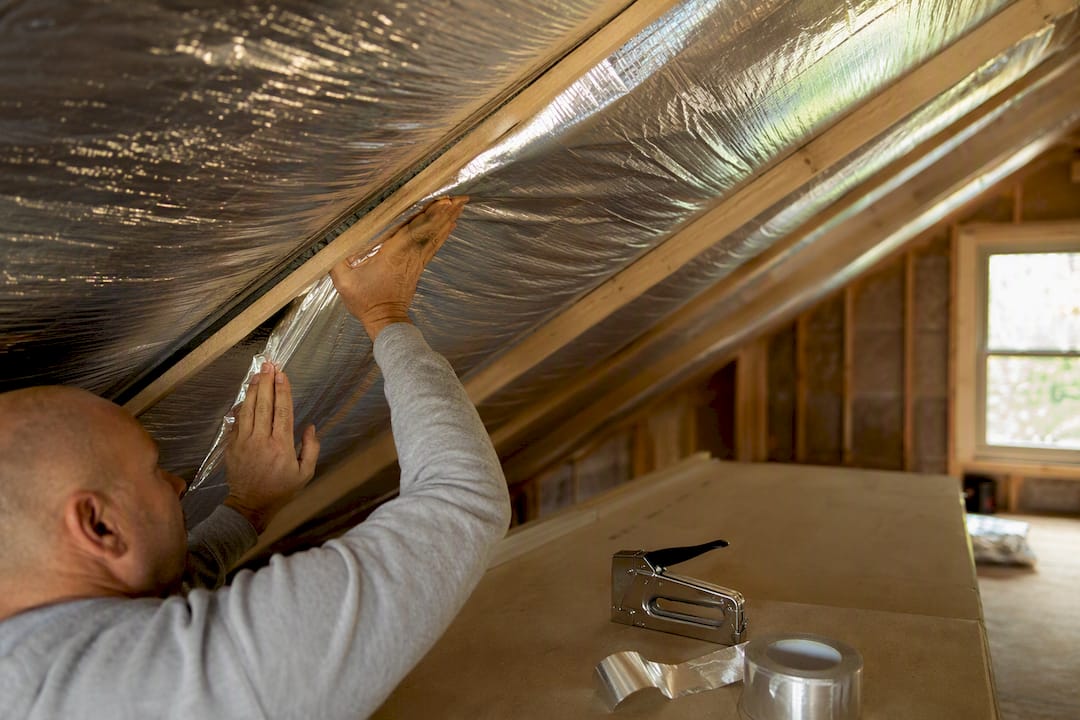
Overlap each run by the manufacturer's specified margin, usually a set number of centimetres, and tape every overlap with the matching foil tape. Skipping tape at laps is one of the most common DIY mistakes, because a gap here undermines the sealed-cavity performance the whole system depends on.
Fix counter-battens through the multifoil and into the rafters at the specified spacing, creating the second certified air gap on the room side. This is the step most likely to get rushed, and rushing it is exactly what turns a correctly specified product into an underperforming installation.
Seal around loft hatches, pipes, and cable penetrations with tape rather than leaving gaps and hoping they don't matter. Finally, fit plasterboard or your chosen internal finish onto the counter-battens, never directly onto the foil itself. Once boarded, check nothing has been pierced or compressed in a way that closes off either air gap.
How long does superfoil loft insulation last?
Multifoil is a low-maintenance product once correctly installed. There's no settling, no sagging under its own weight the way some fibre insulations can experience over decades, and no food source for pests the way natural fibre products occasionally offer. Provided the reflective foil surface stays intact and the air gaps remain uncompressed, performance shouldn't meaningfully degrade over the life of the roof.
The durability risk isn't the product itself, it's what happens around it. A roof leak that soaks the multifoil can affect the wadding layer and reduce its reflective efficiency where moisture sits against the foil surface for extended periods. Rodent or bird damage to the foil surface, though uncommon in a properly boarded loft, can also create localised weak points.
Because multifoil is typically boarded over once installed, there's little ongoing maintenance a homeowner needs to do. The main task is vigilance rather than upkeep: keep an eye on roof integrity generally, and if you're ever doing other loft work, such as adding cabling or dealing with an existing spray foam issue, avoid puncturing the multifoil unnecessarily and retape anything you do disturb.
Unlike loose-fill products that can shift or compact over time, a taped and battened multifoil system stays exactly where it was fitted. That stability is one of the quieter advantages of the product, even though it rarely gets mentioned alongside the headline U-value figures.
Does superfoil perform the same across the UK's climate?
The UK doesn't have dramatic climate variation compared with continental Europe, but there's still a meaningful difference between a loft in Cornwall and one in the Scottish Highlands or the Pennines. Multifoil's radiant-heat-reflecting mechanism works the same way regardless of region, but the practical benefit shows up differently depending on how cold the roof surface gets and how many months of the year the heating is running.
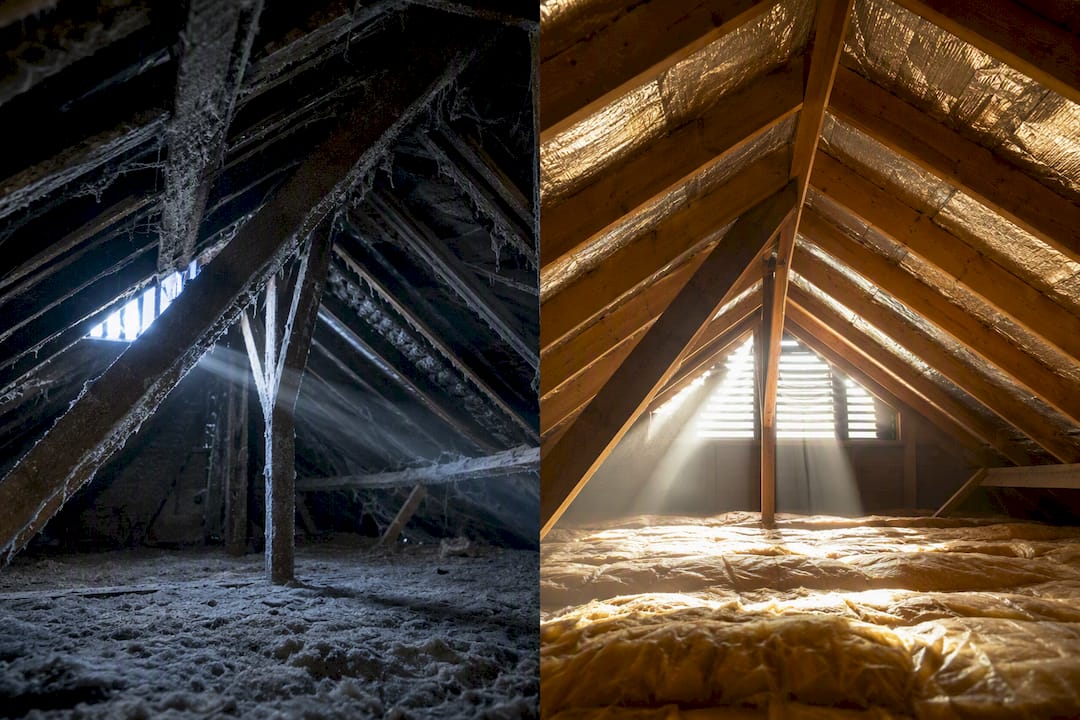
In colder, more exposed regions, the radiant heat loss through an underinsulated pitched roof is more severe, so a correctly specified multifoil build-up has more work to do and the improvement is more noticeable on heating bills. In milder southern and coastal areas, the same installation still performs to its certified U-value, but the seasonal swing in heating demand is smaller, so payback in pure cost terms takes a little longer.
Multifoil also earns its keep in summer, which gets far less attention than its winter performance. Reflective layers resist radiant heat gain from a sun-baked roof just as they resist heat loss in winter, which is why insulation more broadly plays a role in reducing overheating in roof spaces during hot spells. Loft conversions used as bedrooms or offices, particularly in southern England where summer roof temperatures climb hardest, benefit from this two-way effect more than a simple winter U-value figure suggests.
Ventilation strategy should still flex with climate and roof orientation. A south-facing roof with limited ventilation risks summer overheating regardless of insulation type, so pairing multifoil with adequate airflow matters everywhere, but especially in warmer, more exposed installations.
Editorial take: what actually determines whether SuperFOIL works
Most advice on multifoil focuses on the headline U-value, and that's the wrong place to start. The number on the packet only means anything if the installed build-up matches the tested build-up exactly, air gap for air gap, layer order for layer order. Homeowners fixate on comparing SF19+ against SF40 on paper when the bigger risk sitting in front of them is a counter-batten shortcut that quietly voids whatever figure they chose.
The conventional wisdom treats multifoil versus mineral wool as a straightforward efficiency contest. It isn't. It's a space-versus-installation-discipline trade. Multifoil rewards precision and punishes rushed work far more harshly than a thick roll of mineral wool ever does, because there's no forgiving bulk to compensate for a squashed cavity.
If I had one instruction for anyone starting this project, it would be this: get the certificate and the build-up drawing before you get quotes. Compare installers on whether they'll commit to that exact specification in writing, not on price per square metre. That single document does more to protect your loft conversion than any amount of product research.
— jessica
Get your loft assessed properly before you insulate
Multifoil only performs when it goes in against a sound roof structure with no hidden damp or old insulation problems waiting underneath. Sprayfoamremovalhelp gives you a direct line to the certified team actually doing the work, rather than a call centre passing your job to a subcontractor, so the survey, the quote, and the fitting all come from the same accountable technicians.

If your loft has old spray foam that needs assessing or removing before new insulation goes in, or you simply want a professional check before choosing a SuperFOIL build-up, Revive Maintenance's PCA-certified team can survey the space, confirm what's underneath, and advise on the right approach for a mortgage-compliant result. Every job is backed by a 10-year insurance-backed warranty and priced transparently with no hidden extras. Book a free inspection to get a clear, written assessment of your loft before you commit to a single roll of insulation.
FAQ
What is the average cost of SuperFOIL loft insulation in the UK?
Material costs vary by roll size and grade, with SF40 and SF60 costing more per square metre than SF19+ due to extra layers. Total installed cost depends heavily on whether it's a DIY job or a professionally fitted build-up with counter-battens and boarding.
Is SuperFOIL loft insulation good?
It's a strong choice for space-constrained lofts and loft conversions when it's BBA-certified and installed exactly to the certified air-gap specification. Skip either requirement and performance drops sharply, regardless of which grade you buy.
What is the best insulation for lofts in the UK?
There's no single best material. Multifoil wins on space and clean handling, mineral wool wins on acoustic performance and often on cost per square metre where depth isn't restricted, and the right choice depends on your specific loft's constraints.
Is SuperFOIL as good as PIR?
They solve different problems: PIR resists conduction well and is often paired with multifoil in certified build-ups where a project needs both radiant and conductive resistance in a limited depth. Neither reliably replaces the other on its own in every application.