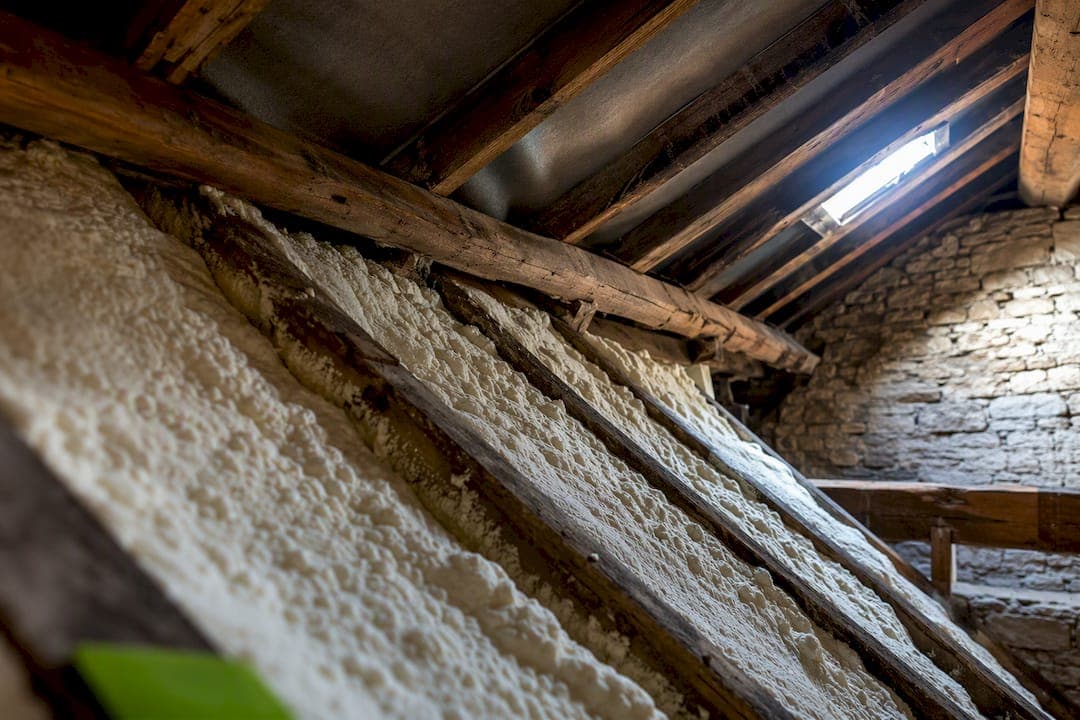
Spray foam is rarely a good match for period properties, and if it's already in your roof, the priority is not removal itself but proof: an independent inspection, your original paperwork, and early contact with your lender before you spend a penny. Stop assuming the worst, but don't ignore it either. The Building Safety Regulator, RICS and Historic England all point the same way: get the facts before you commission any work.
TL;DR:
- Spray foam applied directly onto old roof coverings without proper moisture control often traps damp, increasing decay risk and complicating future repairs.
- Most spray foam in period properties is installed without consent, making enforcement actions and costly, invasive removal highly likely.
- Proper documentation, independent inspections, and specialist reports are crucial to mitigate mortgage risks and support salvage or remediation strategies.
- Removal costs range from £1,000 to £7,000 depending on foam type and roof size, with full removal often requiring careful, phased approaches to preserve historic fabric.
- Using breathable insulation alternatives and maintaining thorough records can enhance sustainability and ease future resale or insurance claims.
Table of Contents
- What is spray foam insulation and how is it applied in older roofs?
- Why period properties are especially vulnerable to spray foam damage
- Will spray foam affect your mortgage or sale in a period property?
- What to do first if you find spray foam in your period property
- Removal or remediation: what it costs and how disruptive it gets
- Listed buildings: consent, enforcement and conservation-friendly alternatives
- How to choose a specialist for assessment or removal
- Monitoring your roof after any spray foam work
- Is spray foam ever sustainable for a historic building?
- What experience with UK period roofs actually teaches you
- Getting mortgage-compliant spray foam removal without the guesswork
- Sources
- FAQ
What is spray foam insulation and how is it applied in older roofs?
Spray polyurethane foam comes in two forms, and the difference matters more in a period property than almost anywhere else. Open-cell foam is softer, more vapour-permeable, and expands to a lighter density. Closed-cell foam is rigid, denser, and far more resistant to moisture movement, which sounds like an advantage until you realise that resistance is exactly what traps damp against old timber.
Installers generally take one of two approaches:
- Cold-roof application, where foam goes at ceiling level, leaving the roof void above ventilated as it always was.
- Warm-roof (rafter-level) application, where foam is sprayed directly onto the underside of the roof covering or underlay, sealing the whole roof structure.
The second approach is where most period-property problems begin. If the foam is applied straight onto old sarking felt, or onto a high-resistance underlay with no Air and Vapour Control Layer (AVCL) fitted beneath it, moisture that would once have escaped has nowhere to go. The Energy Saving Trust notes that professionally designed installations reduce this risk considerably, but "professionally designed" is doing a lot of work in that sentence, and it's rarely what happened in a 1930s loft sprayed on a Tuesday afternoon by a salesman who arrived unannounced.
Why period properties are especially vulnerable to spray foam damage
Old buildings were built to breathe, not to be sealed. Traditional lime mortar, timber, and permeable roofing underlays all rely on moisture being able to move through the fabric and evaporate away, rather than being trapped behind an impermeable layer. Conservation bodies describe this as the "raincoat versus overcoat" problem: a raincoat sheds water from the outside, but an overcoat traps whatever moisture is already inside against your skin. SPAB and Historic England treat this principle as central to any retrofit decision on a historic building, and spray foam is very much an overcoat.
Once moisture is trapped against timber rafters or purlins that have breathed freely for a century, decay can set in quietly, hidden under a layer you can't see through or lift. The Building Safety Regulator's modelling confirms that risk rises sharply when foam is applied directly to coverings or underlays without an AVCL, and falls when the installation actually meets BS 5250:2021, the British Standard governing moisture control in buildings.
The practical fallout goes well beyond the roof timbers themselves:
- Roof repairs become harder and more expensive, since tiles or slates bonded to foam often can't be lifted and reused.
- Electrical cables and pipework buried in foam are difficult to inspect, trace, or safely upgrade.
- Ventilation paths that once kept a loft dry are blocked, shifting the moisture problem elsewhere in the structure.
Pro Tip: If you can still see daylight through gaps in your roof felt from inside the loft before any foam goes in, that's usually a sign the roof was designed to breathe. Sealing it with closed-cell foam changes that balance permanently, not just for the winter.
Will spray foam affect your mortgage or sale in a period property?
Yes, often. Surveyors are trained to flag spray foam because it hides the roof structure from visual inspection, and RICS guidance is explicit that its presence can affect a professional valuation. That doesn't automatically mean a blanket refusal. Lenders increasingly assess these cases individually rather than declining every property with foam on sight, and the outcome usually comes down to documentation.
What lenders and surveyors typically want to see includes:
- BBA or Kiwa certification confirming the foam product and its intended application.
- Installation calculations showing the roof assembly was assessed for moisture risk beforehand.
- A guarantee or warranty from the original installer, ideally insurance-backed.
- A recent independent report, not just the installer's own sign-off.
Where that paperwork is missing (which is common, since a lot of period-property foam went in during a wave of free or subsidised loft schemes years ago), a Level 3 Building Survey or a report following PCA inspection protocols can carry real weight with a lender. These reports give an underwriter something structured to assess, rather than a vague note saying "spray foam present, further investigation advised." If a surveyor has already flagged or refused a loft on your property, that specialist report is usually the fastest route back to a mortgage offer.
What to do first if you find spray foam in your period property
Resist the urge to book a removal crew the same afternoon you find foam in the loft. The sequence matters, and getting it wrong can cost you money and options.
- Stop any planned work on the roof or loft until you know what you're dealing with, including any DIY attempts to pull foam away from timbers.
- Gather every scrap of paperwork, including the original installer's contract, any BBA or Kiwa certificates, guarantees, and installation calculations.
- Book an independent inspection from a specialist who works to PCA protocols and understands what a RICS surveyor will actually accept as evidence.
- Contact your lender and insurer directly, before commissioning removal, so you know exactly what they require rather than guessing.
Trading standards guidance from local authorities specifically warns against rushing into removal on the back of a single mortgage refusal; an independent inspection sometimes shows the installation carries less risk than a lender initially assumed, and mitigation or a clean report can resolve things without full removal.
Pro Tip: Photograph the loft from every angle before anyone touches the foam. If a dispute with a previous installer or a lender ever arises, dated photos of the "as found" condition are worth far more than a description written weeks later.
Removal or remediation: what it costs and how disruptive it gets
Removal is often necessary, but it's not automatically the only answer, and it's rarely quick. The method depends on whether you're dealing with open-cell or closed-cell foam, and how it was applied.
- Open-cell removal tends to be less physically demanding since the foam is softer and pulls away from timber more readily, though it still needs careful, methodical extraction to avoid damaging old rafters.
- Closed-cell removal is harder work. The foam bonds tightly to whatever it touches, and if it's fused to the underside of tiles or slates, those coverings often can't be salvaged and reused.
- Full roof re-covering is sometimes unavoidable once foam has bonded directly to historic tiles, turning what should have been a straightforward removal job into a partial roof renewal.
Costs vary considerably depending on roof size, foam type, and access, and any figure should be treated as a starting point rather than a quote: open-cell removal typically runs from £1,000 to £5,000, while closed-cell removal tends to sit between £1,500 and £7,000, with the full range across all spray foam removal jobs spanning £1,000 to £7,000. The exact figure depends heavily on the survey findings, not a flat rate.
On a listed or otherwise protected period property, complexity increases further. Removal that disturbs historic fabric, or that requires re-covering with matching materials, can trigger conservation officer involvement even when the original foam installation never went through planning. A step-by-step removal overview is worth reading before you commit to a contractor, so you know roughly what disruption to expect in your own roof space.

Listed buildings: consent, enforcement and conservation-friendly alternatives
If your property is listed, spray foam installation almost certainly should have gone through listed building consent, and in practice it very rarely did. Historic England treats spray foam as not easily reversible once bonded to historic timber or roof coverings, which is precisely the kind of irreversible alteration that listed building consent exists to control.
Where foam was installed without consent, local planning authorities have the power to pursue enforcement action, which can include requiring full removal and restoration at the owner's expense, regardless of who installed the foam or when. If you're in that position:
- Contact your local conservation officer early and voluntarily rather than waiting to be found.
- Get specialist advice on what a compliant removal and restoration would involve before agreeing any scope of work.
- Ask about breathable alternatives, such as wood fibre or sheep's wool insulation, that conservation officers are far more likely to accept for future works.
Enforcement is a genuinely different order of problem to a mortgage delay. It's a legal risk, not just a lending inconvenience, and it's worth treating it that way from the outset.
How to choose a specialist for assessment or removal
Not every contractor who removes spray foam understands period buildings, and the wrong choice can do more damage than the foam already has.
- Check for PCA membership or a clearly demonstrated PCA-aware methodology, since this is the protocol most lenders and surveyors already recognise.
- Ask for evidence of historic fabric experience, not just general loft insulation work. Old timber and lime-based masonry behave very differently to modern construction.
- Request a written scope of work before anything starts, including whether existing roof coverings will be reclaimed and reused rather than automatically discarded.
- Confirm insurance-backed guarantees are included, not just a verbal assurance that "we stand by our work."
Pro Tip: Be wary of anyone who wants to start removal on the same visit as the assessment. A proper survey, a written report, and a considered scope of work should always come before any foam is touched, not alongside it.
Avoid unsolicited cold calls entirely, and treat refusal to provide certificates, references, or a sample report as an immediate red flag.
Monitoring your roof after any spray foam work
Whether you go for remediation or full removal, the job isn't finished the day the contractor leaves. Moisture problems in roof timber develop slowly, often over several winters, so a one off inspection at completion tells you very little about what happens two years later.
Build a simple annual routine: check the loft after the coldest months for condensation staining on remaining timber, look for any musty smell that wasn't there before, and photograph the same areas each year so changes are easy to spot. If any remediation left partial foam in place rather than full removal, pay particular attention to the boundary where foam meets untreated timber, since that's typically where moisture concentrates first.
Keep every certificate, warranty, and inspection report from the work in one place, ideally digitally as well as on paper. If you ever come to sell, or need to make an insurance claim, that paper trail is what separates a quick resolution from a drawn out dispute. A property that's already had value knocked off it because of spray foam concerns is far easier to remarket with a clean, documented history than with vague reassurances.
If your property sits in a conservation area or carries listed status, ask whoever carried out the work to note exactly what materials went back in and how they comply with breathability principles. That record matters if a future conservation officer or buyer's surveyor asks questions.
Is spray foam ever sustainable for a historic building?
The environmental case for spray foam in period properties is weaker than most installers admit. Polyurethane foam is a petrochemical product, and unlike wood fibre, sheep's wool, or hemp insulation, it isn't easily recyclable once it has bonded to timber or masonry. When removal becomes necessary, the foam itself typically goes to landfill, and any roof coverings it has ruined add further embodied carbon in the form of replacement tiles or slates.

There's also the maintenance-carbon question that rarely comes up in installer sales pitches: a period property with hidden timber decay caused by trapped moisture may eventually need far more invasive structural repair than it would have with a breathable alternative. That repair carries its own environmental cost, in materials, transport, and disruption, often decades sooner than would otherwise have been necessary.
Breathable alternatives generally align better with both conservation principles and genuine sustainability. Wood fibre board, sheep's wool, and cellulose insulation all allow moisture to move through the building fabric as it always has, while still improving thermal performance meaningfully. They're not always cheaper upfront, and they don't offer quite the same instant draught-sealing effect that makes spray foam attractive to installers doing a hard sell on a cold January doorstep. For a period property, the slower, breathable route tends to be the one that actually lasts.
What experience with UK period roofs actually teaches you
The single biggest mistake homeowners make isn't installing spray foam in the first place. It's what happens afterwards: panic-booking removal before an inspection, or worse, throwing away the installer's paperwork because "it's not relevant anymore." It's almost always relevant, and it's usually the first thing a lender or surveyor asks for.
A properly certified removal should leave you with a clear paper trail: a pre-work survey report, photographs of the roof structure once foam is out, confirmation of any timber treatment carried out, and a written guarantee. Anything less, and you haven't actually solved the mortgage problem, you've just moved it further down the road.
Conservation implications get underestimated constantly. Homeowners fixate on the lending issue and forget that a listed building with undocumented spray foam carries a legal exposure that a mortgage refusal simply doesn't.
— jessica
Getting mortgage-compliant spray foam removal without the guesswork
Specialist companies work directly with period-property owners who need certified, mortgage-compliant spray foam removal rather than a generic loft insulation quote. Technicians are PCA-certified, removals may be backed by insurance-backed warranties, and clients deal directly with skilled teams doing the work rather than through call centres.

For a period property, the survey itself often matters as much as the removal. Revive Maintenance offers Basic Visual Surveys, Full Roof Reports, and Drone Survey packages designed to give lenders and surveyors exactly the documentation RICS guidance recommends, alongside open-cell and closed-cell removal services priced with no hidden fees. Because the team has handled foam removal across genuinely old, structurally sensitive roofs, they understand when a covering can be salvaged and when conservation considerations need a lighter touch than a standard strip-out.
If you've found spray foam in a period property and need clarity before your next move, book a survey through Revive Maintenance and get a written report you can actually hand to your lender.
Sources
For readers who want to check the detail themselves, these are worth reading directly rather than relying on secondhand summaries:
- Moisture risk of spray foam insulation applied to timber sloped roofs (Building Safety Regulator) — March 2024
- RICS consumer guide: Spray foam insulation
- SPAB: Energy efficiency and old buildings — principles and priorities
FAQ
Is spray foam banned in the UK?
No, spray foam insulation is not banned in the UK, and it remains a legal product available for installation. Concerns focus on incorrect installation and its impact on breathable, older buildings, not on the material being prohibited outright.
Can I sell my house with spray foam?
Yes, you can sell a house with spray foam, though it may affect valuation and slow the process if you lack documentation. Gathering installation paperwork and commissioning an independent specialist report beforehand makes the sale considerably smoother.
Is spray foam insulation available in the UK?
Yes, spray foam insulation is widely available across the UK in both open-cell and closed-cell forms. Availability isn't the issue; suitability for period and listed properties is, given the breathability concerns raised by SPAB and Historic England.
How much does spray foam removal cost in the UK?
Costs depend on the foam type and roof size, with open-cell removal typically ranging from £1,000 to £5,000 and closed-cell removal from £1,500 to £7,000. An independent survey is the only reliable way to get a figure specific to your roof rather than a generic estimate.
Will my mortgage lender automatically refuse a property with spray foam?
Not automatically. Lenders increasingly assess spray foam cases individually rather than issuing blanket refusals, and a structured report following PCA protocols can often satisfy their concerns without requiring full removal.