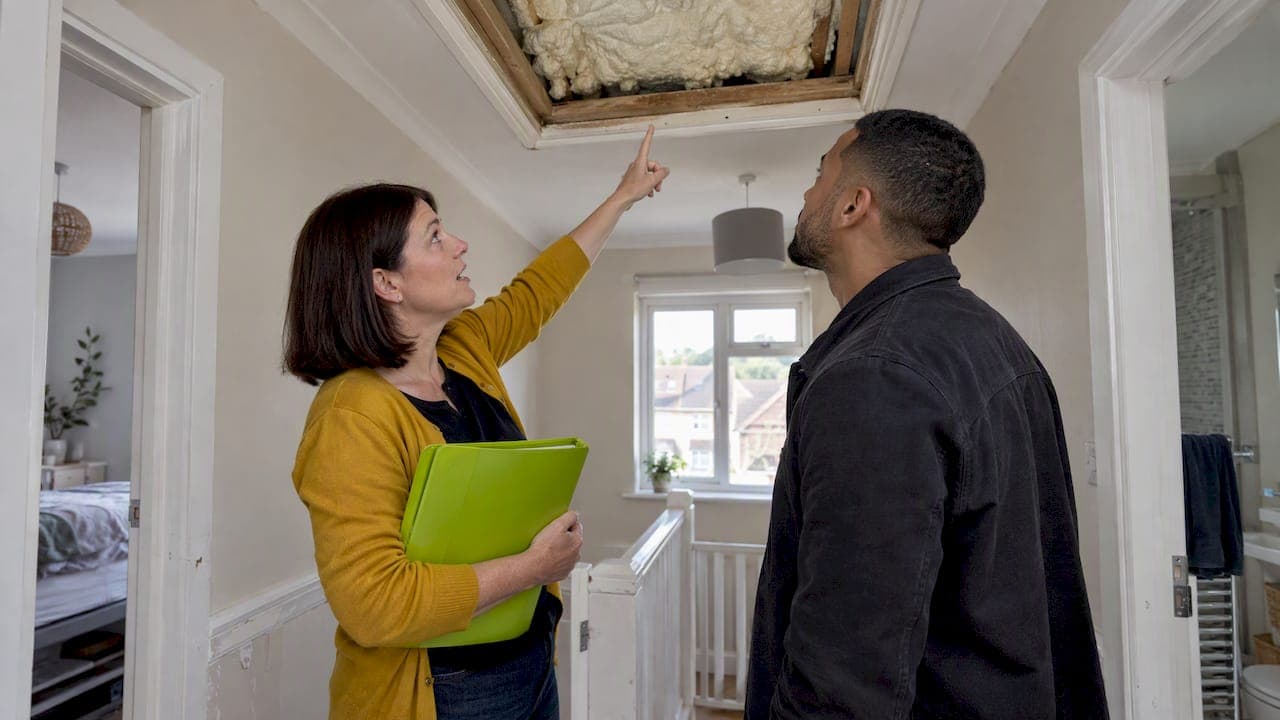
If you know your home has spray foam insulation, you should tell buyers. You can still sell, but staying quiet is a legal risk and a practical one. Consumer protection law treats leaving out known, relevant facts as a misleading omission, and a buyer's surveyor will probably find the foam anyway. This guide explains what to disclose, when and how, and what paperwork to gather first.
TL;DR
- There is no ban on spray foam in the UK, and no law says you must remove it before selling. You do need to be honest about it.
- Answer the seller's questions on the conveyancing forms truthfully. A known problem left out can unwind a sale or lead to a claim.
- Lenders increasingly look at each property individually, so evidence matters more than a rushed removal. Gather the installer's paperwork, photos and a specialist roof report.
- Removal is sometimes the right call, but it should follow a proper assessment, not a pushy phone call.
- Check who installed the foam before you commission anything. They may still owe you a guarantee.
Table of Contents
- Is spray foam insulation illegal in the UK?
- Do you have to disclose spray foam when selling?
- Why disclosure protects you as much as the buyer
- What lenders and surveyors actually look for
- The evidence pack to prepare before you list
- Your options when you are selling
- Perspective: what we see when foam meets a sale
- What removal and surveys cost
- Getting a report before you decide
- Special cases that change the disclosure picture
- A step-by-step plan for sellers
- FAQ
- Sources
Is spray foam insulation illegal in the UK?
No. As of 2026 there is no government ban on spray foam insulation. The problem is not the material in itself. The RICS consumer guide to spray foam makes the point that its presence should not automatically block lending. What matters is whether it was designed and installed to suit the roof it went into.
That distinction shapes everything about disclosure. Foam sprayed onto the underside of roof tiles or felt can hide the timbers. Surveyors then cannot see whether moisture is building up. If it is, rafters and battens can decay without any visible sign from inside the loft.
The scale is not small. A parliamentary committee has repeated an estimate from the Residential Property Surveyors Association that around 250,000 homes could be unmortgageable because of spray foam, and it warned the true figure may be higher. The House of Commons Library briefing records that some homeowners have struggled to remortgage or sell.
Do you have to disclose spray foam when selling?
In practice, yes. There is no single statute headed "spray foam disclosure". The duty comes from three places working together.
- Consumer protection rules. Citizens Advice explains that sellers must say what they know about a property, and what they should reasonably be expected to know, when it could affect a buyer's decision. That page is written for Scotland. Property law differs across the UK, so check the position in your own nation with your conveyancer.
- The conveyancing forms. In England and Wales, your solicitor or conveyancer will send you a property information form. It asks about disputes, guarantees, alterations and known problems. Insulation works fall squarely within those questions. Whatever you write must be true to your knowledge.
- Misrepresentation. If a buyer relies on a wrong or incomplete answer and then suffers loss, they may seek to recover it or pull out. Answering "not known" when you do know is not a safe shortcut.
The only sensible rule is this: if you know foam is in the roof, walls or floor, say so, and say what you can prove about it.
What counts as material information?
Anything that would change a reasonable buyer's decision or their ability to borrow. For spray foam that includes:
- The location: loft rafters, walls, underfloor, or a conservatory or extension roof.
- Whether it is open cell or closed cell.
- Who installed it, when, and whether you hold a contract, guarantee or insurance-backed warranty.
- Any survey, valuation or lender comment that mentioned it.
- Any known damp, timber decay, condensation or ventilation changes.
- Whether you are aware of any removal, partial removal or remedial work.
If you bought the house with foam already in place and genuinely do not know, tell your conveyancer that. Then get a specialist inspection so you stop being in the dark. What you could reasonably be expected to know is part of the test, so ignorance is a weaker position once a survey has been done.
Why disclosure protects you as much as the buyer
It can feel counterintuitive to raise a problem before an offer. But consider how the sale usually unfolds without it.
The buyer's lender instructs a valuation. The surveyor goes into the loft, sees foam on the rafters and flags it. The lender then asks for a specialist report or declines. Weeks into the chain, your buyer is stuck, and you are asked why you did not mention it.
Disclosing early changes the conversation in three ways:
- You control the evidence. You can hand over a prepared pack instead of reacting to a lender's demands.
- Fewer late collapses. Buyers who know the position upfront can price it in, or walk before spending on legal and survey fees.
- A cleaner legal position. A written, documented disclosure is far harder to challenge later than a vague answer.
We cover the buyer's side of this in our guide to buying a house with spray foam, which explains why some major lenders may refuse.
What lenders and surveyors actually look for
There is no formal removal certificate required by law. What lenders usually want is an independent specialist report that confirms the condition of the roof timbers and whether the construction is at risk. Surveyors often assess against British Standard BS 5250:2021, which deals with moisture in buildings.
Policies differ, and they move. The Commons Library briefing notes that, according to a BBC survey in November 2024, major lenders were treating spray foam in different ways, and the picture has been shifting towards judging each property on its facts. Ask your buyer's broker which lender is involved before you assume anything.
The reason for the caution is simple. According to the Citizens Advice report A Foamidable Challenge, around one in three homeowners with loft-installed spray foam have experienced problems such as damp, timber damage or ventilation failure. Because foam hides the structure, a surveyor often cannot judge the timbers without destructive testing. A specialist report is the lender's precaution.
If your survey wording has caused trouble, our piece on three RICS survey wording items for spray foam explains what each phrase typically triggers.

The evidence pack to prepare before you list
You do not need to remove foam to be able to sell. You do need to show it was installed properly, or show what the true condition is. The RICS recommends that homeowners keep full records. Build a folder with:
| Document | Why it matters |
|---|---|
| Installer's contract, invoice and guarantee | Shows who installed it, when, and whether any warranty is still live |
| Product details and any independent test certificates | Lets a surveyor judge what was used |
| Pre- and post-installation photos | Shows the roof condition before the foam went on |
| Moisture readings of the roof timbers | Gives a baseline on damp risk |
| Records of ventilation changes | Shows how the roof void was designed to manage moisture |
| Any previous survey, mortgage valuation or lender letter | Shows what has already been said about the property |
| A specialist roof report | Replaces guesswork with a current assessment |
A documented installation against BS 5250:2021 can carry more weight with a lender than a rushed, expensive removal that was never needed. That is why we usually advise getting facts first and deciding about removal second.
Check the installer before you do anything else
If the original firm still trades, it may hold the guarantee you need. Trading Standards services have warned of a pattern where a firm sells foam and someone returns later, sometimes under a different name, claiming it is damaging the home and pushing a costly removal. Cornwall Council's trading standards advice sets out the risks and what to check. If the installer has vanished or the work was mis-sold, our guide to spray foam warranty claims and Section 75 explains a route that may help if you paid by credit card.
Your options when you are selling
There are three realistic routes. None is right for everyone.
Option 1: Sell with foam and a full evidence pack
This suits foam that was installed by an accountable firm with paperwork, on a roof where a specialist finds no moisture damage. You disclose, share the pack and the report, and let the buyer's lender decide. You may still face a narrower pool of lenders, so be ready for questions.
Option 2: Commission a specialist report first
If you do not know the condition of the timbers, a report turns an unknown into a fact. It either supports the sale or tells you removal is worth considering. It also gives you something concrete to show buyers rather than a worry.
Option 3: Remove the foam, then sell
Removal makes sense where the report shows moisture damage, where lenders are refusing, or where the buyer's price reduction would cost more than the work. Do not attempt this yourself. Foam bonds to timber, tiles and felt, and careless removal can damage the roof. Use a certified specialist, and ask for documentation and an insurance-backed warranty so the next buyer's lender can see what was done.

Cash buyers add another wrinkle. They may offer quickly and low, counting on you not understanding the foam issue. Our article on getting a report before accepting a cash offer explains how a report keeps you in a stronger bargaining position.
Perspective: what we see when foam meets a sale
We remove spray foam across London and the Southeast, and we work directly with the homeowner, with no middlemen or lead-selling websites in between. That gives us a front-row view of how sales go wrong.
The most common failure is not the foam. It is surprise. A seller who mentions foam on day one and hands over a report keeps the sale moving far more often than one whose buyer finds it on the valuation. The second most common failure is panic: sellers hear that foam makes a house unsellable and commit to a removal before knowing whether they need one.
We would rather you had the facts. That is why we publish prices for surveys and removals, and why our PCA-certified team can inspect and report before anyone talks about taking foam out. When removal is the right answer, the work should leave you with paperwork that a lender will accept, which is why we back ours with a 10-year insurance-backed warranty. We have worked with over 1,000 homeowners, and the ones who relax first are those who were told clearly what they had.
— jessica
What removal and surveys cost
These are the prices published on our site. Every roof differs, so the final figure depends on access, the type of foam and how much is on the roof.
| Service | Published price |
|---|---|
| Spray foam removal | £1,000 to £7,000, one-off |
| Open cell spray foam removal | £1,000 to £5,000, one-off |
| Closed cell spray foam removal | £1,500 to £7,000, one-off |
| Basic visual survey | From £100, one-off |
| Full roof report (with photos) | From £200, one-off |
| Drone survey and report | From £250, one-off |
| Full drone survey and detailed report | £350 to £450, one-off |
Closed cell foam is denser and bonds harder, which is why its range sits higher. For a fuller breakdown, see our spray foam removal cost page.
Getting a report before you decide
If you are about to list, or a buyer has just raised foam, a report is usually the cheapest and fastest next step. Our surveys range from a basic visual check to a drone survey with a detailed report, so you can match the depth to what your buyer's lender is asking. You can compare them on our surveys and services page, or book a home visit quote. Our team deals with you directly, and we aim to give clear, fixed pricing with no hidden fees.
Special cases that change the disclosure picture
Landlords
If you let the property, foam affects your remortgage and sale just as it does for an owner-occupier. Landlords also carry duties to tenants for condition and safety. Our piece on landlord spray foam obligations explains how these can stall a remortgage.
New-build and warranty-backed homes
If the home came with a structural warranty, foam added afterwards can complicate things. See our note on paperwork for NHBC homes with spray foam.
Particular roof types
Felt underlays, trussed roofs and conservatory roofs each carry their own moisture risks and their own surveyor concerns. We have guides on felt roofs and remortgaging, trussed roof risks and conservatory spray foam checks.
Listed and protected buildings
Spray foam should not be installed in a listed or protected building without prior consent. If you own one and foam is already there, mention that to your conveyancer immediately, because consent history becomes part of what a buyer will ask.
Insurance
Buildings insurers may ask about insulation. Keep what they say in writing, and read our guide to PCA and RICS reports for insurance and mortgage delays.
A step-by-step plan for sellers
- Confirm what you have. Find out where the foam is, whether it is open or closed cell, and who installed it.
- Gather the paperwork. Contract, guarantee, photos, moisture readings and ventilation records.
- Contact the installer if they still trade, and ask in writing whether a guarantee applies.
- Tell your conveyancer. Give them every fact you hold, so the forms are answered accurately.
- Get a specialist report from an independent, certified source if the condition is unknown.
- Decide on removal only once the report is in. Compare written, itemised quotes.
- Disclose in writing to buyers early, with the evidence pack attached.
- Keep records of everything you say and send.
Be wary of anyone who cold calls to say your foam is failing. Councils such as Surrey County Council warn about high-pressure loft insulation sales tactics and misleading claims. A genuine inspection never depends on you agreeing to work on the spot.
FAQ
Can I sell my house with spray foam?
Yes. There is no law stopping a sale. You must disclose it, and you should expect the buyer's lender to ask questions. A good evidence pack and a specialist roof report give the sale the best chance.
Do I need a certificate for spray foam removal?
There is no formal removal certificate required by law. Lenders usually want an independent specialist report on the roof's condition, and documentation from whoever carried out the work. Ask your removal contractor what paperwork and warranty come with the job.
What happens if I do not disclose spray foam?
A buyer could argue they were misled by an omission, which can lead to the sale collapsing or a legal claim. The foam is also likely to be spotted at survey. Telling your conveyancer everything you know is the safest course, and a solicitor can advise on your specific situation.
Must I remove spray foam before selling?
Not necessarily. Lenders are increasingly judging each property on its evidence. Removal is worth considering where a report finds moisture damage or where buyers cannot get a mortgage. Get the report first, then decide.
Sources
- RICS: Spray foam insulation consumer guide
- UK Parliament Committee: Warm homes retrofit failures
- House of Commons Library: Spray foam insulation and mortgages
- Citizens Advice: Problems with buying and selling a home
- Citizens Advice: A Foamidable Challenge
- Cornwall Council: Spray foam insulation advice
- Surrey County Council: Loft insulation, don't get scammed